
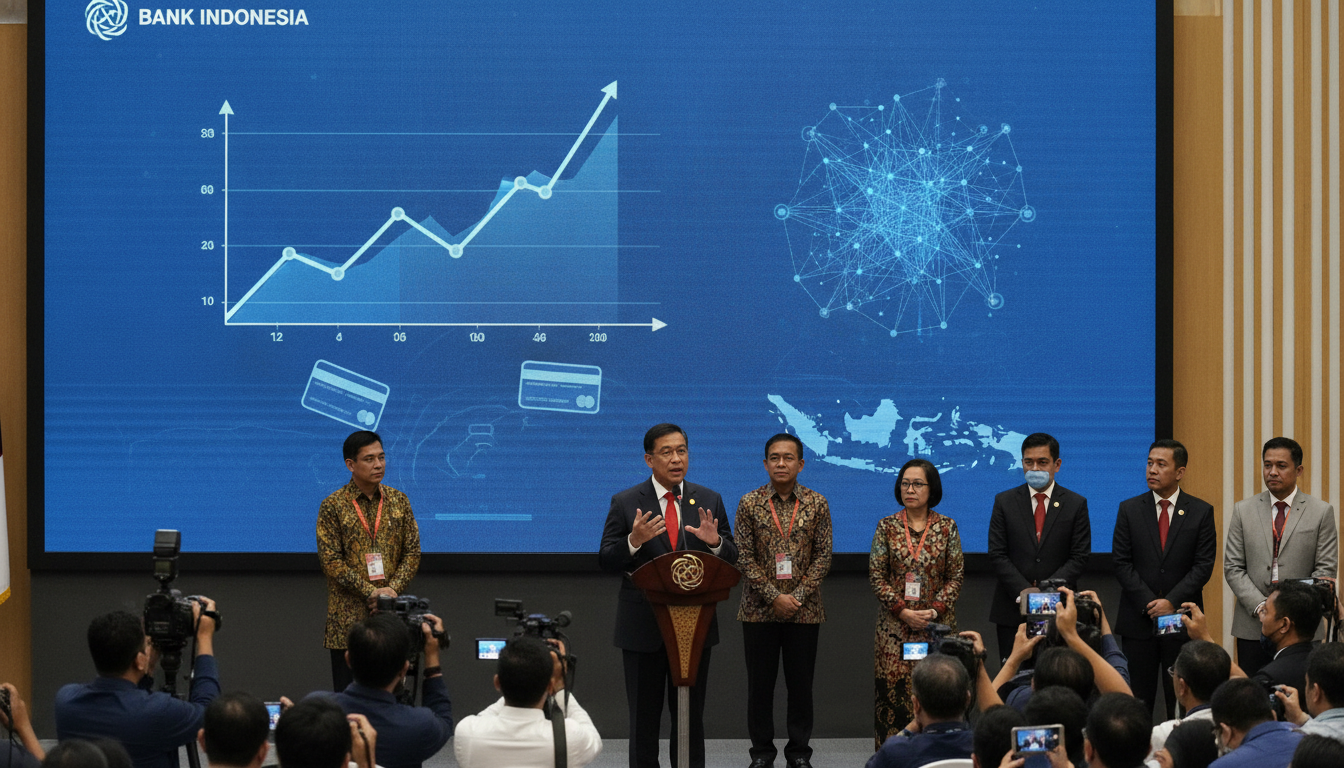
Bank Indonesia extends domestic credit card payment system to individuals, pressing Visa and Mastercard
Bank Indonesia has extended a domestic credit card payment system to individual cardholders, aiming to boost consumer lending and shift transaction processing onshore as young Indonesians increasingly use credit. The move, announced in Jakarta on August 17, 2026, links the central bank with major local lenders to route domestic card transactions through a national system. Officials say the change is intended to deepen the domestic payments infrastructure and provide an alternative to international card networks.
Policy move announced and immediate goals
Bank Indonesia framed the expansion as part of a broader effort to strengthen financial infrastructure and support consumer credit growth. By allowing individual transactions to be processed domestically, the central bank seeks faster settlement cycles, greater oversight of retail credit flows, and enhanced data residency. The policy responds in part to patterns of rising credit-card use among younger Indonesians and a growing market for point-of-sale and online consumer lending.
Partnerships with major domestic banks
The rollout is being implemented in cooperation with several large Indonesian lenders that already operate in the card market. Bank Mandiri was cited as an example of a bank that processes domestic transactions onshore using the KKI system, and other banks are expected to join or expand participation. These partnerships are intended to ensure technical readiness at issuers and acquirers, and to coordinate upgrades to merchant acceptance and back-office settlement systems.
How onshore processing works and the KKI role
Under the new arrangement, domestic credit card transactions conducted within Indonesia will be routed through a national clearing and settlement platform rather than defaulting to international switches. That platform—referred to in industry materials as the KKI system—handles authorization, clearing and settlement for transactions processed onshore. Bank Indonesia and participating banks say the approach will preserve interoperability with global networks for cross-border spending while giving domestic actors control over local transaction flows.
Competitive implications for Visa and Mastercard
Market participants and analysts view the policy as a competitive challenge to dominant international card networks that have traditionally routed a large share of Indonesian volume offshore. Onshore processing can reduce outbound routing, lower cross-border switching fees and create room for domestic interchange and fee structures. Industry observers caution that global networks still play a central role in international acceptance and that any shift will be incremental, depending on bank, merchant and consumer adoption.
Impact on consumers and consumer lending
Bank Indonesia’s initiative is positioned to increase access to consumer credit by lowering operational costs and enabling lenders to tailor credit products for domestic spenders. For younger consumers who increasingly rely on installment and credit-card financing, onshore processing could deliver faster dispute resolution and improved local protections. At the same time, regulators will need to monitor credit quality as more cards and consumer loans enter the market.
Operational, technical and regulatory considerations
Adopting onshore processing requires upgrades to terminals, acquirer services and issuer back-ends, and banks must meet security and compliance standards set by Bank Indonesia. The central bank has signaled that rules governing data handling, anti-fraud measures and interoperability will accompany the rollout. Payment providers will need to balance local routing with the convenience of global acceptance, especially for outbound tourism and cross-border e-commerce.
Market response and phased implementation
Initial responses from banks and payment service providers have been measured, with several lenders confirming pilot schemes and staged integration plans. Merchants may see reduced transaction fees over time, but adoption will depend on acquirer investments and consumer awareness. Bank Indonesia is expected to phase implementation to allow technical testing, participant onboarding and regulatory adjustments before full nationwide coverage.
Bank Indonesia’s expansion of the domestic credit card payment system marks a deliberate step toward greater self-reliance in Indonesia’s payments landscape. The initiative aims to support consumer lending, improve settlement efficiency and create an alternative routing path to international card networks while preserving global interoperability.
Financial institutions, merchants and consumers will watch closely as the phased rollout unfolds and regulators publish detailed operational rules for the new onshore framework.

