
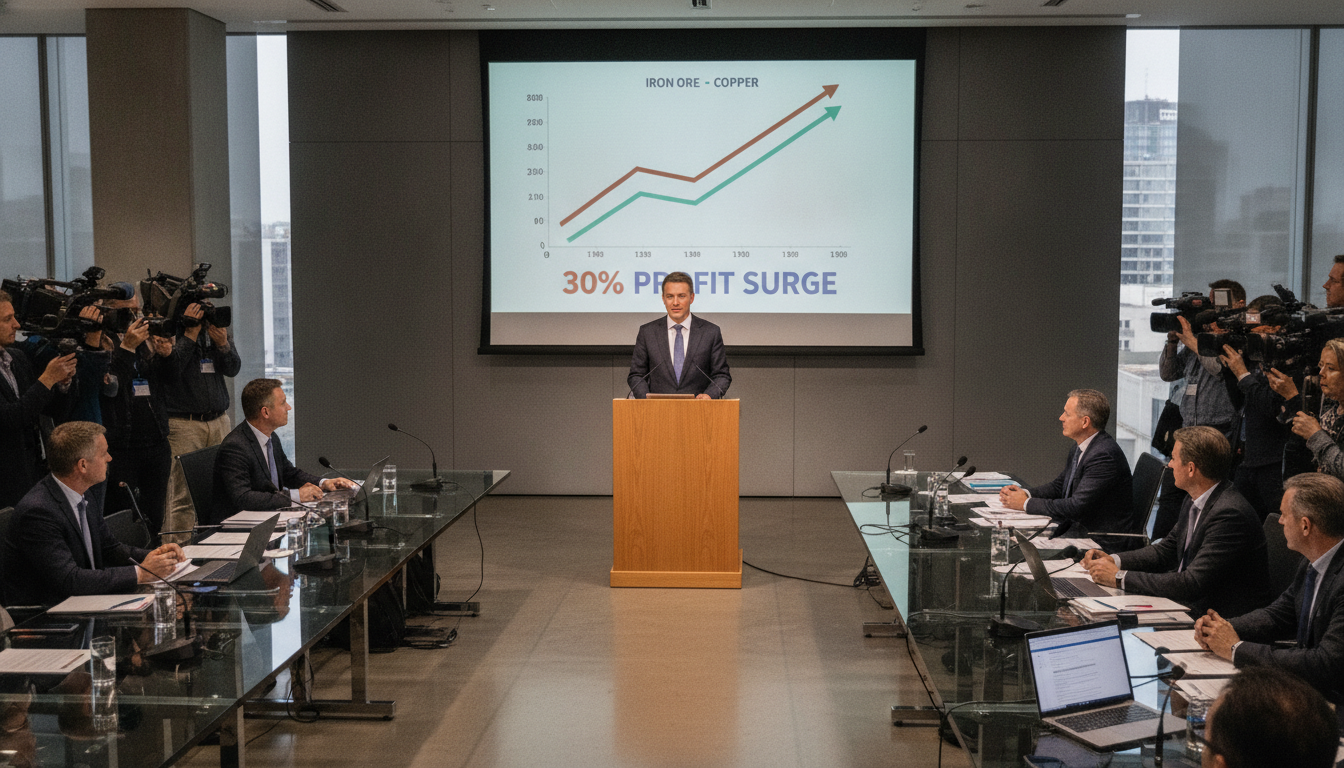
BHP copper profit jumps 30% as copper overtakes iron ore in annual results
BHP’s underlying annual profit rose 30% as copper’s rally pushed the red metal ahead of iron ore, highlighting the miner’s strategic pivot to copper in 2026.
Strong annual result drives headlines
BHP reported a 30% increase in underlying annual profit on August 18, 2026, as higher copper prices strengthened its full-year performance. The rise in BHP copper profit reflects a broader shift in the company’s earnings mix, with the red metal becoming a leading contributor to results. The company said the performance was driven by both commodity price moves and operational capacity linked to its copper assets.
Copper overtakes iron ore in earnings mix
For the first time in recent reporting, copper contributed more to BHP’s full-year earnings than iron ore, underscoring the commodity’s growing importance to the world’s largest listed miner. Analysts noted that the sustained rally in copper prices during the reporting period elevated margins across smelting and refining operations. BHP’s reweighting toward copper has altered the company’s revenue profile, reducing historical reliance on iron ore cycles.
Olympic Dam and downstream operations cited as key factors
BHP’s Olympic Dam complex in South Australia was highlighted as a material contributor, with the company’s smelting and refining capacity supporting higher-value copper production. Olympic Dam also hosts significant uranium deposits, but it was the scale of copper output and processing that underpinned the profit uplift. Operational improvements at existing sites and investments in downstream facilities helped capture value further along the copper supply chain.
Company strategy aligns with long-term copper demand
BHP has signalled a deliberate strategic pivot to copper in response to anticipated demand from electrification and renewable-energy deployment. Industry observers say the miner’s increased exposure to copper aligns with global trends for electric vehicles, grid expansion and decarbonisation technology. The shift has required capital allocation toward copper projects and processing, reflecting management’s view of structural demand growth for the red metal.
Market context and broader commodity implications
The result comes amid a wider reconsideration of commodity portfolios across major mining houses, where copper’s role as a transition metal has lifted investor interest. Rising copper prices during the year compressed the relative earnings contribution of iron ore, traditionally the cornerstone of Australian miners’ profits. Market commentators noted that a stronger copper cycle could prompt further strategic repositioning across the sector.
BHP’s update on August 18, 2026, positions the company to capitalise on higher-value metals while maintaining legacy operations, leaving investors and industry players watching how future capital expenditure and asset development will reinforce the miner’s copper profile.

