
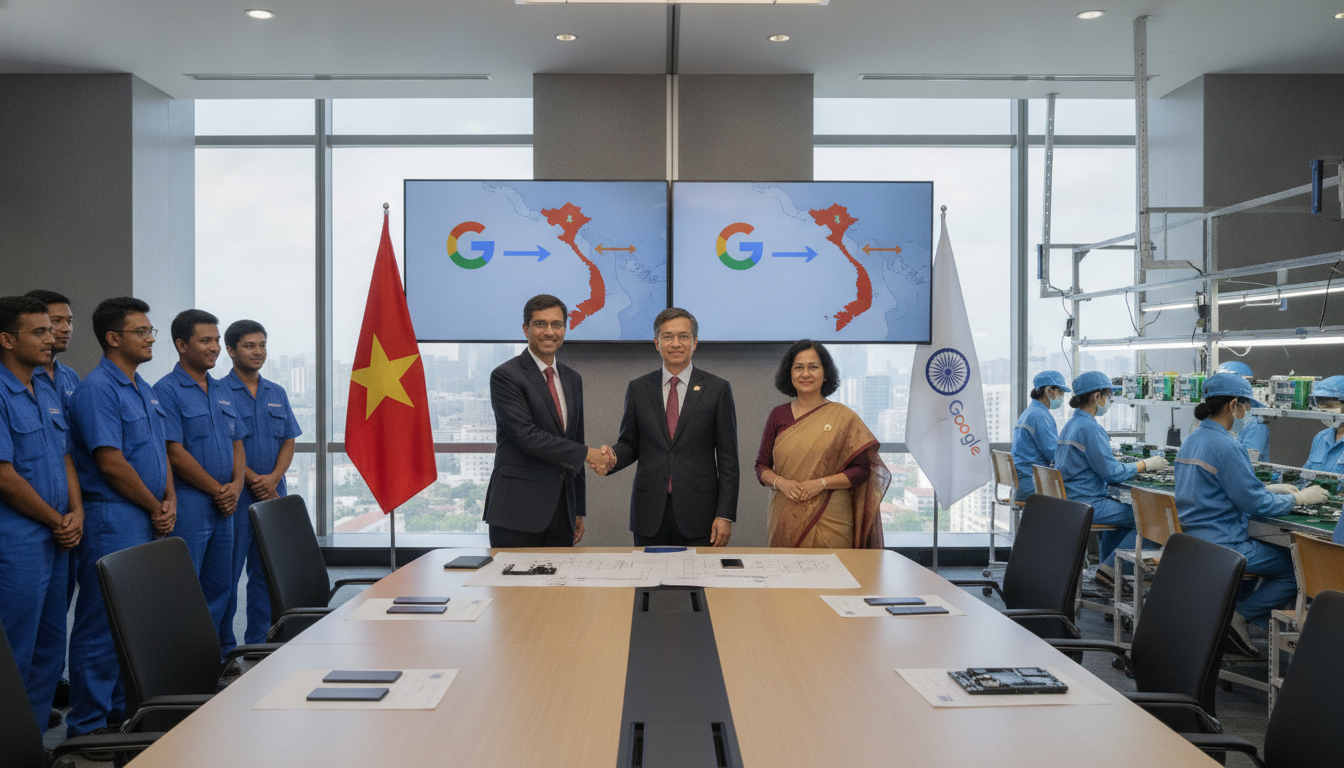
Google Pixel production shift to Vietnam and India set to begin in 2027
Google plans to move Pixel production out of China in 2027, shifting smartphone, watch and earbud assembly to Vietnam and India to boost shipments and reduce geopolitical risk.
Google to move Pixel manufacturing out of China in 2027
Google has informed suppliers that it intends to have all Pixel smartphones, smartwatches and wireless earbuds produced outside of China beginning in 2027. The decision, communicated to manufacturing partners and component vendors, is framed as an effort to diversify production and increase overall smartphone shipments.
Company officials cited a mix of commercial and strategic reasons for the change, including closer alignment with key markets and reduced exposure to supply disruptions linked to US–China tensions. Suppliers contacted by industry sources said Google plans a phased transition that will shift assembly lines and related operations over the coming 12–18 months.
Production to concentrate in Vietnam and India
Industry sources said Google is directing much of the new production capacity toward Vietnam and India. Both countries have stepped up efforts to attract electronics manufacturing with tax incentives, investment facilitation and expanded industrial parks tailored for mobile device assembly.
Vietnam’s established electronics hubs and a growing skilled workforce make it an attractive near-term option for ramping up phone production. India, meanwhile, offers scale and government-backed incentives designed to accelerate local assembly and component sourcing through policies that favor domestic investment.
Suppliers briefed on timelines and capacity changes
Multiple suppliers reported receiving detailed briefings on implementation timelines, tooling transfers and quality-control expectations. Companies involved in parts and subassembly were told to prepare for staged relocation of lines and to coordinate logistics for new export channels.
The transition will require substantial retooling, workforce training and certification processes to meet Google’s specifications. Suppliers cautioned there will be short-term bottlenecks as factories increase throughput and new vendor relationships are established.
Impact on shipments and product roadmap
Google’s move is explicitly linked to plans to increase smartphone shipments, according to those briefed on the company’s strategy. Executives aim to scale Pixel volumes by securing more geographically diversified manufacturing capacity and shortening lead times to major markets.
Analysts say the strategy could help Google be more responsive to demand fluctuations and reduce the cost and complexity of cross-border logistics. However, scaling production fast enough to meet aggressive shipment targets will depend on supplier readiness and the speed at which Vietnam and India can expand capacities without compromising quality.
Geopolitical drivers and corporate risk management
The shift reflects growing corporate efforts to mitigate geopolitical risk amid strained US–China relations and ongoing trade uncertainties. For US-headquartered tech companies, moving production out of China has become part of broader contingency planning to insulate supply chains from policy shifts and export controls.
Officials and industry observers note that while the move reduces certain risks, it introduces other challenges such as new regulatory environments and potential local content requirements. Firms will need to balance geopolitical diversification with operational continuity and cost considerations.
Challenges for Chinese factories and regional supply chains
A full relocation of Pixel assembly away from China would be a notable setback for factories and suppliers that have built expertise around smartphone production in recent decades. Chinese assemblers and component makers may face order reductions and pressures to pivot to other customers or product categories.
At the same time, the broader ecosystem will adapt as suppliers reconfigure networks, invest in alternative sites, or deepen partnerships with local manufacturers in Southeast Asia and South Asia. The pace of that adjustment will shape competitive dynamics in the global electronics industry over the next several years.
Google’s publicly traded status means any major supply-chain moves will be monitored by investors and market analysts, who focus on cost implications and potential impacts on product availability. The company has not released detailed shipment targets tied to the relocation, leaving market watchers to assess outcomes from supplier disclosures and factory output reports.
Next steps and monitoring of the transition
Google’s next steps will likely include finalizing contracts with assembly partners, completing pilot production runs in new facilities, and coordinating with vendors to secure component flows. Regulatory approvals, workforce training and logistics planning will be critical before full-scale production begins in 2027.
Governments in Vietnam and India are expected to continue offering incentives to secure long-term manufacturing commitments from global tech companies. Observers say close monitoring of initial production quality and shipment metrics will indicate how quickly Google can meet its goals and whether the transition will affect product launch schedules or pricing.
The move underscores a wider industry trend toward diversification of electronics manufacturing, as major technology firms realign supply chains to reduce reliance on single-country production hubs and adapt to an increasingly fragmented global trade environment.

