
Japan to Revise National Security Documents by December 31, 2026 as Drones and AI Transform the Battlefield
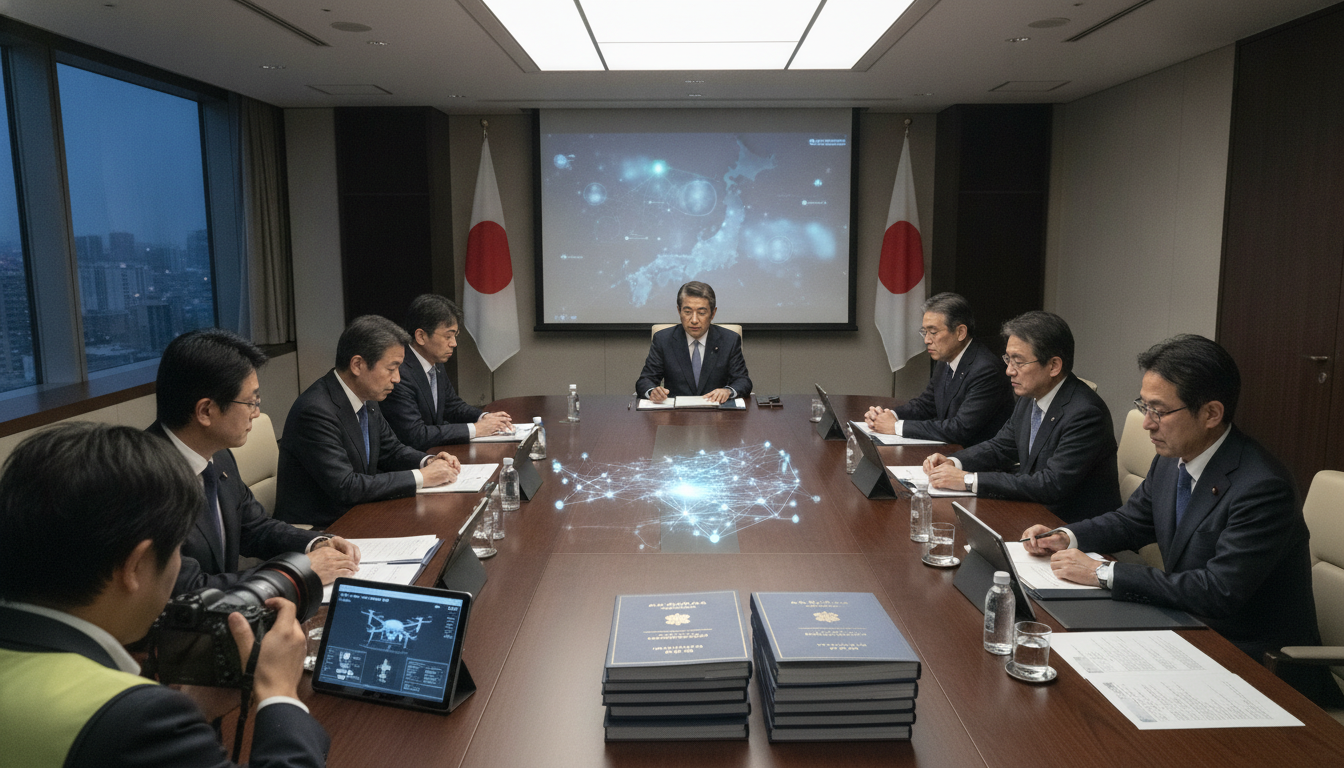
Japan will revise its three main national security documents by December 31, 2026 to respond to emerging threats from drones, artificial intelligence and other battlefield technologies, officials said.
Japan will revise its three main national security documents by December 31, 2026 in response to rapid technological changes that have altered the character of conflict. Government and defense ministry officials said the update aims to bring doctrine, acquisition plans and legal guidance into line with threats posed by drones, autonomous systems and advanced cyber and information operations. The decision follows internal reviews begun after the publication of the current documents in 2022 and reflects new operational realities highlighted in recent exercises and intelligence assessments.
Cabinet to Update Three Core Security Papers
The government has signaled that the National Security Strategy, the National Defense Program Guidelines and the Medium-Term Defense Plan will all be revised before the end of the calendar year. Officials described the process as a coordinated rewrite rather than piecemeal amendments, intended to ensure consistency across strategy, force posture and procurement priorities.
Cabinet-level officials will oversee the drafting and are expected to consult the Ministry of Defense, the Self-Defense Forces and intelligence agencies. Legal advisers and experts in emerging technologies will be invited to contribute to sections on rules of engagement, command-and-control and civilian protections.
Drones and AI Reshape Combat Calculus
Officials say unmanned aerial systems, autonomous weapons concepts and artificial intelligence have fundamentally changed how risks are assessed on the modern battlefield. These technologies reduce decision times, expand surveillance reach and complicate attribution, prompting a reappraisal of deterrence, rapid response and resilience measures.
The new documents will address sensor-networked operations, algorithmic targeting support and counter-drone capabilities as central elements of national defense. Policymakers are also examining how to regulate and integrate commercial-off-the-shelf AI tools used for logistics, intelligence analysis and electronic warfare support.
Adjusting Force Posture and Procurement
The revisions are expected to accelerate procurement of counter-UAS systems, electronic warfare capabilities and resilient communications infrastructure. Defense planners are prioritizing interoperability with U.S. forces and investing in systems that can be rapidly updated as software-defined functions evolve.
Budgetary shifts will likely be outlined in the Medium-Term Defense Plan, with an emphasis on modular platforms and unmanned systems that can operate in dispersed and contested environments. Officials caution that acquisition timelines must balance speed with oversight, particularly where autonomy and lethal effects intersect.
Domestic Debate and Legal Considerations
The government faces legal and political questions as it adapts doctrine to new technologies, including the circumstances under which autonomous systems may be deployed. Lawmakers and legal scholars are pressing for clearer rules on human oversight, accountability and compliance with international humanitarian law.
Civil society groups have called for transparency in how risk assessments are conducted and how civil liberties will be protected in an era of expanded surveillance. The Cabinet is expected to publish explanatory materials alongside the revised documents to outline legal rationales and safeguards.
Regional Security and Alliance Coordination
Tokyo frames the rewrite in part as a response to a more volatile regional security environment, and officials emphasize the need for closer coordination with allies. The revisions will reportedly consider joint logistics, shared situational awareness, and combined operations doctrine with the United States and other partners.
Diplomatic channels in Tokyo and allied capitals have already begun discussions about interoperability standards and information-sharing protocols. Analysts say harmonizing doctrine will be essential to deter escalation and ensure cohesive responses to hybrid and gray-zone threats.
The government plans to circulate draft language to key ministries and alliance partners in the coming weeks and to hold public briefings after Cabinet approval. The revised security documents will set policy direction through the next multi-year planning cycle and shape procurement and operational choices well beyond 2026.

