
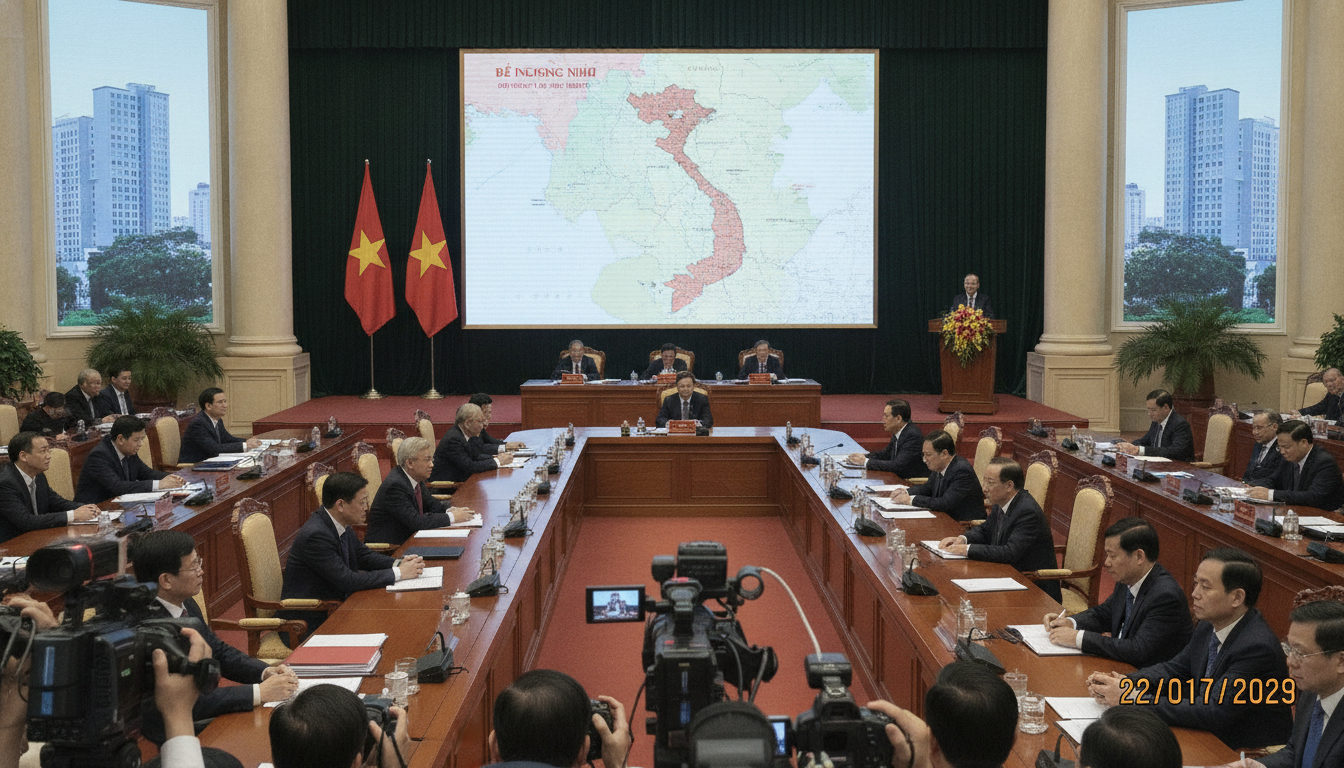
Bac Ninh and Quang Ninh to Become Centrally Governed Cities in Vietnam’s New Investment Plan
Vietnam to elevate Bac Ninh and Quang Ninh to central government-run cities to accelerate investment, expand Samsung manufacturing, and bolster Ha Long Bay tourism.
Vietnam’s government has proposed elevating Bac Ninh and Quang Ninh to centrally governed city status, a move designed to fast-track investment and deepen industrial development in two of the country’s most important regions. The plan specifically aims to strengthen the Samsung manufacturing hub in Bac Ninh and to leverage Quang Ninh’s tourism economy around Ha Long Bay. Hanoi officials say the reclassification is part of a broader strategy to create new national growth poles and attract higher-value foreign direct investment.
Plan to Elevate Bac Ninh and Quang Ninh
The central government proposal would give Bac Ninh and Quang Ninh the administrative standing of centrally governed cities, placing them on a similar footing to Ho Chi Minh City and Hanoi. Proponents argue the change will speed approvals, increase budgetary transfers, and enable larger-scale infrastructure projects. Officials in Hanoi describe the move as a means to decentralize decision-making and better coordinate regional industrial and tourism strategies.
Local leaders in Bac Ninh and Quang Ninh have publicly supported the initiative, saying the status upgrade will allow them to negotiate directly with central ministries on land use and investment incentives. Business groups welcomed the proposal as a signal of policy stability that could encourage longer-term factory investments and higher-value projects. The formal approval process will require central government endorsement and parliamentary ratification before the new status takes effect.
Samsung and Manufacturing Expansion in Bac Ninh
Bac Ninh has emerged as Vietnam’s largest exporting locality, anchored by major electronics manufacturers, notably Samsung, and the city’s upgrade aims to cement that role. Backers expect centrally governed status to facilitate faster construction of factories, logistics hubs, and worker housing, reducing bottlenecks that have slowed recent expansions. Investors say clearer administrative powers and streamlined procedures could lower lead times for approvals and import-export licensing.
Industry analysts note that while Samsung’s presence is already significant, the company has signaled interest in diversifying its regional supply chain and expanding local production capacity. A higher administrative status could also help Bac Ninh attract suppliers of advanced components, enabling a deeper integration into global electronics value chains. Local workforce development and vocational training programs are expected to become higher priorities as the region pursues more sophisticated manufacturing projects.
Quang Ninh’s Tourism and Infrastructure Ambitions
Quang Ninh’s economy combines heavy industry, ports and one of Vietnam’s most famous tourist assets, Ha Long Bay, and central status is intended to unlock investments across all three. Planners argue that elevated governance will expedite transport links, airport expansion, and coastal infrastructure to support both cargo throughput and international tourism arrivals. The move is pitched as a way to balance industrial growth with environmental protection measures for sensitive coastal areas.
Tourism operators and conservation groups have urged careful planning to prevent overtourism and to safeguard Ha Long Bay’s UNESCO-listed values. Authorities say the new governance framework would provide the legal tools to enforce stricter environmental standards and to channel tourism revenues into conservation projects. A coordinated development plan is expected to include regulations on port expansion, cruise operations, and shoreline construction.
Economic and Investment Implications
Economists say the proposed status change could recalibrate investor perceptions of Vietnam by creating clearly defined growth poles outside the two largest cities. The designation may increase fiscal transfers and permit local issuance of development bonds, enabling larger infrastructure projects without immediate dependence on central funding. For foreign investors, clearer administrative authority and expedited permitting could reduce uncertainty around greenfield projects and expansions.
However, analysts caution that administrative reform alone will not guarantee sustainable growth without complementary policies on land rights, labor training and regulatory transparency. Some provincial businesses worry that centralization of decision-making powers could also concentrate authority and reduce local flexibility. Observers say the success of the initiative will hinge on detailed legal instruments and timely implementation of promised reforms.
Governance, Legal Steps and Timeline
Elevating a province to a centrally governed city requires several legal and procedural steps, including cabinet approval and changes to national administrative law. Hanoi has indicated a desire to move quickly, framing the proposal as part of a larger effort to rebalance development across the Red River Delta and the north-eastern coast. Exact timelines remain unclear, and parliamentary debate will determine whether the two provinces meet the fiscal, population and infrastructure thresholds required for the upgrade.
Officials have begun preliminary consultations with central ministries on budgetary formulas and the transfer of authority for planning, land administration and public investment. International development partners and multilateral lenders may be engaged to finance infrastructure projects tied to the status change. Transparency advocates are calling for public disclosure of transition plans to allow businesses and residents to prepare for changes in taxation, land policy and public services.
The government’s proposal to elevate Bac Ninh and Quang Ninh reflects a strategic push by Hanoi to create new national hubs that combine industrial capacity with tourism and port infrastructure. If approved, the reclassification could reshape investment flows in northern Vietnam and provide a stronger institutional platform for long-term economic development. The outcome will depend on legislative approval and how effectively the new city administrations implement the reforms and safeguards promised under the plan.

