
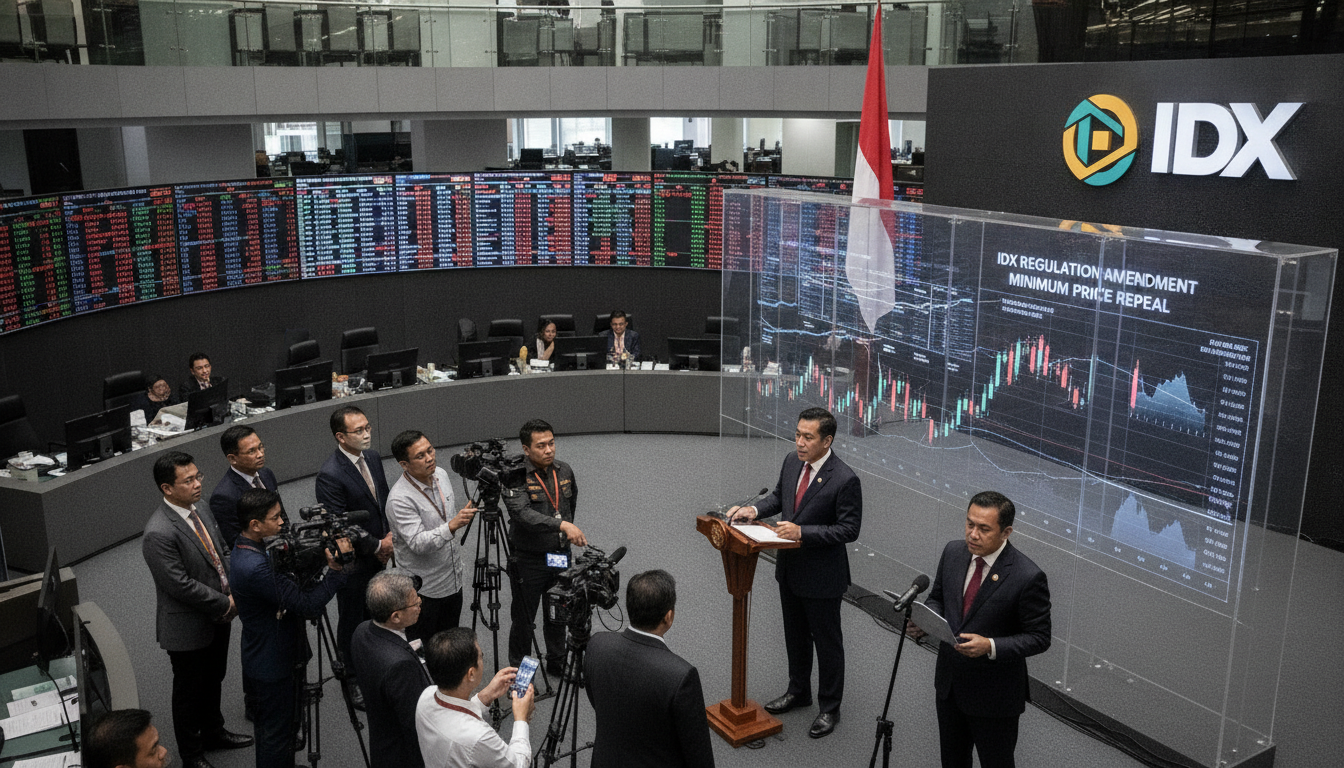
Indonesia Stock Exchange to remove 50 rupiah minimum share price to boost liquidity
Indonesia Stock Exchange to drop 50 rupiah minimum share price to boost liquidity and let prices reflect valuations, the IDX publicly said on August 21, 2026.
The Indonesia Stock Exchange announced plans on August 21, 2026 to scrap the 50 rupiah minimum share price rule, a move the exchange says is intended to improve liquidity and allow share prices to more accurately reflect market valuations. IDX President Director Jeffrey Hendrik confirmed the exchange has been consulting domestic securities firms, asset managers and global investors about the proposal. No implementation date was provided as the exchange continues to collect feedback and assess system readiness.
Scope of the proposed change
The existing regulation sets a floor of 50 rupiah on quoted share prices, effectively limiting trading in lower-priced ticks across the bourse. Under the proposal announced by the Indonesia Stock Exchange, that nominal floor would be removed to permit trades at prices below 50 rupiah, subject to final rulemaking and operational checks. The exchange has not disclosed whether other price band or tick-size adjustments will accompany the change.
Consultations with domestic and global participants
IDX officials said they held discussions with the Association of Indonesian Securities Companies and the Indonesian Investment Managers Association to solicit industry input. Jeffrey Hendrik also told reporters the exchange had briefed global investors, indicating the proposal is receiving attention beyond domestic market participants. The exchange emphasized it is still gathering feedback and has not settled on a formal timetable for any rule change.
Operational readiness and technical testing
Officials at the Indonesia Stock Exchange said they are assessing trading-system readiness before moving ahead, reflecting concerns about orderly trading at lower price levels. The exchange will need to test order-matching engines, tick-size calculations and surveillance tools to ensure they can process higher volumes of low-price trades without disruption. Hendrik declined to provide a timetable, saying the implementation date will depend on results from these technical assessments and industry feedback.
Potential benefits for liquidity and price discovery
Advocates of the reform argue that removing the 50 rupiah floor could make it easier for investors to trade micro-cap and low-priced securities, potentially increasing turnover in segments that have been thinly traded. By allowing quotes to fall below the current minimum, the Indonesia Stock Exchange aims to enhance price discovery so that market prices better reflect supply-and-demand dynamics. Improved liquidity in smaller names could also attract new retail and institutional interest in previously sidelined issuers.
Risks, investor protection and market surveillance
Market participants cautioned that lower price thresholds can increase volatility and may expose less sophisticated investors to larger percentage swings in value. Securities firms and regulators will likely need to consider enhanced surveillance, stricter market-maker obligations or revised disclosure rules to guard against manipulation. The exchange’s emphasis on system readiness signals awareness of these risks, but it has not outlined specific investor-protection measures tied to the proposal.
Implications for small-cap issuers and market structure
If implemented, the change could meaningfully alter trading dynamics for micro-cap companies that trade near or below the current floor, possibly reducing the need for share consolidations or other corporate actions aimed at lifting nominal prices. Brokers and fund managers will be watching for adjustments to order execution practices and liquidity provision models. The broader market structure — including tick-size regimes, order-routing and transaction-cost calculations — may also be reviewed to align with lower permitted price levels.
The Indonesia Stock Exchange said the initiative is part of a wider effort to modernize market infrastructure and support deeper, more efficient capital markets. As the exchange continues consultations and technical testing, investors and intermediaries will be looking for a clear timetable and details on accompanying safeguards before adjusting trading strategies or product offerings.

