
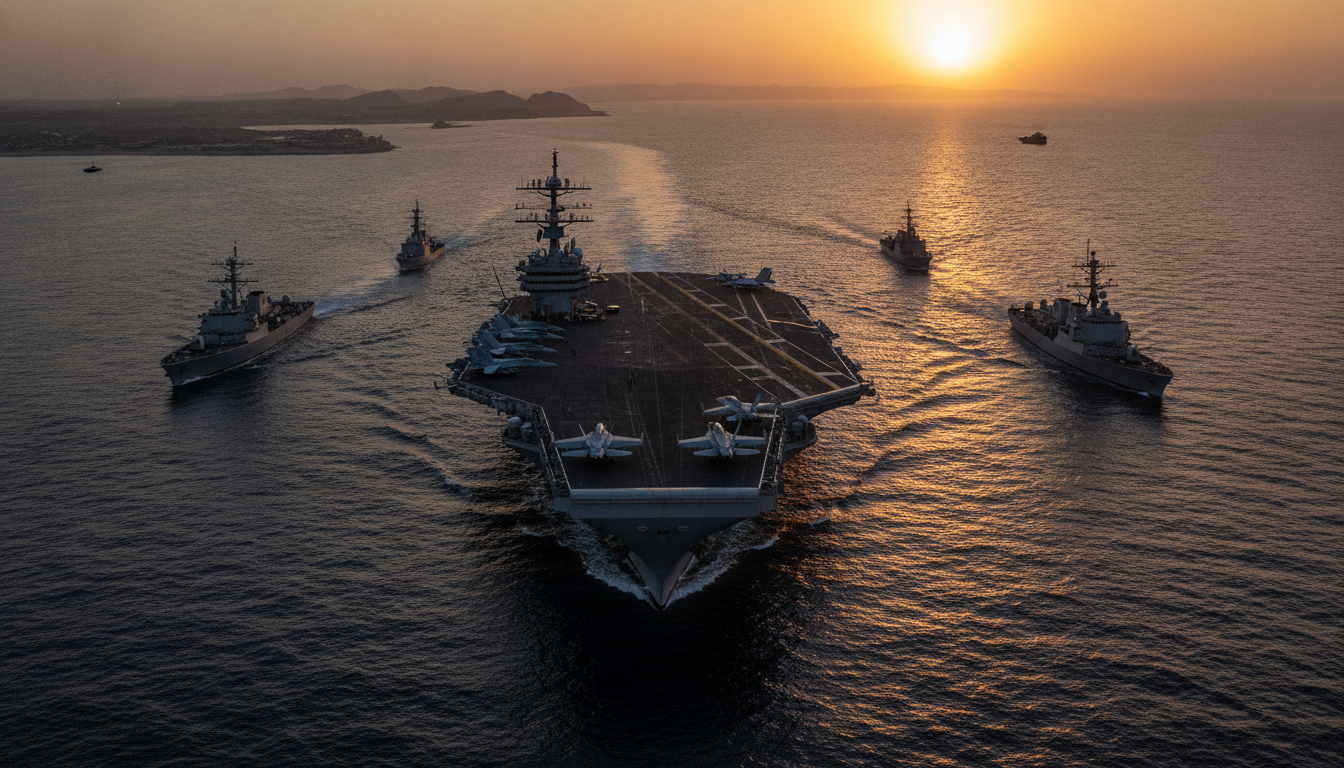
USS George Washington Deployed to Middle East as Iran Crisis Deepens
USS George Washington arrives in Middle East waters on Aug. 19–20, 2026 to begin operations amid the Iran crisis, reinforcing U.S. presence after its 2024 Yokosuka deployment.
Carrier Arrives in Middle East Waters
The USS George Washington arrived in the Middle East on Aug. 19, 2026 and began operations in regional waters as hostilities involving Iran continued, U.S. Central Command said on Aug. 20. The deployment places the forward-deployed carrier in a theater where tensions have prompted heightened naval activity and surveillance by multiple countries. The carrier’s arrival follows a series of incidents in the Gulf of Oman and nearby seas that have raised international concerns about the security of commercial shipping lanes.
Central Command Confirms Operational Start
Central Command reported that USS George Washington has commenced operations in the area and will carry out missions consistent with protecting U.S. forces and maintaining maritime security. The statement emphasized routine operational posture while noting the carrier’s presence is intended to deter further escalation and reassure partners. Officials described the deployment as part of a broader set of U.S. force movements designed to respond to unfolding developments related to Iran.
Yokosuka Forward-Deployment and Force Posture
The carrier was forward-deployed to Yokosuka, Japan, in 2024 and has since operated regularly in the Indo-Pacific with allied navies. That prior forward-deployment gave the United States the logistical baseline and crew readiness to surge the USS George Washington into the Middle East on short notice. The carrier’s movements reflect an ability to shift major naval assets between theaters as strategic circumstances evolve.
Transit Through the Arabian Sea and Strike Group Activity
Photographs show the USS George Washington transiting the Arabian Sea on Aug. 20, 2026 as part of its initial maneuvering into area operations. The carrier is operating with escort vessels and an embarked air wing, enabling sustained flight operations and surveillance across a broad maritime area. Such strike group activity typically includes air patrols, intelligence-gathering sorties, and coordination with regional partners to monitor potential threats to commercial and military vessels.
Impact on Regional Security and Commercial Shipping
Analysts say the presence of a U.S. aircraft carrier group can both deter attacks and complicate escalation dynamics, depending on how all parties respond. Shipping firms and insurers have grown increasingly attentive to naval movements after recent incidents near regional chokepoints, and the carrier’s deployment may help stabilize merchant route security in the short term. Still, the addition of large military assets into a tense environment raises risks of miscalculation and underscores the importance of communication channels among navies.
Allied Coordination with Japan and Other Partners
The USS George Washington’s ties to Yokosuka underscore the U.S.-Japan security relationship and signal Tokyo’s indirect logistical support for U.S. naval operations. Since its 2024 forward deployment, the carrier has conducted extensive joint exercises with the Japan Maritime Self-Defense Force, building interoperability that can be leveraged during contingencies. Washington has also emphasized coordination with other regional partners to align maritime domain awareness and convoy protection efforts where necessary.
The carrier’s deployment will be closely watched in Tokyo, capitals across the region, and by commercial interests that depend on the safe passage of goods through adjacent sea lanes.
Military planners say the immediate objectives are surveillance, deterrence and the ability to respond rapidly if attacks on vessels or personnel occur. Central Command’s public notice of operations seeks to balance transparency with operational security while signaling sustained U.S. commitment to regional stability.
Intelligence and diplomatic channels will likely remain active as nations seek to prevent further incidents from spiraling into wider confrontation. Naval commanders will continue to adjust patrol patterns and rules of engagement as circumstances change.
The coming days will reveal whether the USS George Washington’s presence reduces the frequency of maritime incidents or merely shifts the tempo and geography of regional tensions.

