
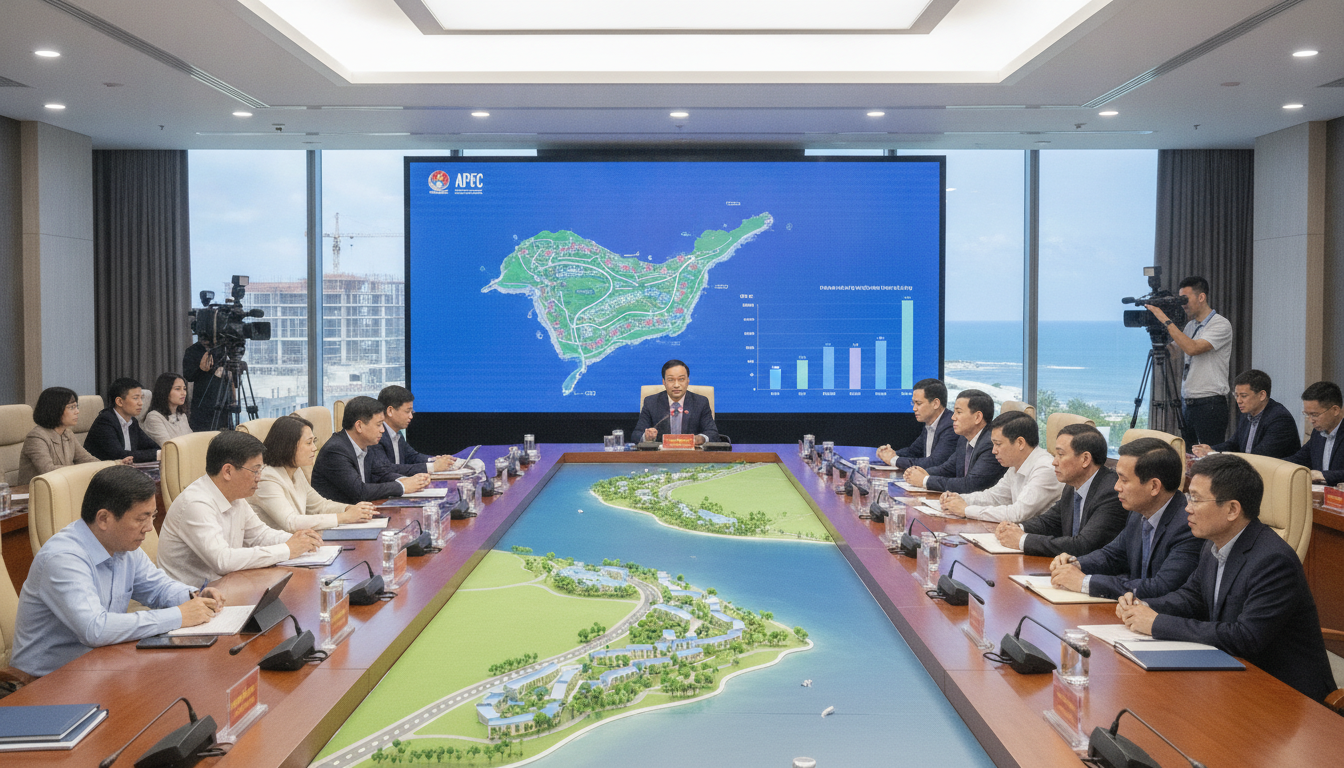
Phu Quoc Launches $5 Billion Build-Out of Airports, Hotels and Convention Centers Ahead of APEC 2027
Phu Quoc begins a $5 billion tourism and infrastructure push — new airports, hotels and event venues aim to prepare the island for APEC in November 2027.
Vietnam’s Phu Quoc island has entered a rapid construction phase as authorities and private developers accelerate more than $5 billion in projects to ready the resort for the Asia-Pacific Economic Cooperation (APEC) leaders’ meeting scheduled for November 2027. Excavators and cranes now dominate former beaches and farmland as the government pushes major upgrades to transport links, hospitality capacity and long‑planned event venues. Officials say the build-out aims to emulate the success of earlier coastal developments, while private groups position themselves to capture surging tourism demand.
Rapid construction surge on Phu Quoc
The pace of work on Phu Quoc has intensified in recent weeks with visible expansion at multiple sites across the island. Government contractors and private firms are working around the clock on runways, hotel complexes and cultural centers to meet fixed timelines. Local officials have framed the programme as a strategic national priority tied to Vietnam’s diplomatic hosting duties.
Developers report supply chains and labour have been mobilized from across the country to hit milestones, and signage at several sites lists projected completion dates tied to the APEC schedule. The visible urgency has drawn attention from investors and travellers, prompting fresh inquiries about long‑term tourism capacity after 2027.
Scale and financing of the $5 billion programme
The investment package combines state capital with private funding, concessions and long‑term leases for hospitality and service operations. Authorities estimate that public infrastructure works — including airport upgrades and road links — will comprise a substantial share of the public commitment, while large private conglomerates are financing hotels and entertainment venues. The total announced figure exceeds $5 billion when planned projects and ancillary spending are aggregated.
Officials have not released a detailed breakdown of funding by project line, but industry sources say a mix of equity, debt and forward bookings underpins the largest hotel developments. Analysts caution that transparent accounting and stringent oversight will be key to managing fiscal risk as projects accelerate.
Major projects: airports, hotels and APEC-ready venues
Planned works include upgrades to air connectivity, significant new hotel capacity and a convention and performing arts center designed to host international delegations. The convention facility and adjacent performing arts venue are among the most prominent projects, built to international event standards and marketed as legacy assets beyond the summit. Airport improvements are aimed at increasing flight frequency and accommodating larger aircraft to serve anticipated visitor peaks.
Hotel operators are fast‑tracking mixed‑use resorts and business hotels to meet both leisure and conference demand. Developers emphasize that the new inventory will expand the island’s ability to host multi‑day, high‑profile events, but they also note the challenge of filling rooms outside peak diplomatic and festival dates.
Economic benefits and industry expectations
Local and national officials project substantial short‑term job creation in construction, logistics and services, followed by longer‑term growth in hospitality, F&B and retail. Proponents argue that improved transport and event infrastructure will diversify the island’s tourism offerings and raise per‑visitor spending. The Ministry of Transport and tourism authorities expect a marked increase in international arrivals once the upgraded facilities are fully operational.
Private sector stakeholders are positioning Phu Quoc as a year‑round destination to reduce seasonality, citing conference tourism as a key revenue stream. Economists, however, note that sustaining growth will depend on consistent demand, effective marketing and integration with wider national transport networks.
Environmental and community concerns
Rapid development has raised concerns among environmental groups and local communities about coastal erosion, habitat loss and strain on freshwater resources. Conservationists warn that the scale of construction could affect mangroves, coral reefs and marine biodiversity that underpin fisheries and ecotourism. Local residents have also voiced worries about displacement, rising land prices and the capacity of municipal services to absorb a sharp population and visitor increase.
Government agencies say environmental impact assessments and mitigation plans are in place for major projects, and officials have pledged monitoring and community consultations. Observers stress that the effectiveness of those measures will be judged by enforcement and by the actions of private developers on the ground.
Lessons drawn from Danang and timeline risks
Officials and developers have repeatedly cited Danang’s earlier development as a model for leveraging international events to accelerate urban and tourism investment. Phu Quoc’s planners are attempting to replicate select elements of Danang’s post‑event growth while seeking to avoid past pitfalls such as uneven local benefits. The tight schedule, however, leaves little room for unexpected delays.
With the APEC summit set for November 2027, the next 15 months will be critical for completing high‑visibility works. Contractors face a compressed timeline, and any setbacks from weather, supply chains or permitting could threaten milestone targets. Observers say contingency planning and transparent reporting will be essential to delivering functional infrastructure for the summit while managing legacy outcomes for the island community.
Phu Quoc’s transformation is now a test of Vietnam’s ability to balance rapid infrastructure delivery with long‑term environmental, social and economic stability as it prepares to host one of the region’s most prominent diplomatic gatherings.

