
AirTrunk Warns Community Backlash Imperils Data Centers in Australia
AirTrunk CEO Robin Khuda warns that growing local opposition and unclear regulation risk the timely rollout of data centers in Australia, urging urgent government action.
Opening remarks at the Nikkei Asia Forum
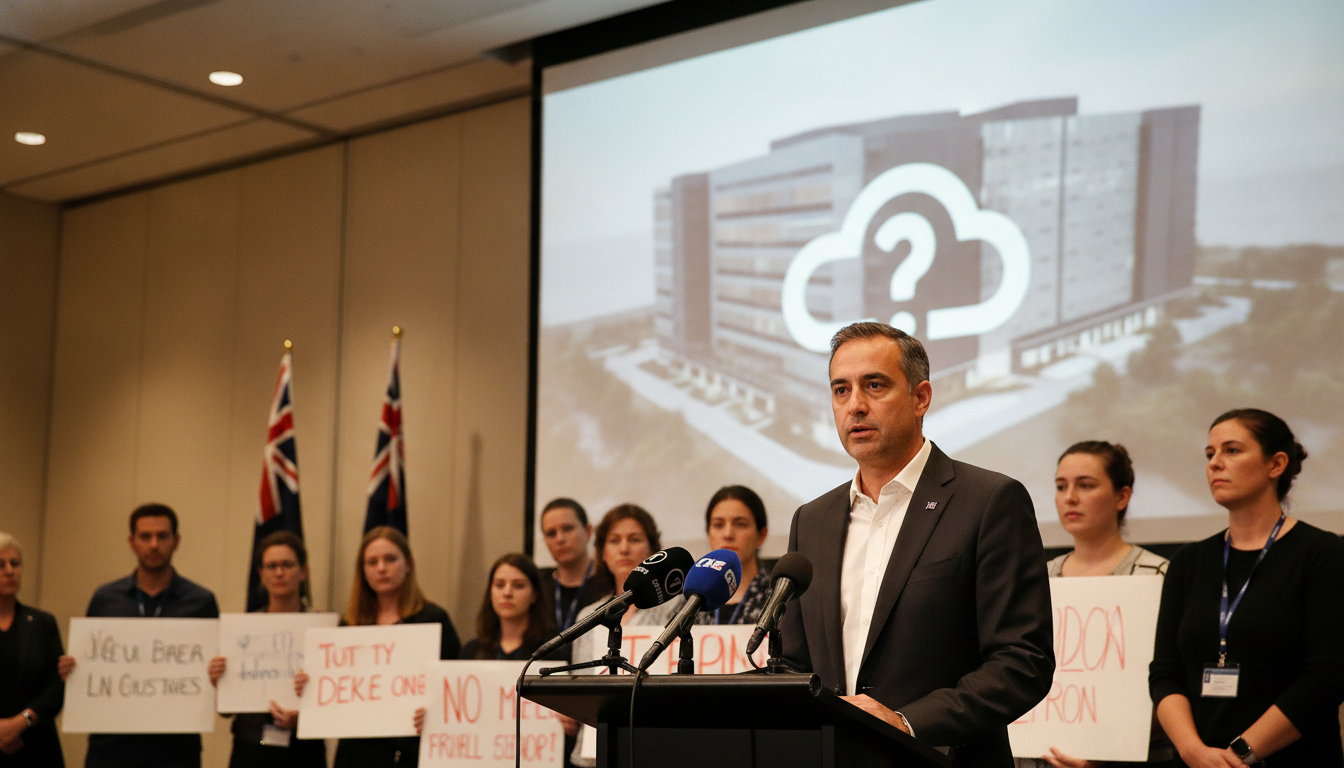
At the Nikkei Asia Forum in Sydney on August 26, 2026, AirTrunk founder and CEO Robin Khuda told delegates that mounting community resistance is one of the biggest threats to the expansion of data centers in Australia. Khuda said developers face not only technical and financial challenges but also social and planning hurdles that can delay or halt projects. He urged federal and state authorities to establish clear, consistent rules to reduce uncertainty and preserve investor confidence.
Community opposition shaping local outcomes
In recent years, proposals for large-scale data centers have encountered vocal neighborhood resistance in multiple states, driven by concerns about noise, traffic and industrialisation of peri-urban land. Local campaigns and legal challenges have slowed approvals and prompted re-examinations of planning permits. Those delays raise costs for operators and can discourage new entrants at a time when demand for digital infrastructure is accelerating across the region.
Regulatory clarity called for by industry
Khuda emphasised that regulatory ambiguity increases the likelihood of disputes and project cancellations, a view echoed by other industry figures at the forum. He called for national guidance that clarifies permissible locations, environmental assessment thresholds and community consultation processes. Consistent rules, he argued, would help align state planning frameworks with the long-term needs of hyperscale facilities and reduce the administrative friction that currently impedes development.
Electricity grid and energy supply pressures
Operators and policymakers alike identify grid capacity and energy sourcing as central constraints for future data center growth in Australia. Hyperscale facilities require substantial, stable power supplies and increasingly seek contracts for renewable energy to meet corporate sustainability targets. Grid upgrades, new transmission lines and clearer mechanisms for large-scale energy procurement are needed to ensure planned sites can be powered without destabilising local networks.
Environmental impacts and community trade-offs
Data centers raise a range of environmental questions that influence local sentiment, from water use for cooling to the visual and land-use footprint of large facilities. Developers highlight job creation, increased regional investment and enhanced digital connectivity as counterbalances to those concerns. Environmental impact mitigation measures — such as advanced cooling technologies, on-site renewables and habitat restoration commitments — are becoming critical components of proposals seeking social licence to operate.
Land supply and planning constraints
Suitable land for data centers is limited by the need for proximity to fibre networks, reliable power and transport access, while avoiding high-cost urban parcels. State planning regimes vary, creating patchwork outcomes for developers seeking consistent approval pathways across jurisdictions. This mismatch has added complexity for companies planning multi-site deployments and for communities assessing cumulative impacts of clustered development.
Policy tools to accelerate responsible rollout
Industry leaders recommended a suite of policy responses to smooth the expansion of data centers in Australia, including a national planning framework, clearer environmental standards tailored to data infrastructure, and mandated consultation protocols that engage host communities early. Other proposals include facilitating grid investment by streamlining approvals for transmission projects and creating incentive programs that reward co-location near existing industrial infrastructure to minimise new land conversion.
Australia’s ambitions to become a regional hub for cloud services and digital investment depend on resolving these intersecting issues, the forum heard. Investors and operators say predictable policy settings and transparent processes would unlock substantial private capital while protecting local interests. Without such clarity, companies may reroute projects to jurisdictions with faster, more certain approval regimes.
The balance between rapid digital infrastructure growth and community acceptance will shape where and how future data centers in Australia are built, and the coming months will be critical as governments, industry and local stakeholders negotiate the rules that will govern expansion.

