
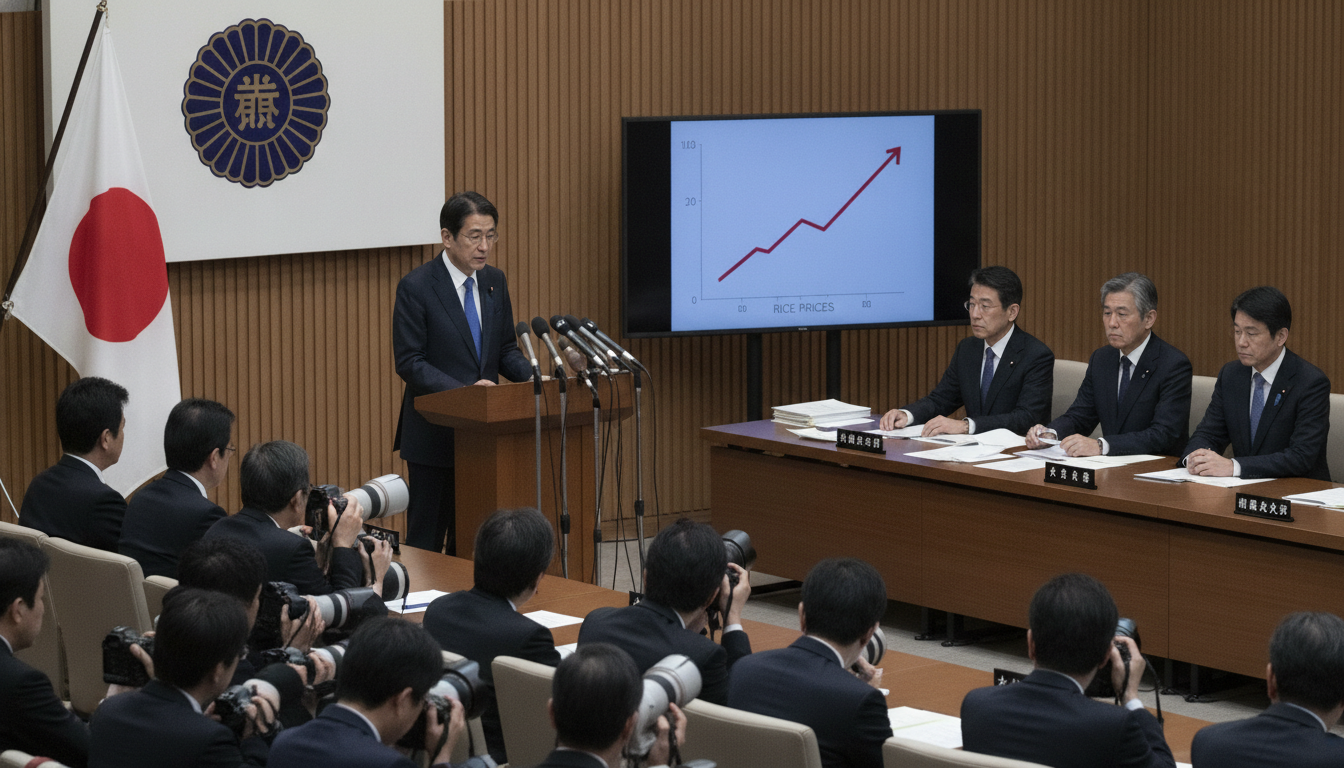
Japan to Launch Government Rice Buyback to Stabilize Falling Prices
Tokyo plans a government rice buyback to tighten supply after inventories swelled and rice prices fell, with the Ministry of Agriculture, Forestry and Fisheries moving to repurchase stored rice.
MAFF to Buy Back Government Rice Reserves
The Ministry of Agriculture, Forestry and Fisheries (MAFF) has decided to proceed with a government rice buyback to remove part of the surplus released during the "Reiwa rice riot" under the Ishiba administration. Officials say the measure aims to reduce oversized inventories and support farmgate prices as the domestic rice market sees downward pressure. Final coordination is underway with the Prime Minister’s Office over timing and the balance with broader price-stability policies.
The plan reflects a shift in policy thinking within MAFF as rice stocks expanded following earlier government releases intended to ease consumer access. Ministry sources say the buyback will be staged rather than immediate and sweeping, allowing authorities to monitor market responses and adjust volumes.
Prime Minister’s Office Weighed Inflation Risks
Senior officials at the Prime Minister’s Office were initially cautious, arguing that an early repurchase could conflict with efforts to curb inflationary pressures on consumers. That stance softened after market forecasts signaled the potential for a marked decline in rice prices, prompting a reassessment by Kantei aides. A senior government official described the current position as support for the buyback policy while seeking clear safeguards against unintended price impacts elsewhere in the economy.
Coordination between MAFF and the Cabinet Office will focus on reconciling agricultural support with the government’s overall price and economic-management goals. Analysts expect discussions to include the sequencing of repurchases and communication strategies to avoid market disruption.
Buyback Volume, Budget and Timing
MAFF will present the buyback proposal to a rice policy advisory council convening on September 2, 2026, where members will be asked to review the purchase plan and its parameters. The government allocated funding in the initial 2026 fiscal-year budget sufficient to repurchase about 150,000 tons of stockpiled rice, and MAFF intends to use that figure as the baseline for an initial phase. Officials said the ministry prefers a phased approach—beginning with the budgeted 150,000 tons and scaling purchases as needed based on price movement and inventory assessments.
Key decisions to be made at the council include the precise purchase price, the allocation of volumes across prefectures and rice types, and the timing of deliveries back into government storage. Those technical details will determine how effectively the buyback reduces market oversupply and supports prices for producers.
Market Conditions Driving the Intervention
Rice inventories swelled after the government released reserves in response to the earlier "Reiwa rice riot," a disruptive episode that prompted emergency distribution to consumers. With new rice entering the market and demand not keeping pace, trading prices have trended downward, increasing pressure on farmers’ incomes. MAFF economists warned that continuing price falls could have knock-on effects on production decisions and rural economies.
By reducing the immediate market supply, the buyback aims to re-establish a tighter balance between supply and demand and curb further price erosion. Market watchers caution, however, that structural factors—such as demographic change, shifts in consumption patterns and import dynamics—remain relevant to long-term price stability.
Implications for Farmers, Processors and Consumers
A successful buyback could shore up farmgate incomes for rice producers, at least in the short term, by lifting or stabilizing prices. Farmers’ groups have pressed the government for decisive action as margins shrink and cultivation becomes less viable in some regions. Rice processors and distributors are likely to see contracting volumes available on spot markets, which could alter procurement plans and inventory strategies.
For consumers, the move may translate into slower declines in retail rice prices than would occur without intervention. That trade-off—supporting producer income at the potential cost of higher consumer prices than a fully free market would yield—is central to the cabinet-level deliberations. Officials stressed that the government intends to coordinate the buyback with existing measures to ease cost-of-living burdens where possible.
Next Steps: Consultation and Implementation Roadmap
After the rice policy council meeting on September 2, MAFF plans to announce the initial parameters of the buyback, including the price framework and delivery schedules. The ministry has signaled it will monitor outcomes closely and adjust subsequent purchases depending on price movements and inventories. Implementation will also involve administrative steps to transfer repurchased rice into designated government storage and to ensure transparent accounting of quantities and costs.
Observers say clarity on purchase price and geographic distribution will be crucial for market confidence. The government also faces the task of explaining how the buyback fits into its broader economic strategy to manage inflation while supporting vulnerable sectors.
A phased, closely monitored government rice buyback is now poised to be a central element of Japan’s immediate agricultural policy response, as authorities balance the needs of producers with broader macroeconomic objectives.

