
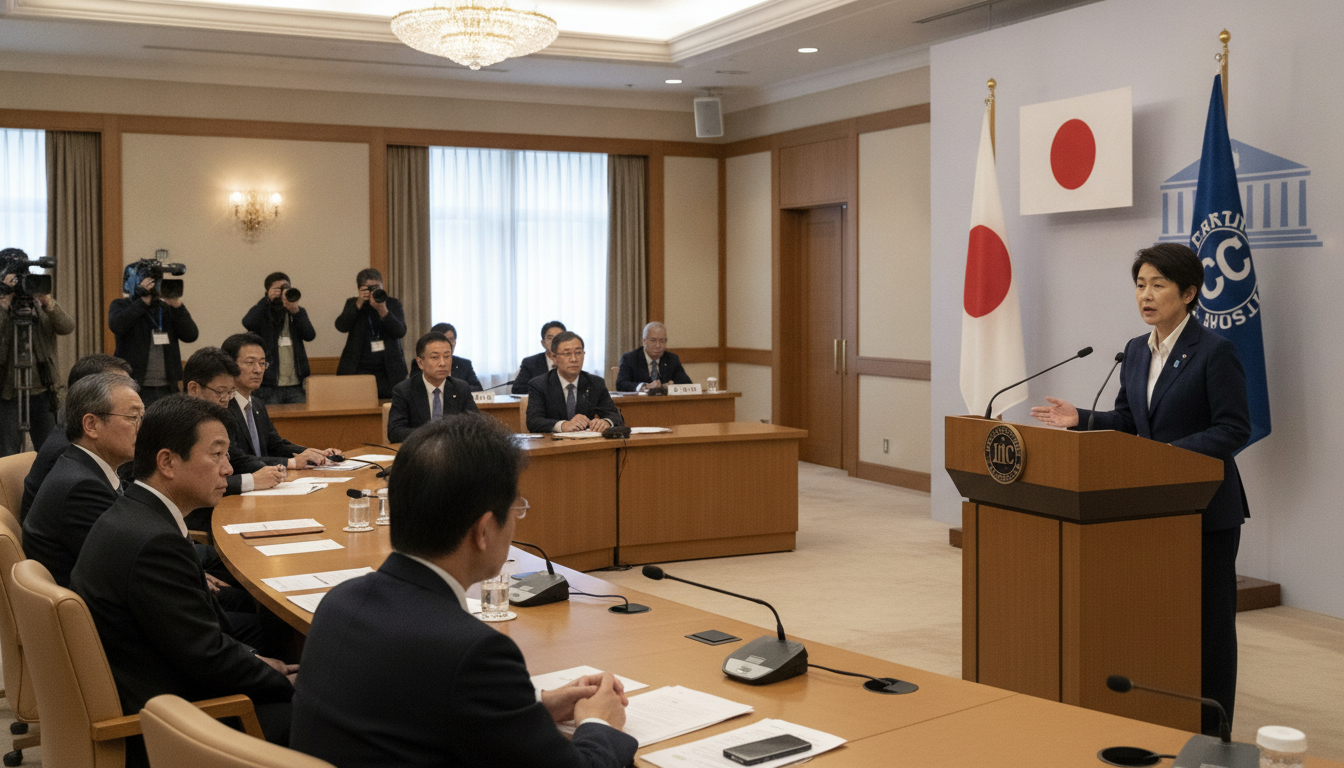
US sanctions on ICC leave prosecutor Tomoko Akane appealing to Japan as court faces moment of truth
ICC prosecutor Tomoko Akane appealed to Japan on August 26, 2026, after US sanctions, warning the measures could hamper the court and urging global backing.
Akane opened an online briefing on August 26, 2026, to respond directly to US sanctions that name her and threaten the International Criminal Court. She framed the measures as a test of whether judicial institutions can withstand political pressure and called for concrete support. The prosecutor said she had received messages of solidarity from several European states and international organizations.
Details of the Japan Press Club briefing
Akane addressed reporters at an event hosted by the Japan Press Club where she outlined the practical and symbolic impact of the sanctions. She emphasized that justice must not yield to force or political intimidation and described the moment as critical for the rule of law. During the session she expressed gratitude for support and at times became visibly emotional.
International institutions and NGOs voice support
According to Akane, representatives from the United Nations, the European Union, legal associations and non governmental organizations communicated immediate backing following the US measures. She said those messages reinforced the ICC’s legitimacy and helped sustain morale among staff and supporters. The signal from multiple capitals underscores concern that the sanctions could set a precedent for targeting international justice actors.
Appeal directed at the Japanese government
Akane explicitly asked Japan to use its position as a US ally to affirm the ICC’s importance and legitimacy while maintaining constructive dialogue with Washington. She said a firm but measured response from Tokyo would strengthen the court and help avoid an escalation of punitive measures. The prosecutor described Japan’s potential assistance as a significant source of support for both her personally and for the institution.
Operational risks if sanctions expand
Legal and financial experts warn that organization wide sanctions could disrupt essential tasks such as investigations, bank transfers and cooperation with national authorities. Akane outlined that if restrictions impede payments or logistical exchanges the ICC could face delays in evidence gathering and witness protection. She warned that operational paralysis would not only affect current cases but could erode long term trust in international justice mechanisms.
Diplomatic responses and possible ripple effects
Diplomats and analysts say the US action has prompted swift outreach by European governments to discourage further escalation and to preserve established international practices. Akane noted direct messages from several European capitals and from international legal communities that urged coordination to preserve the court’s functioning. Observers caution that if sanctions become a tool against international institutions, other states might adopt similar tactics in disputes over accountability.
Legal and institutional stakes for the court
The prosecutor described the present situation as a matter that goes beyond individual pressure and reaches the institutional core of the ICC. She warned that sustained targeting of court leadership could undermine independent investigations and the court’s ability to hold perpetrators accountable. Legal scholars point out that weakening the court would complicate efforts to prosecute grave crimes and could shift burdens back to national systems that may lack capacity or political will.
Paths forward and international monitoring
Akane said she will continue to engage with members states, legal partners and civil society to sustain operational capacity and to seek diplomatic solutions. She urged allies to maintain a careful balance of pressure and dialogue that avoids triggering measures that would further constrain the court. International monitors and legal networks are preparing contingency plans to protect ongoing investigations and to assist affected staff.
The prosecutor’s appeal underscores a broader debate about how powerful states interact with independent international institutions and the risks when political disputes intersect with legal accountability.

