
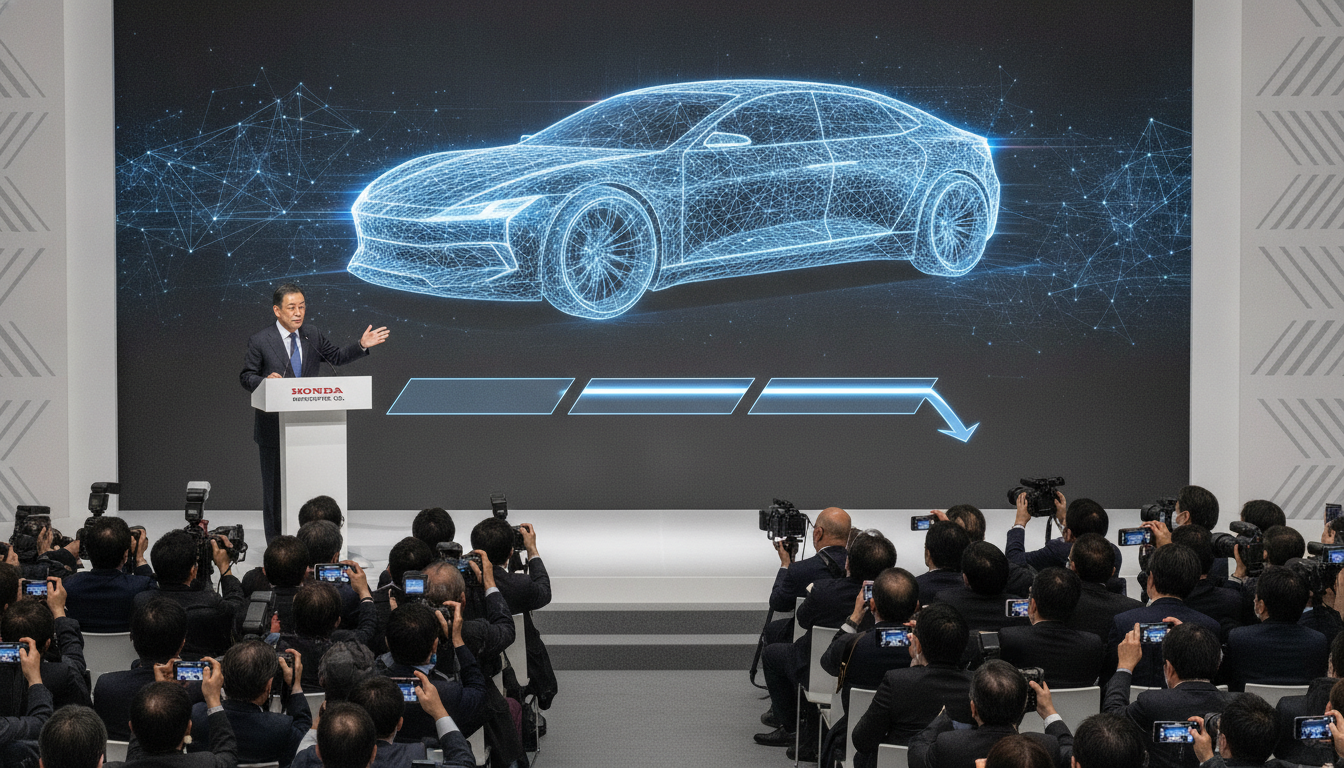
Honda AI vehicle design shortens development cycle to three years
Honda uses AI in vehicle design to cut body development from five years to about three, pairing algorithms with open brainstorming to accelerate innovation.
AI integration announced by Honda Motor
On August 26, 2026, Honda Motor announced it has begun deploying artificial intelligence to assist in designing vehicle bodies, aiming to shorten development cycles substantially. The company says this initiative — described internally as a fusion of algorithmic design and traditional creative workshops — will reduce the typical five-year timeline to roughly three years. Honda framed the move as part of a broader push to accelerate product planning and improve competitiveness as automakers race to introduce new electrified and software-rich models.
Honda representatives emphasized that the shift does not replace human designers but augments them, providing tools to explore a wider range of forms and engineering trade-offs at speed. Company photos and reporting on the effort show engineers and designers working side by side with AI outputs to refine shapes, packaging and performance criteria.
Expected reductions in development time
Honda says the new process will shorten the vehicle development timetable to about three years from the conventional five-year schedule for body design and related integration. That reduction reflects faster early-stage concepting, quicker iteration cycles and the ability to simulate structural and aerodynamic performance earlier in the program. Shorter development windows could allow Honda to refresh model lineups more frequently, respond faster to market trends and compress costs tied to lengthy engineering programs.
Analysts note that compressing a multi-year program into roughly three years will require changes across procurement, validation testing and supplier coordination, since later stages of development are tightly coupled to external partners. Honda has signaled plans to align suppliers and testing milestones with the accelerated cadence to avoid bottlenecks that could offset algorithmic gains.
How the AI tools are being applied
Honda’s approach centers on using advanced computational tools to generate body concepts and validate them in virtual environments before physical prototypes are built. According to company statements, the systems can rapidly propose multiple configurations that meet competing goals such as crash safety, weight reduction and aerodynamic efficiency. These proposals are then evaluated and filtered by human teams for manufacturability and brand identity.
The AI workflows also enable earlier exploration of packaging layouts for electrified powertrains and battery systems, which have different spatial demands than internal combustion platforms. By integrating simulation data on stiffness, crash performance and airflow into the design loop, Honda aims to reduce the number of costly physical iterations and shorten the time from concept to prototype validation.
Preserving design culture amid technological change
Honda has emphasized that the shift to AI-driven methods will be integrated with, not substitute for, its longstanding culture of open brainstorming and collaborative design. Company materials and on-site reporting describe mixed teams of engineers, clay modelers and stylists who use AI outputs as starting points for discussion rather than final answers. Management officials framed the tools as a way to free creative staff from repetitive tasks and let them focus on higher-level aesthetic and user-experience decisions.
Workshops have reportedly been organized where AI-generated proposals are assessed in group sessions, maintaining cross-disciplinary input in early design choices. Honda leaders said this hybrid approach aims to preserve the brand’s design language while harnessing computational speed to test ideas that would previously have required months to assess.
Implications for suppliers and the wider industry
Shorter development cycles driven by Honda’s AI vehicle design initiative are likely to pressure suppliers to tighten lead times and accelerate delivery of components and tooling. Suppliers will need to adapt planning and testing calendars to align with compressed schedules, and some may invest in their own digital tools to keep pace. For rival automakers, Honda’s move represents another example of industry-wide adoption of computational design to reduce costs and time to market.
For consumers, the change could mean faster arrival of refreshed models and quicker adoption of design and technology updates across model lines. Analysts caution, however, that accelerating the front-end of design must be matched by robust validation and manufacturing readiness to avoid quality lapses.
Next steps and expected rollout
Honda has indicated it will expand pilot use of AI across additional vehicle programs following initial internal trials, with cross-functional teams tasked with scaling tools and documenting best practices. The company plans to coordinate more closely with suppliers and testing partners to ensure the downstream processes evolve in step with the faster design cadence. Observers will be watching the first wave of models shaped under the new process to assess whether the projected time savings materialize without compromising durability or safety.
Early public demonstrations and photographs accompanying Honda’s announcement showed designers working alongside generated outputs, underscoring the company’s message that AI is an enabler rather than a replacement. As Honda integrates these systems into routine engineering practice, the move is likely to influence how other manufacturers balance computational speed with hands-on craftsmanship in vehicle design.
Honda is positioning AI-driven vehicle design as a strategic tool to cut development time, increase model turnover and maintain its design identity while meeting tighter market timelines. The company’s next challenge will be translating the faster concept-to-prototype cycle into reliable production schedules and ensuring suppliers and manufacturing lines keep pace with the accelerated rhythm.

