
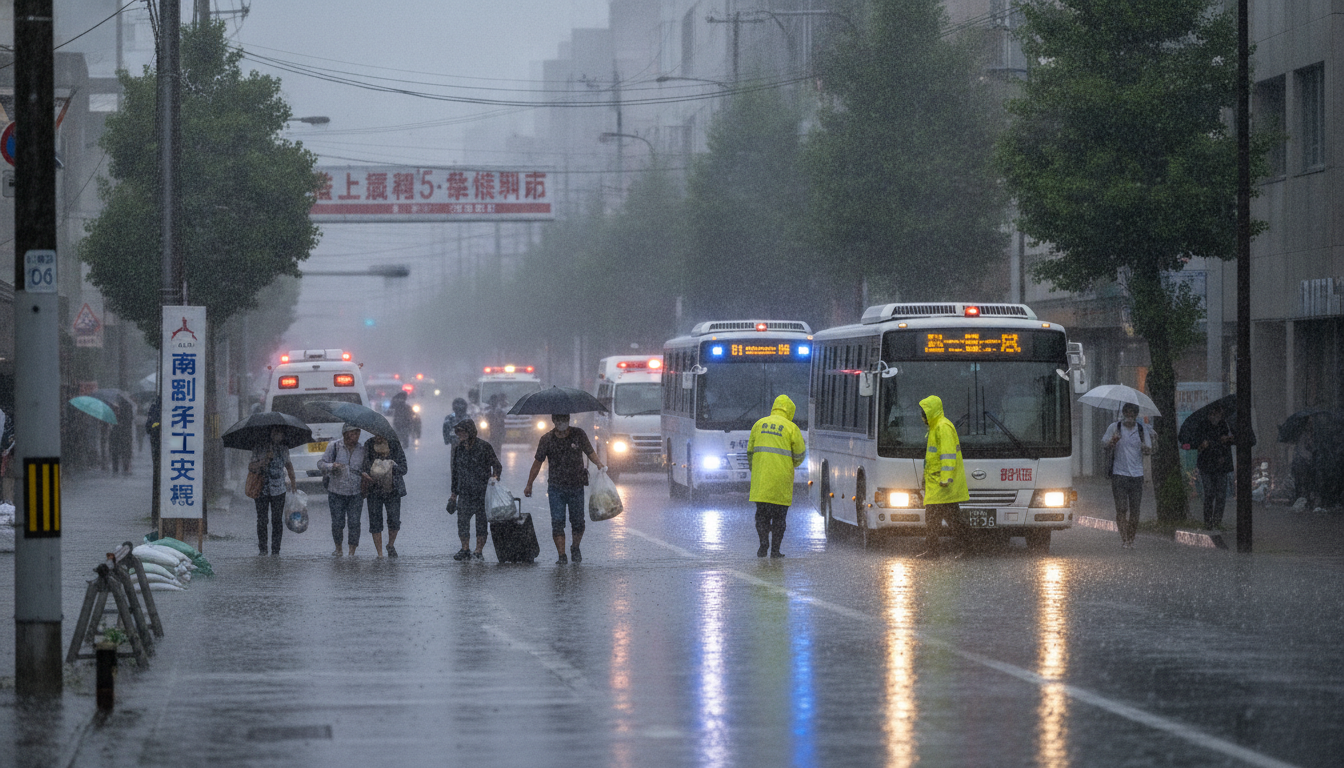
Level 5 heavy rain special warning issued for Toyama and Ishikawa as flooding and evacuations continue
Japan Meteorological Agency issues Level 5 heavy rain special warning for parts of Toyama and Ishikawa; residents urged to secure safety as heavy rain persists through Aug. 28.
The Japan Meteorological Agency (JMA) issued a Level 5 heavy rain special warning at 6:20 a.m. on August 27, 2026, for western Toyama Prefecture and the Noto area of Ishikawa Prefecture, declaring the situation life-threatening and urging immediate action to protect life. The Level 5 heavy rain special warning, the agency’s highest alert, signaled extreme flooding and landslide risk as torrential rain continued across the Sea of Japan coast. Local authorities reported flooded roads and accelerating evacuations in affected municipalities as the storm system remained active.
Areas placed under the Level 5 heavy rain special warning
As of 7:00 a.m. on August 27, the JMA listed Hakui, Shika, Hodatsushimizu and Nakanoto in Ishikawa Prefecture and Himi in Toyama Prefecture among those covered by the Level 5 heavy rain special warning. These municipalities faced immediate threats from overflowing rivers, flash flooding and slope failures given the volume of rainfall reported overnight. Emergency broadcasts and local bulletins were deployed to inform residents in low-lying and landslide-prone areas to move to safe locations without delay.
Photographs and on-the-ground reports showed streets inundated early on August 27, including a passenger car navigating a flooded roadway in Tsubata, Ishikawa, at 7:59 a.m. Local governments stressed that standing water can hide strong currents, submerged hazards and sudden road collapse, increasing the urgency for evacuation. Officials emphasized that residents should not wait for formal evacuation orders if their surroundings become dangerous.
Evacuation orders and shelter operations
Municipal authorities in the affected areas activated evacuation centers and issued evacuation advisories and orders to residents of vulnerable districts. Prefectural disaster management offices coordinated with municipal governments to prioritize elderly residents, people with mobility challenges and those in remote communities for assistance. Where possible, emergency services and volunteer organizations were mobilized to support transportation to shelters and to distribute emergency supplies.
Shelters were set up at schools, community centers and public facilities, with local officials urging people to bring essentials such as medicines, identification and basic hygiene items. Authorities also cautioned about possible shelter overcrowding and advised that residents follow guidance on social distancing and infection prevention as applicable. Those who could relocate to safer relatives or friends outside inundated zones were encouraged to do so to reduce pressure on public shelters.
Transport disruptions and infrastructure damage reported
Heavy downpours forced temporary suspensions and delays on regional roadways and prompted precautionary service reductions on local rail lines, according to municipal reports and eyewitness accounts. Flooded bridges and waterlogged access roads impeded emergency response in some neighborhoods, complicating efforts to reach isolated households. Power outages and intermittent communications failures were reported in pockets, further challenging coordination of relief operations.
Local governments warned drivers against attempting to pass through standing water and urged commuters to check official transport notices before travel. Utility companies and public works teams were placed on heightened alert to respond to landslides, embankment failures and infrastructure damage as water levels rose in rivers and drainage channels.
Meteorological outlook and warnings through Aug. 28
The JMA forecast that rain at warning levels would continue through August 28 in many coastal and inland areas along the Sea of Japan, with the potential for additional intense downpours until the system moves eastward. The agency warned of prolonged heavy rain, sudden torrential bursts and the increasing likelihood of river flooding and sediment-related incidents in susceptible zones. Residents in broader Hokuriku and neighboring regions were advised to remain vigilant for advisories and to follow evacuation guidance from local authorities.
Forecasters highlighted that saturated slopes from earlier rainfall significantly raise the risk of landslides even after the heaviest bands pass, and urged continuous monitoring of local information sources. The JMA recommended that people stay away from rivers, steep slopes and other high-risk locations until authorities confirm conditions have stabilized.
Local officials and emergency services appealed for public cooperation with relief procedures and for community members to check on neighbors, particularly the elderly and those with disabilities. Authorities requested that nonessential travel be avoided to keep roads clear for emergency vehicles and to reduce the likelihood of additional incidents.
The immediate priority for prefectural and municipal governments is safeguarding lives and ensuring access to shelters and emergency care while assessing damage and restoring essential services. Residents in Toyama and Ishikawa are being urged to heed official instructions, prioritize personal safety over property, and remain alert to rapidly changing conditions as heavy rain persists through August 28.

