
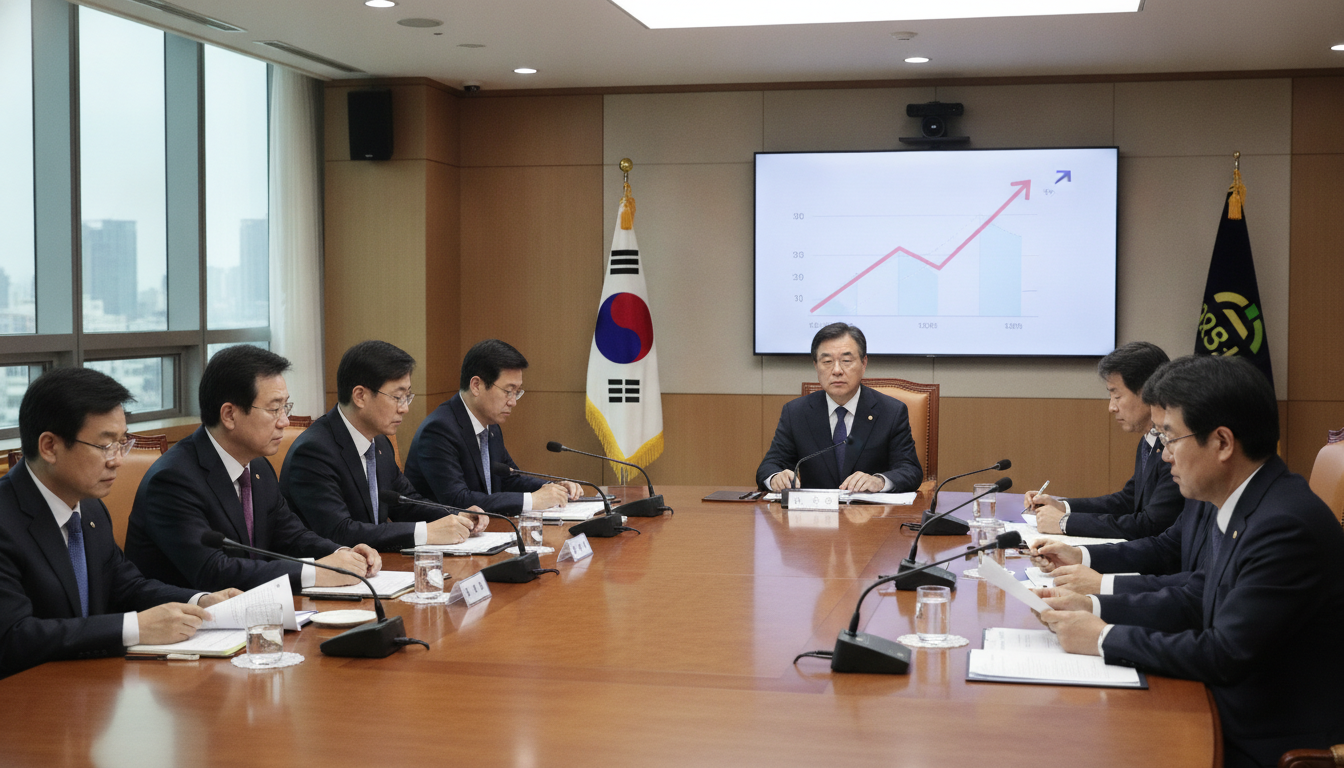
Bank of Korea rate hike marks second straight increase as inflation concerns persist
Bank of Korea rate hike on Aug. 27 marks the second straight increase to tame inflation, as exports expand but small firms face rising financing pressures.
South Korea’s central bank delivered its second consecutive interest rate rise on Aug. 27, executing a Bank of Korea rate hike aimed at reining in inflationary pressures even as growth is projected to pick up. The move — the first back-to-back increase since January 2023 — underscores a shift toward tighter policy after a prolonged period of accommodation. Policymakers cited a combination of stronger external demand and persistent price pressures in their decision.
Bank of Korea raises rate for second straight meeting
The Monetary Policy Committee voted to lift the policy rate for a second meeting in a row, signaling concern over inflation expectations despite an improving economic outlook. Officials said the decision reflects an effort to balance the risks of overheating against the need to support momentum in output. Analysts noted the sequential rises mark a clear break from the slow adjustment seen earlier in the recovery.
Committee links move to faster growth and price risks
Policymakers flagged forecasts showing an acceleration in economic growth as a key factor that increased sensitivity to inflation risks. With GDP projections shifting upward, the central bank judged that a firmer monetary stance was necessary to anchor prices. The Bank emphasized it will continue to weigh incoming data on demand and wages when plotting its next steps.
Exports remain a bright spot amid tightening policy
Trade-driven expansion has underpinned the economy’s resilience, with exports continuing to contribute to growth even as borrowing costs climb. Higher overseas demand for key goods has helped sustain factory activity and corporate investment. However, the benefits from exports may be uneven, leaving domestic sectors more exposed to tighter credit conditions.
Small businesses confront mounting financing and cost pressures
While large exporters benefit from a stronger external cycle, small and medium-sized enterprises face rising headwinds as loan costs increase. Higher interest expenses squeeze margins for smaller firms that rely on short-term funding, and some businesses may delay investment or hiring. Policymakers and lenders will be watching credit-distressed segments closely to limit spillovers to the broader economy.
Financial markets and lenders adjust to the new stance
Banks and nonbank lenders are already factoring in the tighter policy environment, which could lead to higher borrowing rates for households and companies in coming months. Mortgage holders and corporate borrowers should expect elevated debt-servicing costs, particularly where loans reset frequently. Market participants said attention will now turn to incoming inflation prints and wage data for hints on the timing of further moves.
Outlook for future Bank of Korea policy actions
The Bank signaled a data-dependent approach, indicating future decisions will hinge on the evolution of inflation, growth, and global financial conditions. If price pressures re-accelerate or domestic demand strengthens further, additional tightening cannot be ruled out. Conversely, a sharp slowdown or renewed stress in credit markets could prompt a pause or recalibration of the policy path.
The Bank of Korea rate hike on Aug. 27 closes one chapter in a gradual normalization of policy while opening another for scrutiny of its social and business impacts. Authorities will need to tread carefully to prevent disproportionate strain on vulnerable firms and households as they try to keep inflation expectations anchored.

