
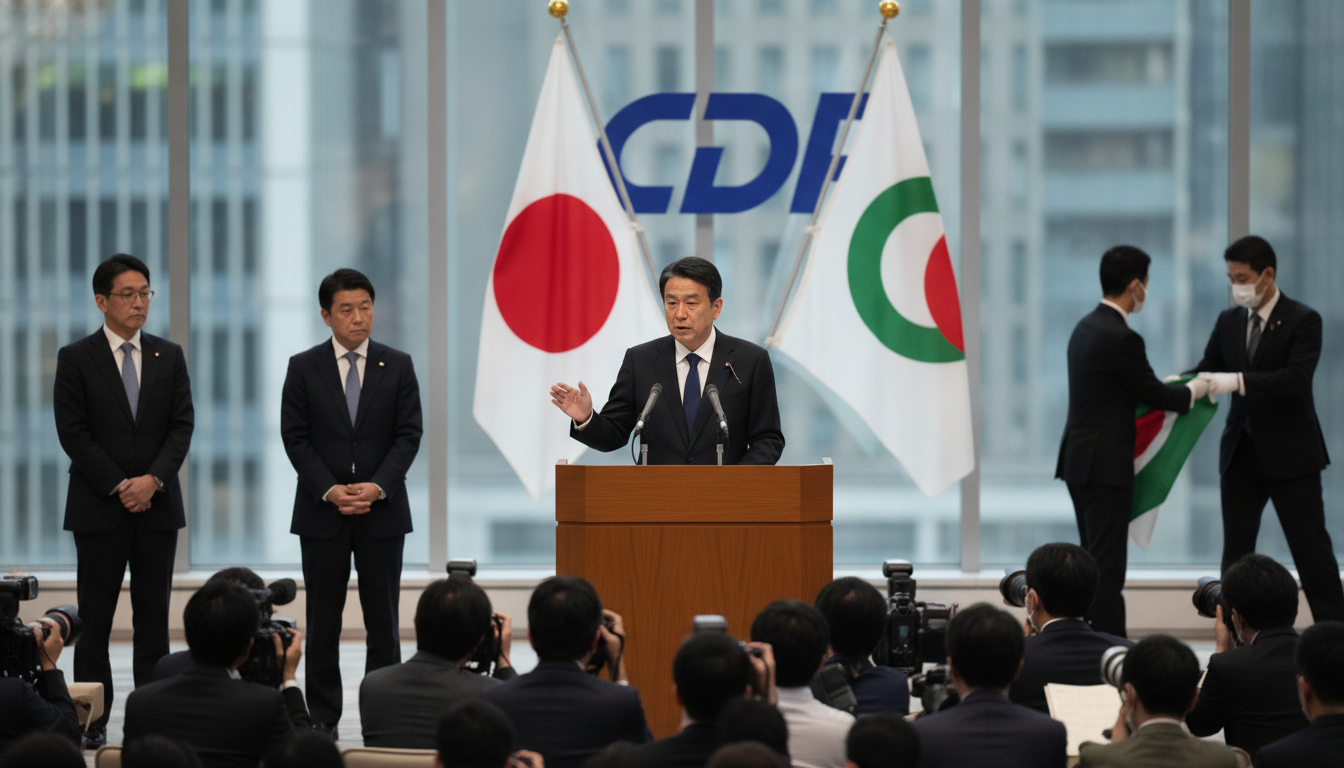
Rikken Shelves Three-Party Merger with Centrist Reform and Komeito, Alliance to Be Abandoned
Rikken’s decision to halt the three-party merger marks a setback for plans to form a unified opposition bloc against the Takaichi administration.
The Constitutional Democratic Party’s (Rikken) secretary-general, Tanabe Masayo (田名部匡代), told the secretary-generals of the Centrist Reform Alliance and Komeito on August 27, 2026, that Rikken will not join a three-party merger by the end-of-August deadline. A leaders’ meeting scheduled for August 28 is expected to formally confirm the parties’ decision to abandon the merger, effectively ending the project to establish a consolidated opposition axis against Prime Minister Takaichi’s government. The three-party merger had been presented as a way to unify disparate opposition forces, but internal resistance and electoral setbacks eroded momentum.
Negotiations Faltered in Morning Meeting
Rikken, Centrist Reform and Komeito held a morning session of secretary-generals on August 27, during which Tanabe conveyed that reaching a conclusion to merge by the negotiated deadline was unlikely. Centrist Reform’s initial expectations—that members of the Upper House and local assembly members would defect to the new grouping—did not materialize after Centrist Reform’s poor showing in the February lower house election. The lack of a clear pathway to secure those defections left Rikken’s leadership unable to justify pressing ahead with a full organizational merger.
Electoral Losses Undermined Momentum
Centrist Reform’s heavy losses in the February lower house contest significantly weakened its bargaining position and political appeal as a nucleus for a broader union. The setback dimmed prospects that the party could attract the parliamentary and local-level transfers that proponents had assumed when talks began. With the three-party merger now shelved, opposition actors must reassess whether tactical coordination or looser electoral pacts can deliver greater policy influence than a formal amalgamation.
Internal Opposition Within Rikken
Consultations between Rikken’s national leadership and regional party organizations revealed strong resistance to merging ahead of the unified local elections next spring. Many local chapters expressed concern about the political and electoral risks of tying up with a party closely associated with Komeito’s support base. Those concerns ranged from pragmatic calculations about vote transfers to unease over associating with Komeito’s central supporter organization, Soka Gakkai, which remains controversial among some Rikken members and supporters.
Policy Divergence with Komeito Remained a Barrier
Longstanding policy differences between Rikken and Komeito also proved difficult to bridge in practical terms. The two parties maintain distinct positions on national security legislation, energy policy—including nuclear power—and other core issues. While tactical cooperation in the Diet is often feasible, merging party organizations would require reconciling these substantive disagreements, a process party officials judged unlikely to be completed on the timetable that had been set for the three-party merger.
Next Steps: Leaders’ Meeting and Alternative Coordination
Party officials said a meeting of the three party leaders on August 28 will likely formalize the decision to forgo the merger and outline next steps for cooperation. Observers expect discussions to turn toward more limited forms of collaboration, such as joint candidate endorsements, coordinated Diet tactics, or the creation of a unified parliamentary group instead of a full party fusion. Rikken’s leadership appears focused on avoiding internal ruptures ahead of key local elections while preserving the option of tactical alliances against the Takaichi administration.
The abandonment of the three-party merger underscores the difficulty opposition parties face in converting shared strategic goals into durable institutional arrangements. With the leaders’ meeting due on August 28, attention will shift to how opposition parties coordinate going forward and whether they can present a coherent alternative to the current government without the structural consolidation they once pursued.

