
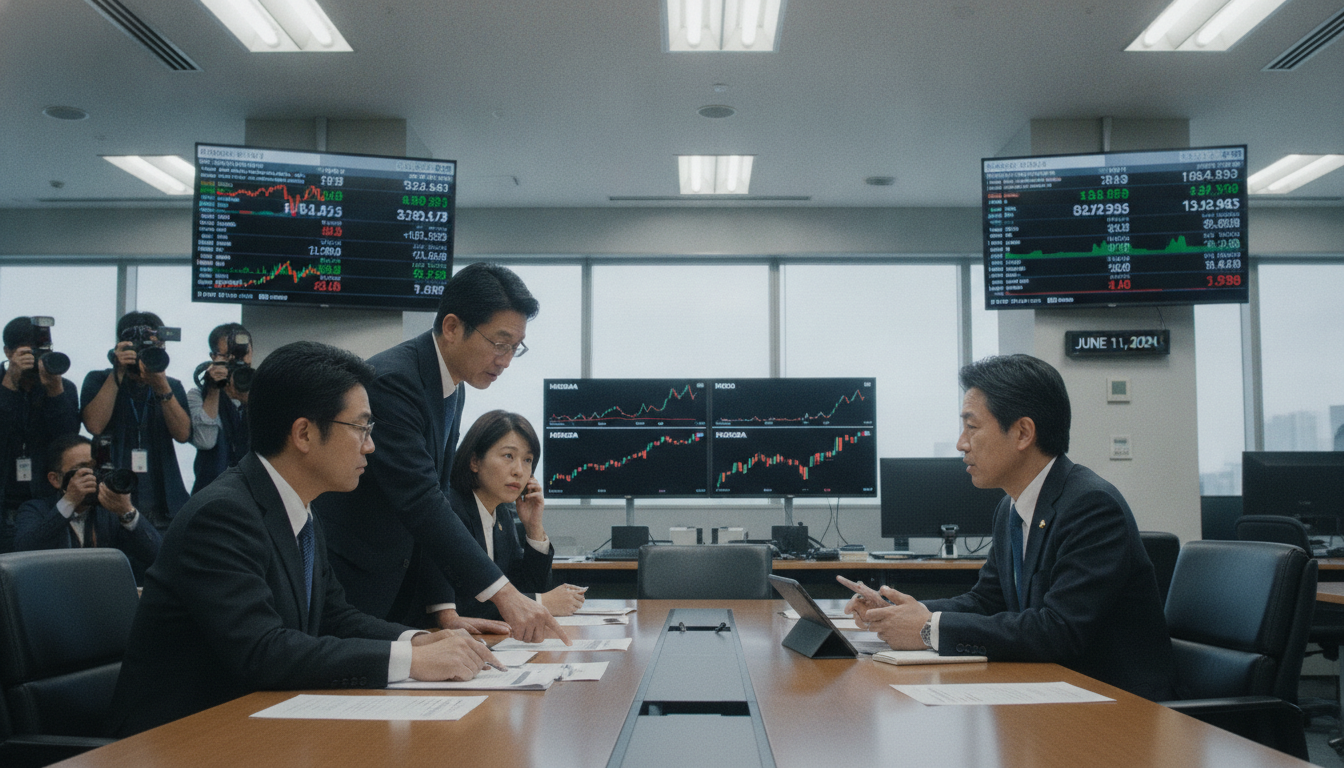
Nissan stake in Mitsubishi sparks takeover talk as lockup nears end
Nissan stake in Mitsubishi draws fresh takeover speculation as lockup period nears its 10th anniversary, opening options for Honda, Foxconn or other capital partners.
TOKYO — Nissan Motor’s long-held stake in Mitsubishi Motors has become the focus of renewed market attention as the lockup on its shares approaches the 10th anniversary of the original investment, raising questions about whether Nissan will divest and who might step in to reshape Mitsubishi’s future. The Nissan stake in Mitsubishi is cited by analysts as a structural overhang on the smaller automaker’s valuation, which has fallen sharply since October 2016. With the lockup window due around October 2026, investors and industry watchers are weighing potential suitors and strategic outcomes.
Background of Nissan’s 2016 Investment
The investment that brought Nissan into Mitsubishi’s capital structure took place in October 2016, a deal that formalized deeper operational ties between the two firms and aftershocks that reverberated through both balance sheets. The Nissan stake in Mitsubishi was initially framed as a stabilizing move for the embattled Mitsubishi brand and a way to capture synergies across product development and procurement.
Since that transaction, Mitsubishi’s market capitalization has trended lower, contracting roughly 40 percent relative to levels at the time of Nissan’s entry. That decline has been cited by market participants as evidence that the alliance has not delivered the hoped-for boost to investor confidence.
Market Reaction and Share Performance
The approaching end of the lockup period has reignited volatility in Mitsubishi’s shares as traders reassess the potential for a major ownership change. Market reaction has included a mix of profit-taking and speculative buying, reflecting uncertainty about whether Nissan will reduce its stake or seek alternative arrangements.
Analysts point out that any large-scale sale by Nissan could create short-term downward pressure on the stock, but could also clear the way for a strategic buyer to pursue a longer-term recovery plan. Liquidity in Mitsubishi’s shares and the timing of any disposal will be crucial determinants of market impact.
Potential Suitors: Honda and Foxconn
Two names that have surfaced repeatedly in market chatter are Honda Motor and Hon Hai Precision Industry, better known as Foxconn. Honda, as a domestic rival with complementary model line-ups and manufacturing scale, would represent a classic consolidation play within Japan’s auto sector. For Honda, acquiring or partnering with Mitsubishi could deliver access to specific segments and production capacity.
Foxconn would present a different calculus. The Taiwanese electronics group has been explicit about ambitions in electric vehicles and mobility technology, and a stake in Mitsubishi would offer immediate automotive industry access. Observers say a Foxconn bid would likely focus on joint ventures around EV platforms and supply-chain integration.
Strategic Options for Nissan and Mitsubishi
Nissan faces several strategic options as the lockup expiry approaches: retaining the stake and recommitting to the alliance; trimming or fully divesting the holding; or seeking a third-party capital partner that could inject funding without an outright takeover. Each choice carries governance, regulatory and operational implications.
For Mitsubishi, the arrival of a new strategic partner could bring capital, technology or global market reach, but it could also require concessions on board composition and long-term strategy. The company’s management and board will need to assess offers against a benchmark of preserving independence while maximizing shareholder value.
Regulatory and Industry Implications
Any shift in ownership would attract scrutiny from regulators in Japan, where cross-shareholdings and industrial consolidation are politically sensitive topics. Authorities will evaluate proposals for their implications on competition, employment and domestic manufacturing resilience.
Beyond immediate regulatory review, a change in Mitsubishi’s ownership structure could accelerate broader consolidation trends across the Japanese auto industry. That could prompt other manufacturers to reassess alliances, joint ventures and platform-sharing agreements in order to remain competitive in electrification and software-driven vehicle development.
Outlook and Next Steps
Market watchers expect public signals from Nissan and Mitsubishi in the coming weeks, even if formal decisions are deferred until after the lockup window passes in October 2026. Investors will monitor disclosure filings, any quiet-shareholder approaches, and comments from corporate executives for hints about strategic direction.
Short-term volatility is likely, but longer-term outcomes will hinge on whether a new investor emerges with a compelling plan for product, technology and capital deployment. The interplay between shareholder interests, corporate strategy and wider industry dynamics will determine whether this moment becomes a turning point for Mitsubishi.
The unfolding developments around the Nissan stake in Mitsubishi are poised to reshape options for the smaller automaker and could influence consolidation patterns in Japan’s auto sector. Observers say clarity on Nissan’s intentions and potential offers from suitors such as Honda or Foxconn will be pivotal in setting the next chapter for Mitsubishi Motors.

