
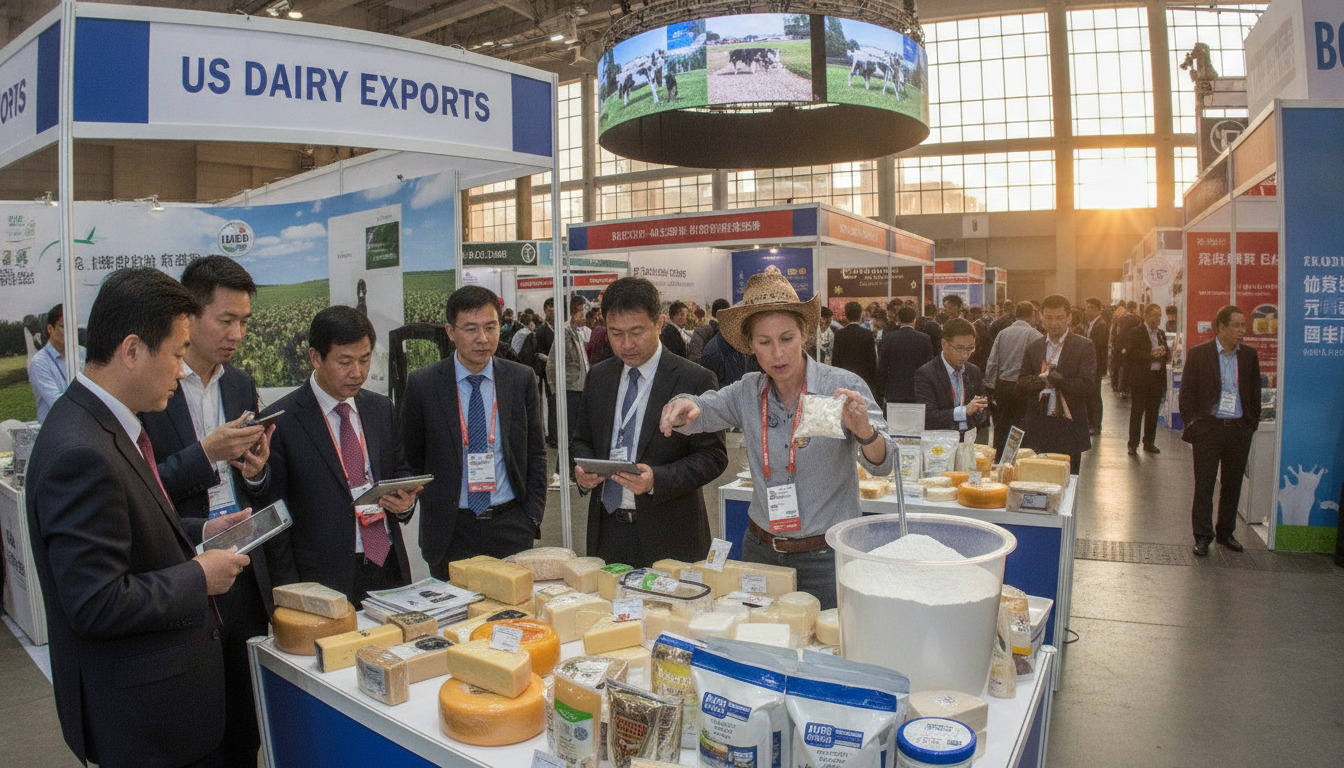
U.S. cheesemakers chase Asian markets as whey output surges
U.S. cheesemakers are pursuing Asian buyers as whey production climbs, forcing Wisconsin dairies to reshape export strategies and expand supply-chain links.
The United States is producing record volumes of cheese, driven in part by demand for whey, a protein-rich by-product that has become valuable to food and supplement manufacturers. Wisconsin, the nation’s largest cheese state, is at the center of the shift as local producers seek new customers across Asia to absorb rising whey supplies. Dairy operators and processors say exporting both cheese and whey will be essential to balancing domestic inventories and maintaining farmgate prices.
Surge in U.S. cheese and whey output
U.S. milk utilization for cheesemaking has increased over recent seasons, producing not only more finished cheese but larger quantities of whey. Processors extract whey during cheesemaking, and modern separation technology has turned that stream into a marketable ingredient for infant formula, sports nutrition and bakery products. As whey volumes grow, dairy groups face mounting pressure to move product beyond traditional North American buyers.
Producers emphasize that whey is no longer a low-value residue for many operations. When dried and processed, whey proteins command significantly higher prices than untreated milk solids. That conversion requires capital investment in drying and filtration equipment, encouraging processors to scale up and diversify customer lists.
Wisconsin dairies pivoting to Asian buyers
Wisconsin cooperatives and independent cheesemakers are increasingly targeting markets in Japan, China, South Korea and Southeast Asia. Export managers point to fast-growing demand for protein ingredients and premium cheeses in urban Asian markets, where consumers are shifting toward Western-style diets. Selling whey protein concentrate and other derivatives overseas provides a route to monetize rising output and stabilize domestic balances.
Smaller processors in Madison and other dairy hubs are forming partnerships with exporters and ingredient brokers to reach Asian manufacturers. Retail and specialty cheesemakers are also exploring direct-to-market strategies, using trade missions and regional partners to build relationships with food processors and distributors.
Asian demand drivers and buyer preferences
Market analysts say growth in Asian whey demand is tied to demographic and dietary trends, including rising incomes, urbanization and a stronger focus on sports and infant nutrition. Manufacturers there prize high-quality whey protein isolate for formula and supplements, creating a reliable outlet for U.S. exports. Meanwhile, demand for artisanal and specialty cheeses is buoyed by restaurant growth and premium retail channels in major cities.
However, buyers in Asia are selective, often seeking consistent specifications, traceability and compliance with local food-safety standards. U.S. suppliers must demonstrate robust quality assurance and meet regulatory requirements, which can be more stringent and variable than those in North America.
Logistics, tariffs and regulatory obstacles
Moving whey and cheese to Asia is not solely a commercial exercise; it requires overcoming logistical and policy hurdles. Freight costs and refrigerated shipping capacity affect margins, while tariff schedules and sanitary rules can complicate market entries. Some whey products must meet specific compositional standards for infant formula, necessitating additional certification and testing.
Exporters say navigating customs clearances and documentation is as important as securing a buyer. Investments in cold-chain infrastructure and strategic warehousing in Asian hubs can shorten lead times and reduce spoilage risk, but those measures raise upfront costs for farmers and processors.
Local impacts and producer strategies in Wisconsin
On the ground in Wisconsin, dairies and cheesemakers are adjusting operations to capture whey value. Some cooperatives have upgraded drying plants to produce powdered whey and protein isolates, while others are building alliances with ingredient processors that can refine whey streams. These moves aim to protect farmer margins by converting a growing by-product into higher-return commodities.
Retail cheesemakers are also experimenting with product mixes that allow them to commercialize both artisanal cheeses and by-products. Shops and small-scale creameries see export engagement as a way to sustain production volumes and support local milk prices, particularly when domestic demand softens.
Market outlook and industry responses
Industry observers caution that export opportunities will require sustained coordination between producers, processors and trade partners. Trade promotion, regulatory alignment and continued investment in processing capacity are likely to determine how fully U.S. whey supplies find buyers abroad. If Asian demand rises as projected, U.S. cheesemakers could see improved returns, but volatility in shipping and global commodity markets will remain a risk.
Regardless of short-term price swings, the structural shift toward treating whey as a strategic product rather than waste is reshaping investment decisions across the dairy sector. Producers who build reliable export channels and meet international standards stand to benefit most from the continuing surge in whey output.
The growing focus on whey exports marks a significant evolution for the U.S. dairy industry, with Wisconsin at the forefront of efforts to turn by-products into revenue streams and strengthen ties with Asian food manufacturers.

