
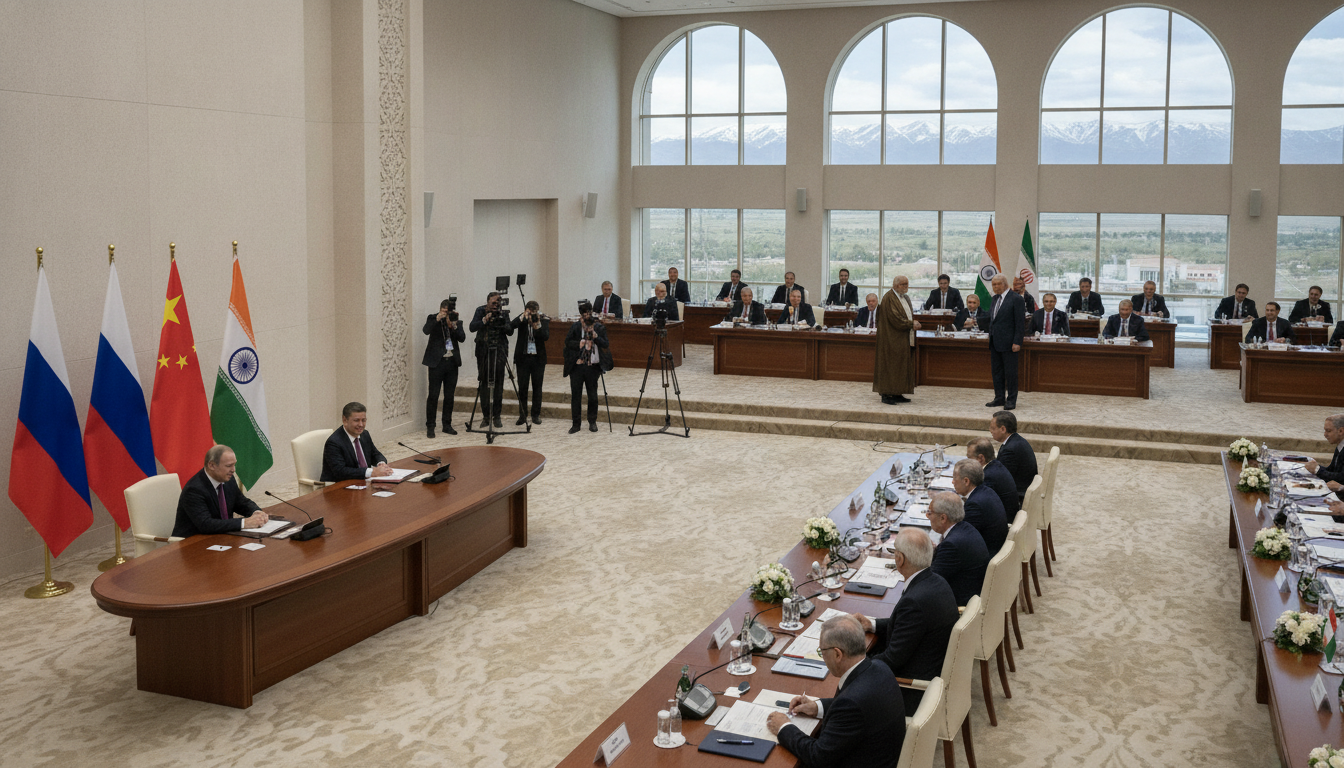
Putin-Xi meeting set for Aug. 31, 2026 at SCO summit in Kyrgyzstan
Putin to meet Xi at SCO summit in Kyrgyzstan on Aug. 31, 2026; bilateral talks with India’s Modi and Iran’s President Masoud Pezeshkian are also scheduled.
Russian President Vladimir Putin will meet Chinese President Xi Jinping on Aug. 31, 2026, at the Shanghai Cooperation Organization (SCO) summit in Kyrgyzstan, a Kremlin aide said on Aug. 28, 2026. The planned Putin-Xi meeting is expected to be one of several high-profile bilateral encounters at the event, with talks also lined up with Indian Prime Minister Narendra Modi and Iran’s President Masoud Pezeshkian. Officials framed the summit as an opportunity to deepen regional cooperation amid shifting geopolitical dynamics.
Putin to meet Xi at SCO summit on Aug. 31, 2026
Russian presidential aide Yury Ushakov announced on Aug. 28, 2026 that Putin and Xi will hold bilateral talks on Monday, Aug. 31, during the SCO leaders’ meetings in Kyrgyzstan. The timing places the Putin-Xi meeting among the summit’s opening sequence of leader-level sessions, according to the Russian statement. Moscow characterized the session as aimed at strengthening strategic coordination between the two capitals.
Bilateral talks with Modi and Iran’s Pezeshkian scheduled
Ushakov also said Moscow has arranged separate talks between Putin and Indian Prime Minister Narendra Modi, and with Iran’s President Masoud Pezeshkian, during the Kyrgyz summit. Those meetings are scheduled on the sidelines of the SCO gathering, providing brief windows for focused bilateral discussions. Officials from the three countries signaled interest in covering economic ties, regional security, and cooperation within multilateral frameworks.
Agenda likely to include security cooperation and trade
Analysts expect the Putin-Xi meeting to touch on regional security arrangements, energy cooperation and trade facilitation, reflecting long-standing pillars of Russia‑China relations. Both sides have in recent years expanded infrastructure and energy linkages, and summit-level contacts typically review projects and tariffs as well as high-level coordination. Observers say the leaders are also likely to discuss collective approaches to stability in Central Asia, where both Moscow and Beijing have growing strategic interests.
SCO summit in Bishkek frames the diplomatic calendar
The SCO summit, hosted this year by Kyrgyzstan, brings together member states and invited partners for formal sessions and a packed schedule of bilateral encounters. For Kyrgyz authorities, hosting the meeting aims to showcase the country’s role in regional diplomacy and to deepen local economic ties with major partners. The platform’s combination of security-focused and economic agendas makes it a frequent venue for leaders to hold time-constrained but consequential negotiations.
Recent trajectory of Russia-China ties ahead of the meeting
Putin and Xi last met in May 2026 in Beijing, and their relationship has been portrayed by both capitals as increasingly cooperative across economic and strategic areas. High-level exchanges over the past year have emphasized coordinated positions on trade corridors, technology collaboration and diplomatic support on key international issues. While the two sides project unity, analysts note differences remain on specific regional policies and commercial terms that summit discussions may seek to manage.
Regional implications and international reactions expected
The scheduled talks at the SCO summit will be watched closely by other regional players, who view Russia–China coordination as an influential factor in Central Asian stability and great-power dynamics. Meetings with India and Iran alongside the Putin-Xi engagement broaden the diplomatic footprint of the summit, underscoring competing networks of partnership across Eurasia. Governments and markets will monitor any joint statements or accords that may emerge, as these could affect trade routes, energy deals and security cooperation across the region.
The Kyrgyz summit’s programme provides only limited bilateral windows, meaning leaders must prioritize key deliverables and manage expectations accordingly. As Russia, China, India and Iran prepare for back-to-back encounters, diplomats say the focus will be on concrete cooperative steps rather than sweeping new commitments. Observers will be looking for both the content of talks and the optics of leader-level interaction when the SCO sessions conclude.

