
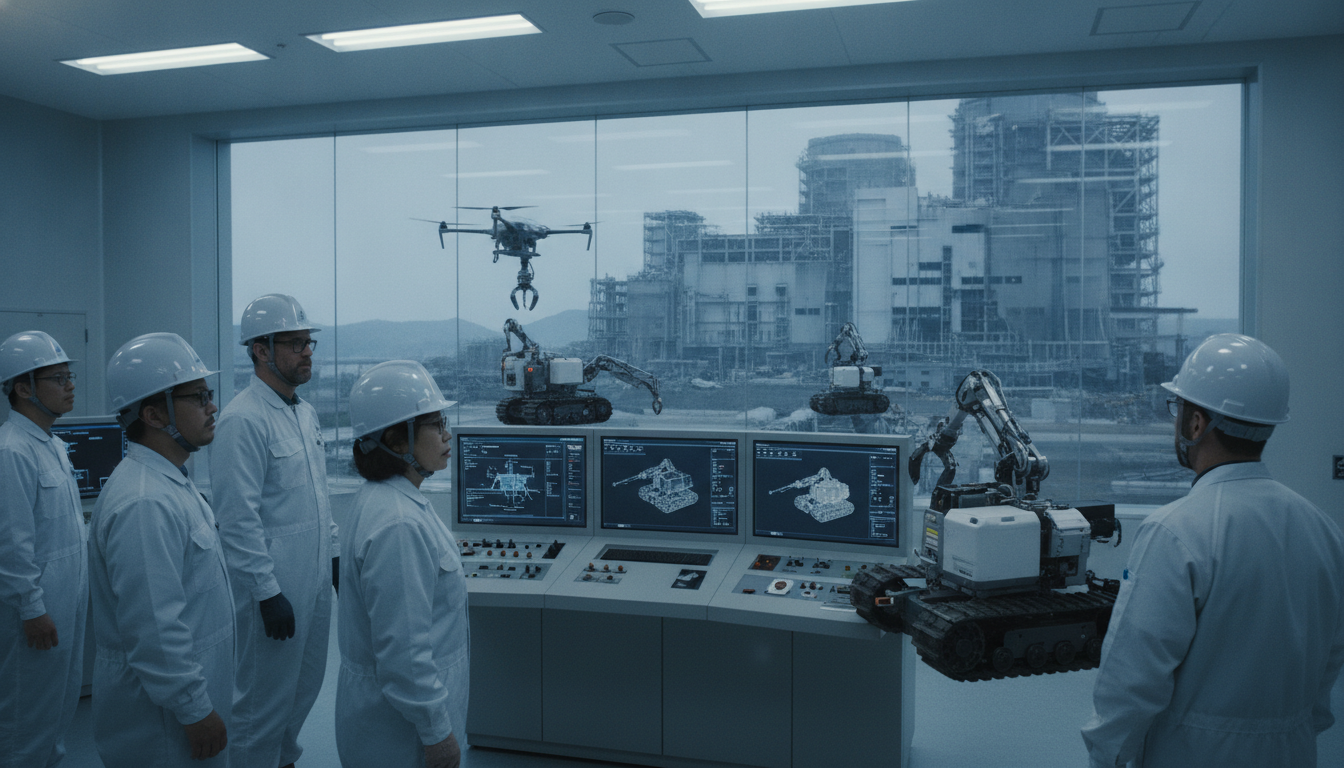
Japan to Deploy AI Robots and Drones at Fukushima Daiichi to Remove Radioactive Debris
Japan plans to form a government-TEPCO consortium to use AI robots and drones at Fukushima Daiichi for radioactive debris removal, accelerating decommissioning work.
The Japanese government and Tokyo Electric Power Co. Holdings (TEPCO) are preparing to launch a consortium that will deploy AI-enabled robots and drones to assist in removing radioactive debris from the Fukushima Daiichi nuclear plant. Officials said the partnership is expected to be established as soon as this fiscal year and will focus on advancing technologies and operational methods for highly contaminated environments. The move follows years of incremental decommissioning work and is intended to address remaining debris inside reactor buildings that has hindered progress.
Government and TEPCO to Form Decommissioning Consortium
The consortium is being organized jointly by national authorities and TEPCO to coordinate technology development, field testing and removal operations. Sources close to the planning indicated the body will bring together utility engineers, robotics firms, academic researchers and safety regulators. The stated aim is to centralize decision-making and accelerate the difficult task of clearing radioactive material while maintaining strict safety oversight.
AI Robots and Drones Assigned to Debris Removal
Officials described plans to deploy a new generation of AI-equipped robots and unmanned aerial systems to work inside reactor buildings and adjacent structures. These machines are designed to operate in high-radiation zones where human access is limited, carrying sensors, manipulators and imaging systems to locate and extract contaminated material. Drones will support mapping, remote inspections and transport of small debris, reducing human exposure and improving situational awareness for operators.
Amount and Location of Radioactive Debris
TEPCO data indicate that three reactor buildings at the site contain an estimated 880 tons of debris, including fuel fragments, structural materials and other contaminated waste. Much of this material remains in hard-to-reach spaces within Units 1 through 3, where past meltdowns and explosions scattered radioactive remnants. Locating, characterizing and safely removing that volume of debris has been a central technical obstacle in the broader Fukushima Daiichi decommissioning program.
Technical and Radiation Challenges
High radiation fields, complex wreckage geometry and degraded infrastructure create severe constraints for removal operations. Robotic systems must be hardened against radiation damage, capable of fine manipulation in cramped conditions, and able to transmit reliable data back to control centers. Engineers also face challenges in preventing secondary contamination, stabilizing loose fragments and ensuring that removal does not create new pathways for radioactive release.
Testing, Trials and Safety Measures
Planned trials will include simulated extractions in controlled facilities followed by staged deployments inside the plant under tight monitoring. Regulators will require detailed safety cases and contingency plans before allowing large-scale removal activities to proceed. Radiation monitoring, remote containment methods and stepwise validation of robotic tools are expected to form the backbone of early operations to minimize both worker and public risk.
Timeline, Funding and Oversight Uncertainties
While the consortium is expected to form within the current fiscal year, officials have not provided a firm schedule for full-scale removal or cost estimates for the program. Authorities face competing pressures to show progress while ensuring that technical readiness and regulatory approvals are met. Parliamentary committees and independent watchdogs are likely to scrutinize budgets, timelines and performance benchmarks as the project moves from development into field work.
Community Concerns and International Input
Local residents and municipal leaders around Fukushima Prefecture have urged transparency and continued monitoring as decommissioning steps advance. Community groups continue to call for clear communication on health safeguards, waste management and long-term site plans. International nuclear safety organizations and foreign research teams are expected to offer technical advice and share lessons from robotic operations at damaged reactors elsewhere.
Plans to integrate AI-capable robots and drones at Fukushima Daiichi represent a strategic effort to accelerate cleanup while reducing human exposure to radiation. The consortium’s success will hinge on robust testing, transparent oversight and close cooperation between government, TEPCO and independent experts. As work progresses, authorities say they will provide updates on milestones, trials and safety assessments to maintain public confidence in the decommissioning process.

