
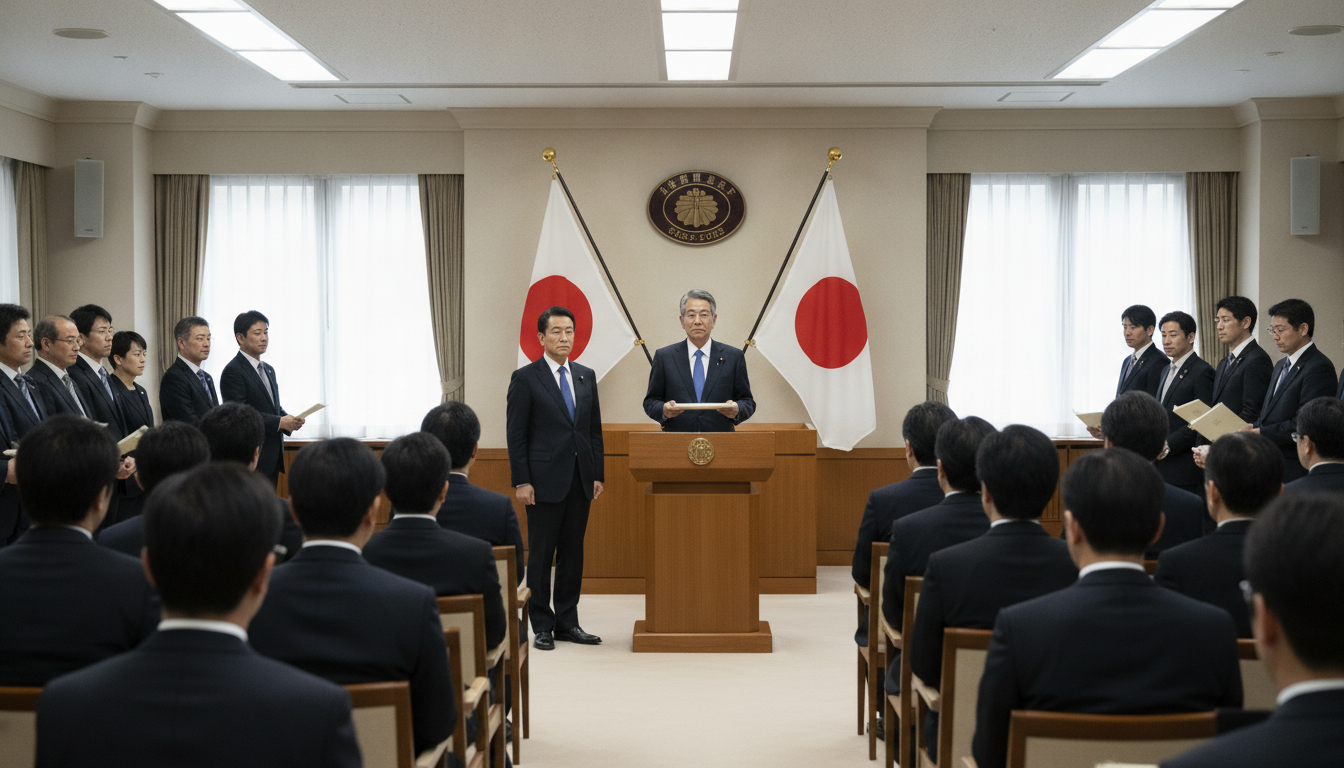
Hayashi Yoshimasa Reappointed as Chief Cabinet Secretary by Prime Minister Ishiba
Prime Minister Shigeru Ishiba on Oct. 1, 2024, reappointed Hayashi Yoshimasa as Chief Cabinet Secretary, a move that places a recent leadership rival at the center of government operations. The appointment of Hayashi Yoshimasa signals an unexpected blend of continuity with the previous Kishida administration and strategic outreach within the Liberal Democratic Party.
An Unusual Appointment Breaks Historical Patterns
Hayashi’s reappointment to the powerful post of Chief Cabinet Secretary departs from recent convention, where the role typically goes to a close aide or a leading figure from the prime minister’s own faction. Historically, chief cabinet secretaries have been chosen from among trusted allies, longtime confidants or those positioned as future party leaders. By elevating a rival from the most recent party leadership contest, Prime Minister Ishiba has created a novel dynamic at the heart of the cabinet.
The choice reflects both political pragmatism and a calculated effort to project stability. Analysts note that naming Hayashi — who served in the same role under the preceding administration — reduces transition friction and reassures bureaus and coalition partners about policy continuity.
Hayashi’s Record and Recent Roles in Government
Hayashi Yoshimasa brings a lengthy ministerial résumé to the position, including previous service as Chief Cabinet Secretary and a stint as Defense Minister. Colleagues recall detailed policy handovers and extended briefing sessions when portfolios shifted, underscoring Hayashi’s familiarity with the mechanics of government. His reputation for procedural competence and steady crisis management informed Ishiba’s decision to place him in the top coordinating role.
Those who worked with Hayashi describe him as meticulous in policy briefings and adept at bridging ministry priorities with political realities. His familiarity with defense and diplomatic files, in particular, positions him to manage national security communication during a period of regional tension and domestic policy recalibration.
Factional Politics and the 2024 Leadership Contest
The appointment comes against the backdrop of internal Liberal Democratic Party factional maneuvering that followed the 2024 party leadership election. Hayashi ran in that contest and received explicit backing from some quarters aligned with the outgoing leadership, creating an unusual post-election relationship between erstwhile rivals. Ishiba’s selection of Hayashi can be read as an overture to factions that had not fully coalesced around the new prime minister.
Within the party, several senior figures previously aligned with different camps reacted cautiously, noting the move could either strengthen internal cohesion or deepen latent tensions. By giving a high-profile post to a recent opponent, Ishiba appears to be pursuing a strategy of inclusion aimed at preventing fragmentation and ensuring smoother legislative negotiation.
Policy Continuity: Signals to Bureaucracy and the Public
Selecting Hayashi sends a clear message of policy continuity from the Kishida administration to both the bureaucracy and the public. Officials in ministries that expected abrupt shifts now face a transition overseen by an experienced hand well-versed in the prior administration’s priorities. This continuity is particularly salient in areas such as defense policy and diplomatic initiatives where consistency matters for allied coordination.
At the same time, Ishiba has emphasized that his government intends to pursue its own policy direction where necessary. The presence of Hayashi in the chief coordinating role may temper sudden departures from established programs while allowing the prime minister to selectively introduce reforms that reflect his mandate.
Implications for Cabinet Dynamics and Succession
Hayashi’s elevation reshapes the internal architecture of the cabinet and alters the conventional balance between the prime minister and his chief cabinet secretary. The office typically serves as the government’s primary communicator and crisis manager, and Hayashi’s closeness to various party factions gives him unique leverage in mediating disputes. Observers will be watching how operational control is shared and how much agenda-setting authority flows from the prime minister’s office.
Looking further ahead, the appointment raises questions about leadership trajectories within the LDP. Placing a recent rival in a central role may defer overt succession jockeying in the short term, but it could also position Hayashi as a credible contender in future contests if he successfully enhances his national profile through effective crisis response and inter-ministry coordination.
Reactions from Party Members and External Partners
Reactions inside the party have been mixed, with some members welcoming the choice as a pragmatic step toward unity and others expressing concern about blurred factional lines. Coalition partners and opposition figures have likewise taken note of the unusual arrangement, viewing it as an experiment in reconciling competitive party politics with the demands of governance. International partners, meanwhile, have signaled relief at the immediate continuity in key diplomatic and security portfolios.
Public commentary has focused on whether the arrangement will yield tangible policy stability or simply paper over deeper disagreements. For now, the most immediate test will be how the new chief cabinet secretary manages communication during the first major policy announcements and any unforeseen crises.
Prime Minister Ishiba and Chief Cabinet Secretary Hayashi must now translate this politically charged appointment into effective governance, balancing the imperative of party unity with the need to act decisively on pressing domestic and international challenges.

