
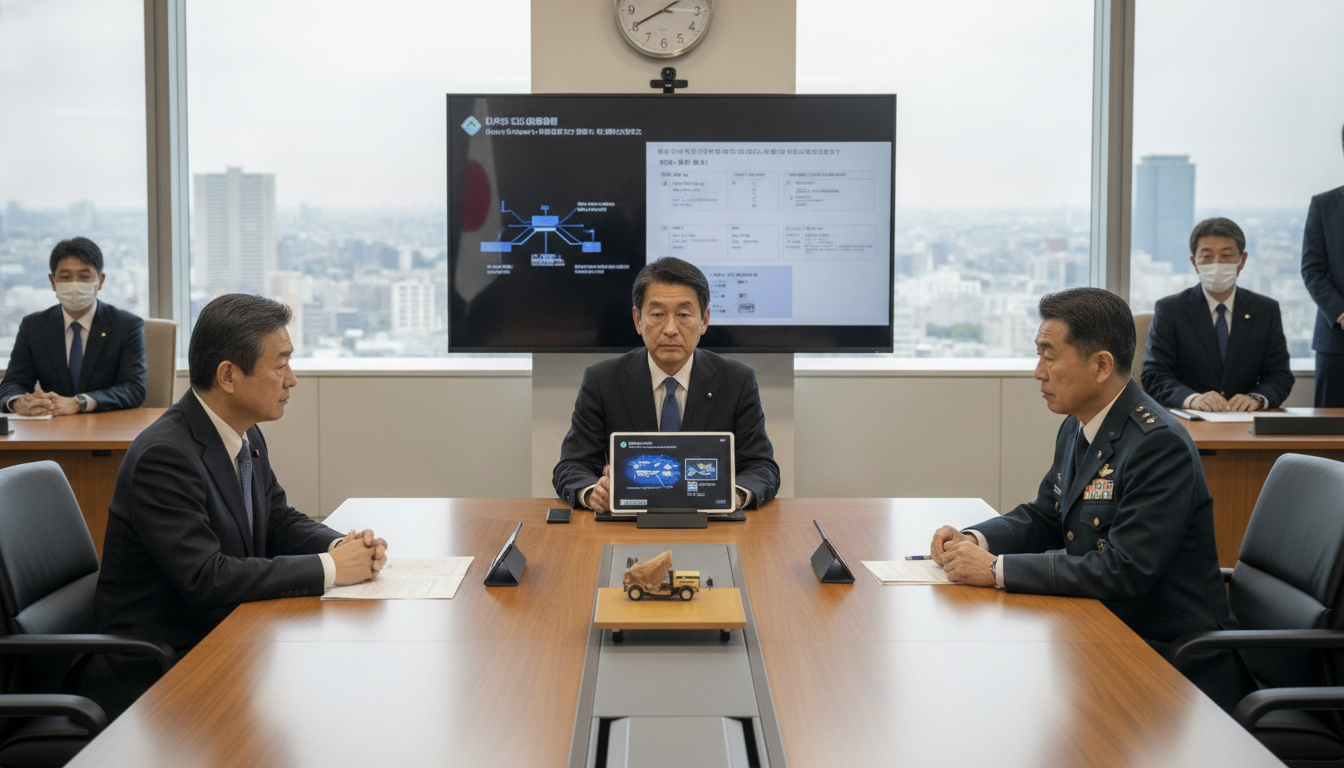
Japan to Adopt NTT’s IOWN for Nationwide Self‑Defense Forces Communications
Japan’s Defense Ministry will deploy NTT’s IOWN technology to modernize Self‑Defense Forces communications, connecting radars, sensors and drones for AI-enabled analysis and command.
Japan’s Defense Ministry has decided to adopt the core technology behind NTT’s Innovative Optical Wireless Network (IOWN) to upgrade communications across Self‑Defense Forces personnel and bases nationwide. The move will link dispersed radar and sensor arrays, unmanned systems and command centers to faster, lower‑latency networks designed to feed AI analysis and improve situational awareness. Defense officials say the shift seeks to modernize legacy links and enable real‑time data sharing across maritime, air and ground components.
Scope of the IOWN rollout
The Defense Ministry’s plan covers communications among personnel, bases and deployed units throughout Japan, with a focus on integrating field sensors and remote assets. Officials described the initiative as a systemic replacement of older backbone and tactical links rather than isolated equipment purchases. The upgraded network will route data from edge devices to centralized and distributed processing nodes to support both human decision‑making and automated systems.
Early deployments will prioritize locations where sensor density and operational demands are highest, including coastal and island installations. Defense planners expect the new IOWN‑based architecture to reduce latency and increase throughput for bandwidth‑intensive payloads such as high‑resolution radar, imagery and video feeds. The ministry also plans to scale the architecture to accommodate future sensors and AI applications.
Technology and network architecture
IOWN combines advanced optical transport, photonics and edge computing concepts to deliver very high bandwidth and extremely low latency. The ministry’s implementation will use a mix of fiber‑optic links and optical wireless technologies to create resilient, high‑capacity corridors between forward elements and data centers. Network segmentation and edge compute nodes will allow mission‑critical processing to occur close to sensors while aggregated data is shared for broader analysis.
The architecture is designed to support parallel streams of telemetry, command and multimedia data without bottlenecks. Defense IT planners highlighted deterministic performance and quality‑of‑service controls as key benefits, enabling time‑sensitive targeting data and cooperative sensor fusion across services. The technology also promises lower energy use per bit transferred, an increasingly important factor for distributed, austere sites.
AI integration with radar, sensors and drones
A central purpose of adopting IOWN is to enable seamless AI integration across the force’s sensor footprint. The communications upgrade will feed high‑fidelity inputs from radars, acoustic sensors, maritime buoys and unmanned aerial systems into AI models that can assist with detection, classification and tracking. Defense officials said AI analysis will operate at multiple layers, from local anomaly detection at the edge to centralized multi‑sensor fusion and long‑term pattern analysis.
Faster, more reliable links reduce the need for heavy data compression and allow more raw sensor data to be preserved for machine learning workflows. This increases the accuracy of automated recognition and shortens the time between detection and actionable recommendations. Officials emphasized that human operators will retain decision authority while receiving prioritized AI‑generated alerts.
Deployment timeline and budget considerations
The ministry has outlined a phased rollout rather than an immediate nationwide cutover, starting with pilot installations and incremental upgrades to existing infrastructure. Initial phases will validate interoperability, security and performance before broader fielding. Procurement officials indicated contracts with system integrators and domestic industry partners will follow competitive processes tied to the staged implementation plan.
Budgetary authorities are assessing lifecycle costs including hardware, software, operations and secure cloud or data‑center capacity. Defense planners note that while upfront investment is significant, projected gains in operational efficiency and reduced latency could offset costs over time. Exact budget figures and procurement award dates were not disclosed by officials at the time of the announcement.
Strategic rationale and operational impact
The shift to an IOWN‑based communications network is framed as part of a broader modernization drive to strengthen resilience and responsiveness. Faster, integrated information flows are expected to shorten decision cycles, improve interoperability among SDF branches and enhance the ability to respond to multifaceted threats. Officials cited the need to move from ad hoc, platform‑centric systems to an integrated, data‑centric architecture.
Analysts say the adoption could also improve disaster response and humanitarian assistance by enabling rapid sensor sharing and coordinated logistics. The ability to prioritize and route critical data under stress conditions should bolster continuity of operations for both defense and civil support missions.
Industry partnerships and security safeguards
NTT’s role as the originator of IOWN technology positions the company as a principal partner, but defense procurement will involve multiple vendors and system integrators. The ministry plans to emphasize domestic industry participation to maintain supply‑chain resilience and secure maintenance capabilities. Contracts are expected to specify standards for interoperability, testing and long‑term sustainment.
Security measures will be integral to the rollout, with officials pointing to encryption, authentication, network segmentation and zero‑trust principles as foundational elements. Operational security practices, physical protection of key nodes and redundant routing are being planned to limit the impact of potential disruptions. The ministry indicated that certification processes and classified testing will guide final security architectures.
The Defense Ministry’s move to install IOWN‑based communications marks a major step in modernizing Japan’s military information infrastructure and preparing the Self‑Defense Forces to operate with greater speed and data depth. Officials say the program will be iterative, emphasizing secure integration and measurable performance gains as new capabilities are introduced.

