
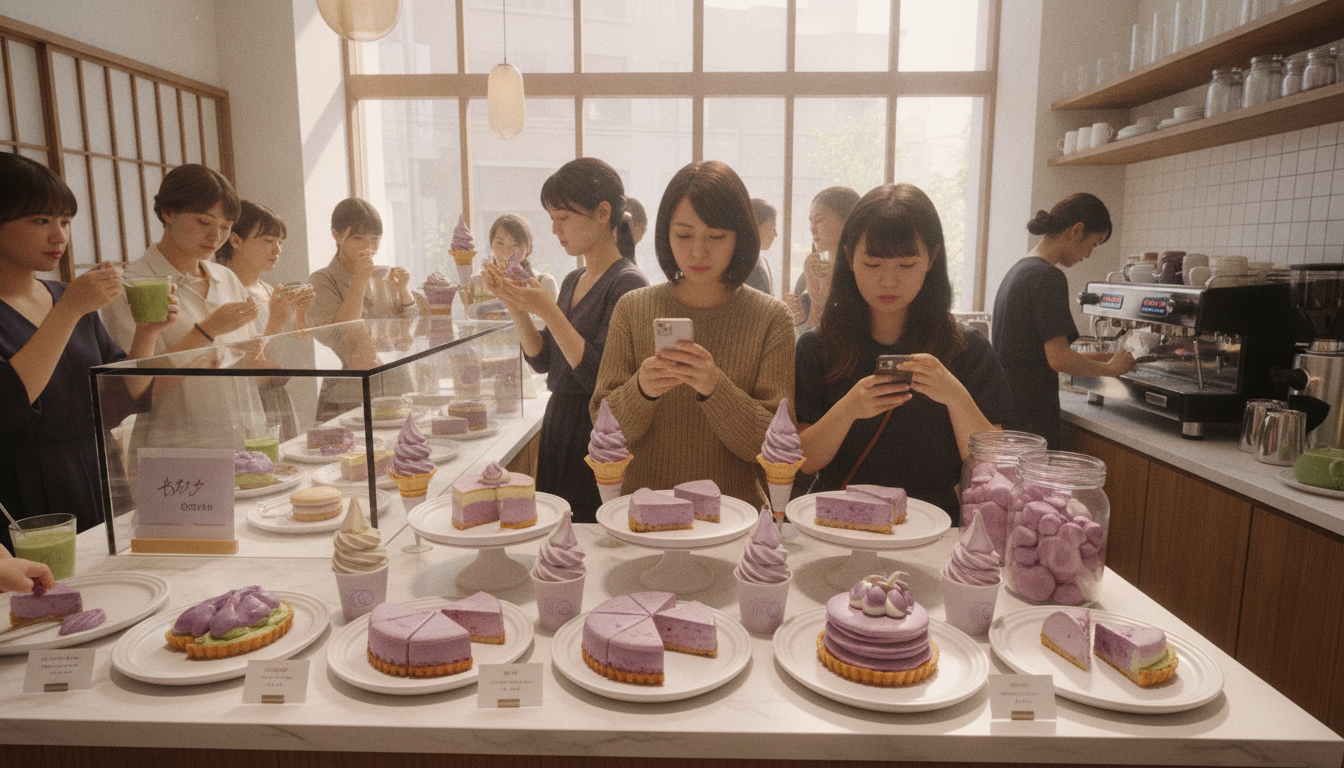
Ube Craze Sweeps Tokyo Cafes as Purple Yam Desserts Rival Matcha
Ube desserts and drinks surge across Tokyo cafes, driven by vivid purple color, sweet aroma and social media—challenging matcha as Japan’s newest flavor trend.
Tokyo cafes report rising demand for ube, the purple yam from the Philippines, as customers flock for its color, mild sweetness and vanilla-like scent. The ube trend is visible in standalone pastries, layered drinks and seasonal menus across neighborhoods from Shibuya to smaller coastal towns. Cafes such as Studio Cafe Maru have become photo-worthy showcases, serving ube-based sweets that blend Filipino ingredients with Japanese patisserie techniques.
Cafes increase ube offerings across Tokyo
Cafes and dessert shops across Tokyo have expanded ube items on their menus this summer, with several reporting double-digit sales increases for purple-tinged treats. Operators say the ingredient’s hue makes it ideal for limited-time menus that attract both regular patrons and social media attention. Smaller independent shops and larger chains alike have rolled out ube lattes, soft-serve, and custard-filled buns to meet the growing appetite.
Some cafes have adapted traditional Japanese confections to include ube, producing an array of fusion desserts aimed at local tastes. These adaptations include ube anpan and ube mochi, where chefs balance the yam’s gentle sweetness with customary textures and presentation. The result has been a steady stream of new menu items rotating through storefronts to sustain interest.
Flavor profile and culinary appeal
Ube’s appeal extends beyond its vivid coloration to a mild sweetness and a floral, vanilla-like aroma that pairs well with dairy, chocolate and citrus. Chefs note the yam’s capacity to act as both flavor and colorant, which simplifies recipe development for visually bold presentations. Unlike stronger-flavored ingredients, ube provides subtlety, making it suitable for layering in cakes, creams and beverages.
Bakers and baristas have also praised ube for its versatility in both hot and cold formats, from steamed buns to chilled parfaits. Its compatibility with familiar textures has lowered the barrier for chefs to experiment, encouraging creative combinations that still feel approachable to Japanese palates.
Social media and fan culture drive visibility
Instagram and other social platforms have amplified the ube trend, with hashtagged photos and short videos delivering rapid visibility for cafes and new menu items. Food influencers and oshi-katsu fan culture—where fans enthusiastically celebrate favored items—have fueled demand for visually striking dishes. Cafes aim for shareable moments, designing plated desserts and drinks that photograph well and encourage online engagement.
Marketing teams report that a single viral post can translate into long queues the following weekend, prompting some shops to manage supply through timed releases and reservation systems. The interplay between offline cafe experience and online buzz has been pivotal in turning a niche ingredient into a mainstream trend.
Supply chains and sourcing challenges
The rise in ube popularity has put pressure on sourcing, particularly for shops seeking authentic purple yam rather than color substitutes. Some suppliers now import frozen or processed ube paste, while others work with agricultural partners in the Philippines and local distributors to ensure steady deliveries. Café owners caution that reliance on imported roots introduces seasonality and price volatility.
To cope, a number of establishments have standardized recipes using concentrated ube paste, which offers consistent color and flavor while reducing waste. Industry observers say investment in supply chain relationships will be critical if the trend is to move from a seasonal spike to long-term menu staple.
Economic effects for small businesses
For many small cafes, ube has provided a welcome sales lift and an opportunity to diversify offerings without major capital expenditure. Limited-run ube items can be produced with existing equipment and marketed as seasonal exclusives, creating urgency and repeat visits. Some owners report that the cost premium customers are willing to pay for visually unique desserts has improved profit margins on featured items.
However, not all businesses benefit equally; shops that misjudge demand can face spoilage and higher ingredient costs. Financial analysts suggest that careful inventory management and conservative batch production help mitigate risks while capitalizing on the trend.
Consumer reactions have been broadly positive, with diners appreciating both the taste and aesthetics of ube. Surveys conducted by industry groups indicate strong interest among younger consumers and tourist demographics, who are drawn to novel flavors that photograph well. Older customers have also shown curiosity, often sampling ube in small portions before committing to larger orders.
Outlook for ube in Japan’s dessert market
Bakers and cafe owners expect ube to remain prominent through the next two seasons, driven by continued social media exposure and the development of new products. Some anticipate the ingredient will settle into a cycle of seasonal popularity similar to other flavors that have surged and then normalized. Others believe that ube’s gentle flavor and visual versatility could secure it a lasting presence alongside matcha on Japanese menus.
If supply stabilizes and producers continue to innovate with both traditional and fusion recipes, ube could evolve from a fleeting trend into a recognized staple of contemporary Japanese desserts. The next phase will likely be defined by how businesses manage sourcing, pricing and the balance between novelty and everyday appeal.
Ube’s surge in Tokyo reflects a broader appetite for ingredients that combine visual impact with culinary adaptability, and for now the city’s cafes are capitalizing on a purple wave that shows no immediate sign of ebbing.

