
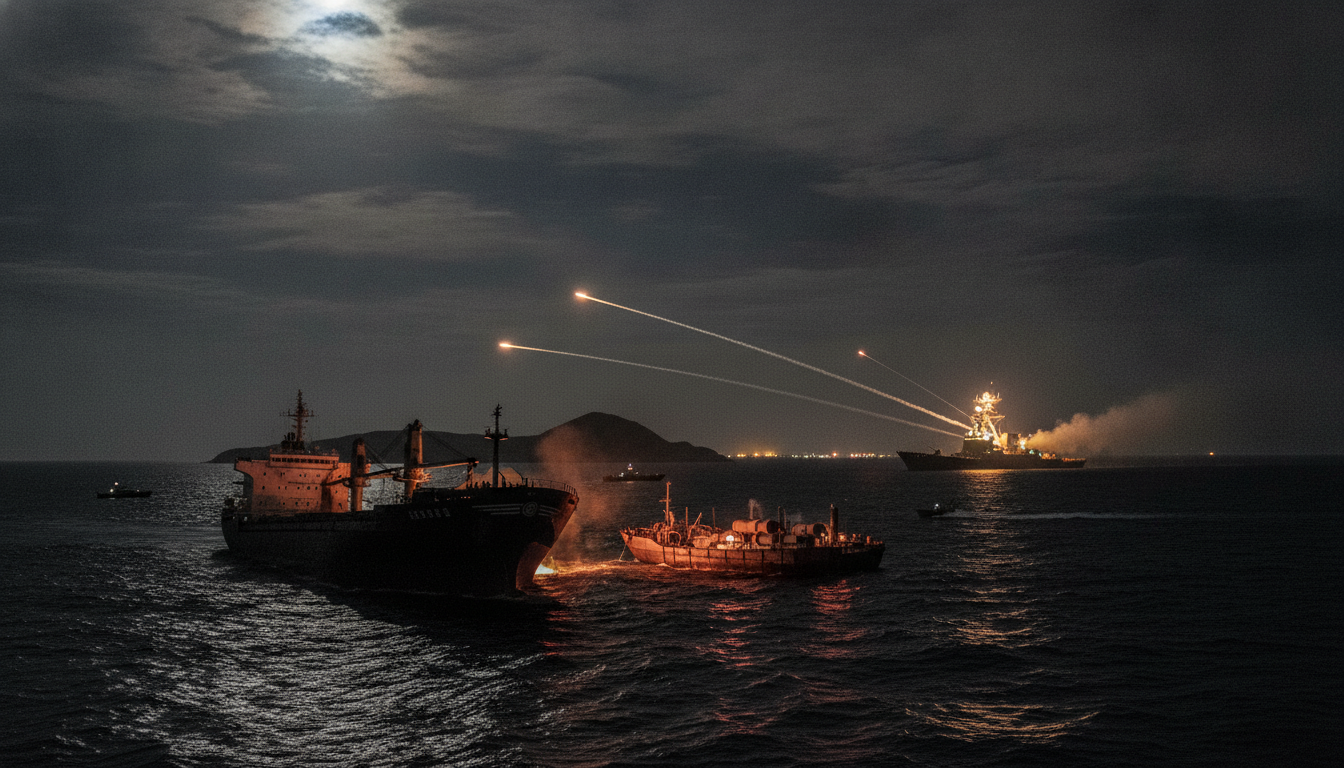
U.S. Attack on Larak Island Sparks Iranian Missile and Drone Strikes on Two U.S. Bases in Jordan
U.S. strike on Larak Island on Aug. 30, 2026, prompted Iran’s Islamic Revolutionary Guard Corps to launch missile and drone attacks on two U.S. bases in Jordan early Aug. 31, escalating tensions in the Strait of Hormuz.
The United States conducted a precision strike on Larak Island in the Strait of Hormuz on August 30, 2026, aiming to disable rocket systems reportedly prepared to launch mines into key shipping lanes.
The operation, described by U.S. officials in media reports as targeted at rocket launch platforms, marked the first U.S. strike on Iranian territory in about a month.
Iranian Revolutionary Guard Announces Retaliation
In a statement released in the early hours of August 31, Iran’s Islamic Revolutionary Guard Corps said it struck two U.S. military bases in Jordan with a combination of ballistic missiles and armed drones.
State-affiliated Tasnim news agency reported the declaration, which framed the action as direct retaliation for the Larak Island strike.
Iran did not immediately provide detailed casualty figures or confirm the extent of damage at the Jordanian bases in its initial announcement.
U.S. officials have not publicly confirmed the full scope of the Iranian claim as of the latest reporting, and independent verification remains limited.
Details of the Larak Island Operation
According to U.S. accounts cited in international media, the strike on Larak Island targeted two mobile rocket launchers believed to be preparing rocket-assisted deployment of naval mines.
Larak, an island under Iranian control in the Strait of Hormuz, has strategic significance for vessels transiting one of the world’s most vital oil chokepoints.
U.S. officials portrayed the operation as defensive, aimed at preventing the placement of mines that could imperil commercial shipping and naval vessels.
The strike represented a continuation of intermittent kinetic actions in the region since late July, when earlier incidents and interdictions heightened regional alert levels.
Sequence and Military Context
The exchange follows weeks of maritime incidents and heightened military activity in and around the Strait of Hormuz, where both state and non-state actors have at times threatened freedom of navigation.
Western naval authorities have in recent months focused on mine countermeasures after reports of devices in international waters raised concerns for commercial traffic.
Iranian forces have described U.S. operations near their territorial waters as provocations, while the United States has framed its actions as necessary to protect shipping and deter attacks on its vessels.
The back-and-forth underscores a cycle of action and reprisal that regional and international diplomats have warned could spiral if unchecked.
Impact on Regional Security and Shipping
Maritime insurers and shipping firms closely monitor developments in the Strait of Hormuz because disruptions there can quickly affect global oil markets and supply chains.
An uptick in hostile activity raises costs and complicates routing decisions for tankers and commercial carriers traversing the Gulf and adjacent waterways.
Neighboring countries and regional security partners may intensify patrols or coordinate escorts for vulnerable merchant traffic, further militarizing an already tense maritime environment.
Longer-term impacts could include shifts in shipping patterns and insurance premiums that reverberate through global energy markets.
Diplomatic Responses and International Concerns
Global capitals expressed concern over the escalation, with calls for de-escalation emerging from diplomatic channels as leaders weigh the risks of broader conflict.
International organizations and some regional states urged restraint and emphasized the need for verification before accepting competing claims about strikes and damage.
Efforts at back-channel diplomacy and third-party mediation are likely to intensify as countries seek to avoid direct confrontation between major military powers in the region.
Officials in affected states may pursue urgent consultations at military and foreign ministry levels to clarify intentions and prevent further retaliatory measures.
Assessing the Risk of Wider Escalation
Analysts warn that targeted strikes and retaliatory moves, even when limited in scope, carry the risk of miscalculation and unintended escalation.
The proximity of commercial shipping, international naval patrols, and coastal defenses complicates command-and-control dynamics in crisis moments.
Military planners in the region will now face pressure to balance deterrence with avenues for communication that reduce the chance of accidental clashes.
For now, the episode highlights the fragility of security in one of the world’s most important maritime corridors and the speed with which localized actions can have international repercussions.
The coming days will be critical for verification, diplomatic engagement and assessment of whether the exchange between the United States and Iran will remain a contained incident or trigger a prolonged period of heightened confrontation in the Gulf and beyond.

