
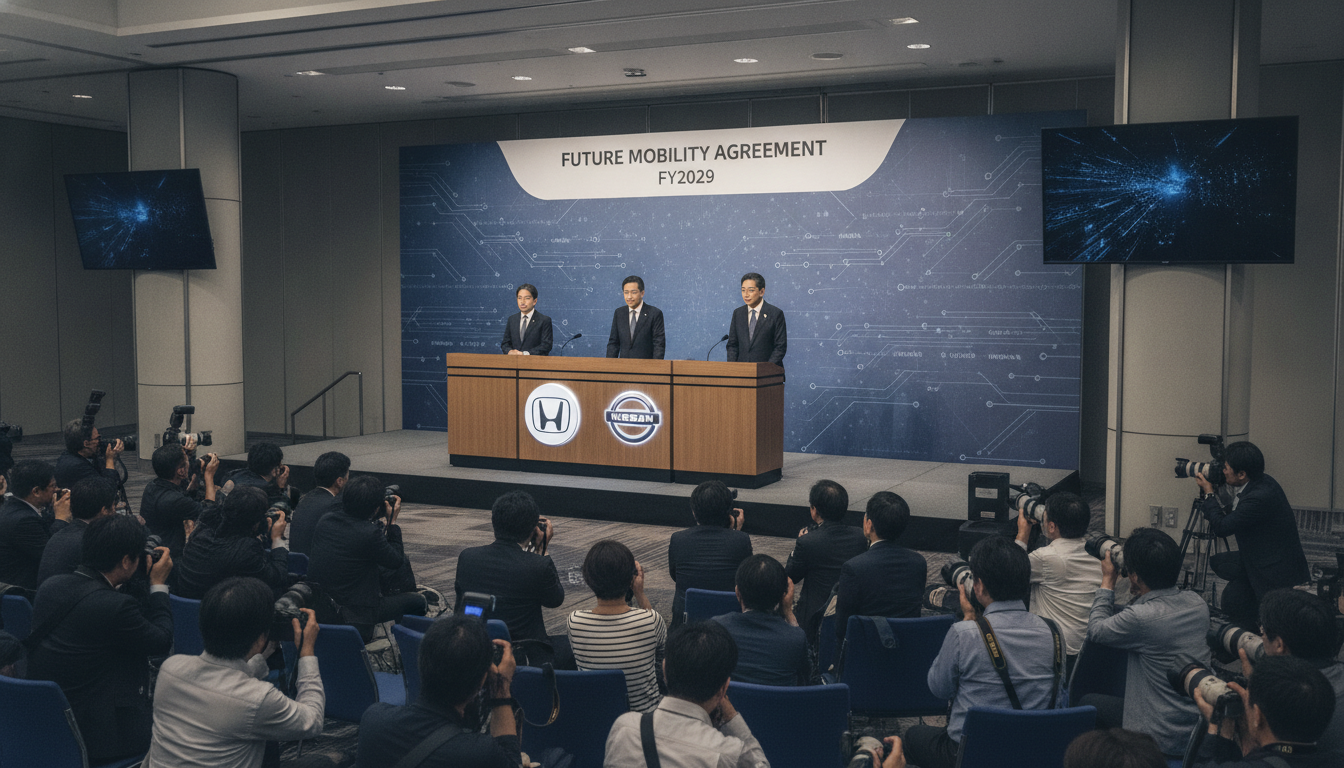
Honda and Nissan to Standardize Operating Systems for Software-Defined Vehicles, Targeting FY2029 Deployment
Honda and Nissan will standardize vehicle operating systems for software-defined vehicles, aiming for deployment as early as fiscal 2029 to speed updates and cut costs.
TOKYO — Honda Motor Co. and Nissan Motor Co. announced on Monday that they have reached an agreement to collaborate on software-defined vehicles, committing to standardize operating systems across selected future models. The move toward software-defined vehicles is intended to accelerate over-the-air updates, streamline development and help both automakers deploy advanced features more quickly.
Agreement Finalized After Two Years of Talks
The decision follows roughly two years of discussions and intermittent tensions in the companies’ corporate relations. Both firms said the collaboration was reached after negotiations that balanced technical needs, intellectual property concerns and product roadmaps.
Industry observers described the arrangement as pragmatic, reflecting widespread recognition that software platforms are becoming central to vehicle competitiveness. The agreement stops short of a full merger of development units, focusing instead on a shared software architecture and interoperability.
Standardized Operating Systems and Technical Scope
Under the agreement, Honda and Nissan will work to standardize core vehicle operating systems and define common interfaces for applications and services. This standardization is expected to cover middleware, basic safety functions, and over-the-air update mechanisms while allowing each maker to customize user experience and brand-specific applications.
The partners aim to create modular software layers that can be maintained independently of hardware, enabling longer product lifecycles and accelerated feature rollouts. The approach is designed to reduce duplicated engineering effort and give both companies a clearer path to scale new driver-assist and electrification functions.
Timeline and FY2029 Deployment Goal
Honda and Nissan said they are targeting initial deployment of the standardized systems as early as fiscal 2029, with phased rollouts across multiple models thereafter. The timetable calls for prototype validation, supplier alignment and regulatory approval steps to take place over the coming two to three years.
Automakers typically define their fiscal 2029 timelines differently by market, but the companies indicated they expect early versions on select electric and hybrid models first. Full platform harmonization across broader model ranges will follow based on test results and market acceptance.
Strategic and Financial Rationale
Executives at both companies have framed the collaboration as a cost-control and speed-to-market initiative amid rising software development costs. Standardized systems can compress long-term R&D spending by allowing shared development resources and common supplier agreements.
Beyond cost savings, the move aims to improve customers’ experience through faster delivery of new features and security updates. The ability to update critical systems remotely is increasingly seen by automakers as essential for maintaining vehicle safety and competitiveness.
Implications for Suppliers and Talent
The agreement will require close coordination with semiconductor vendors, software suppliers and Tier 1 system integrators to align on standards and supply commitments. Suppliers may face pressure to conform to joint specifications and to invest in compatible development tools and testing environments.
Both automakers will also need to expand in-house software capabilities and retain engineering talent capable of handling cloud services, cybersecurity and continuous integration systems. Recruitment and partnerships with technology firms are likely to accelerate as the project moves from planning into implementation.
Competitive Context in the Auto Industry
The Honda–Nissan initiative mirrors a broader industry shift toward software-defined vehicles, where companies seek to own or control key software layers rather than cede that ground to external tech providers. Rival automakers have announced similar efforts, and global suppliers have been positioning themselves to serve multiple OEMs with common stacks.
Analysts say the collaboration could strengthen the two companies’ position in electrified and connected vehicle markets, but success will depend on execution speed and the ability to attract a robust ecosystem of developers. Consumer acceptance and regulatory scrutiny will also shape how quickly features enabled by the new systems appear in showrooms.
Regulatory, Safety and Cybersecurity Considerations
Standardizing operating systems raises regulatory and safety questions that the partners will need to address jointly, particularly for features tied to driver assistance and automated driving. Regulators in Japan and other key markets will scrutinize how safety-critical functions are certified when software is shared across brands.
Cybersecurity is another focal point; a common platform can increase efficiency but may also create systemic risks if vulnerabilities are not managed rigorously. Both firms said they will prioritize security architecture and compliance as part of integration planning.
Looking ahead, the Honda–Nissan collaboration on software-defined vehicles marks a significant step in Japan’s automotive sector toward treating software as a platform-level asset rather than a bolt-on feature. The agreement sets a clear timeline and technical ambition, but the path to FY2029 deployment will hinge on supplier alignment, regulatory clearances and successful validation in real-world conditions.

