
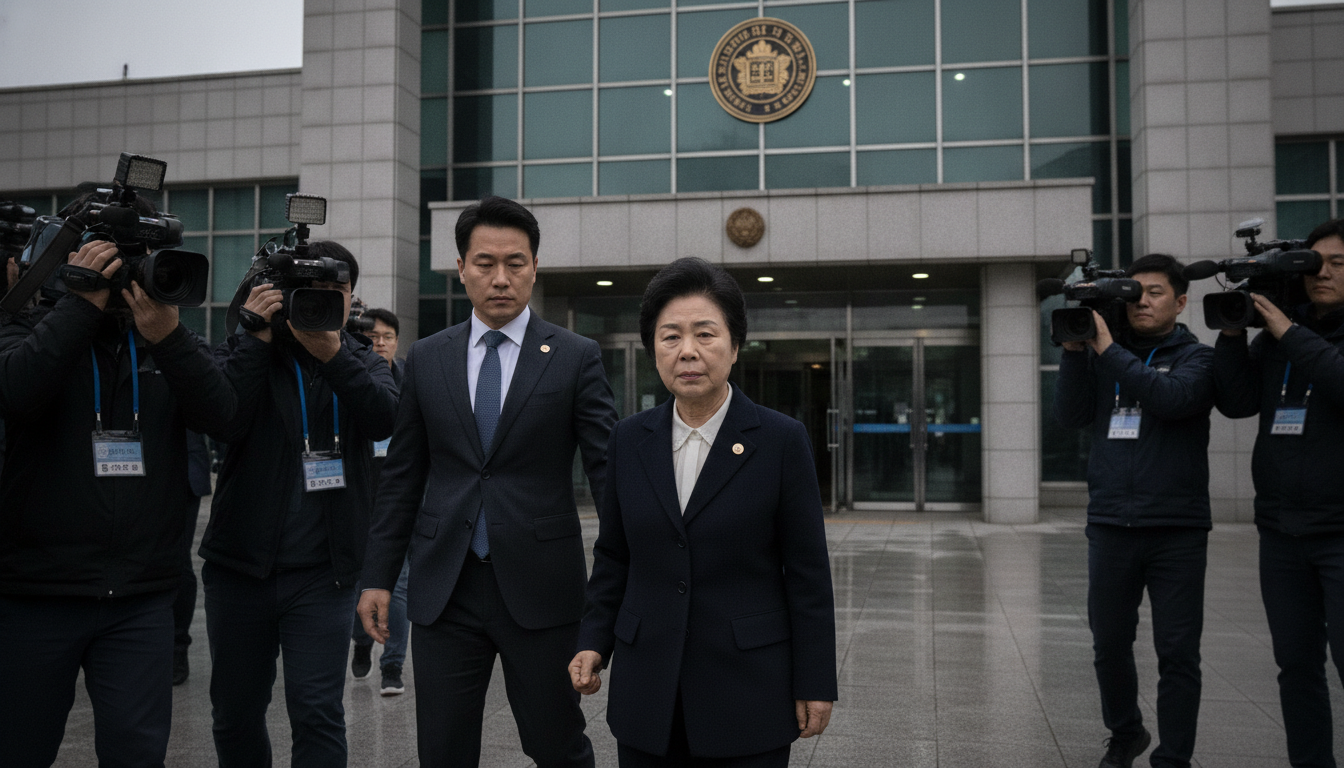
Han Hak-ja Sentenced to Two Years Over Political Funding and Bribery Allegations
Seoul court sentences Unification Church leader Han Hak-ja to two years for political funding and bribery tied to alleged efforts to influence President Yoon.
A Seoul court on August 31, 2026 handed Unification Church leader Han Hak-ja a combined two-year prison term after finding her guilty of political funding and bribery charges. The ruling concluded a prosecution case that accused Han of attempting to cultivate influence with former President Yoon Suk Yeol’s administration through illicit financial and political support. The sentence marks a significant legal setback for a high-profile religious figure whose activities have drawn sustained public and political attention.
Court ruling and sentence details
The court convicted Han on counts related to unlawful political donations and bribery, imposing a combined custodial sentence of two years. Judges cited evidence presented during the trial as sufficient to establish criminal liability for her role in the alleged scheme to secure political access. The verdict was delivered following a sentencing hearing in Seoul where Han appeared in court and heard the judgment pronounced.
Prosecutors’ accusations and charges
Prosecutors charged Han with arranging political funding and offering benefits to public officials as part of efforts to gain influence over policy and appointments. The indictment alleged a pattern of transactions and coordinated actions intended to curry favor with key figures in the national government. Authorities argued that these activities crossed the legal line between lawful political activity and criminal conduct aimed at manipulating public office.
Allegations of influence with Yoon Suk Yeol’s administration
Central to the case were allegations that the Unification Church leadership sought to build ties with President Yoon Suk Yeol’s administration for strategic advantage. Prosecutors said those ties would have given the organization access to policymaking channels and helped protect its interests. The court’s finding does not implicate the president personally but underscores prosecutors’ contention that the church’s leadership engaged in targeted efforts to cultivate political leverage.
Defense response and legal options
Han’s legal team disputed the charges during the trial, arguing that actions attributed to the defendant fell within lawful religious and organizational activities. Defense attorneys have the right to appeal the conviction and sentence under South Korean criminal procedure, and the initial ruling can be reviewed by a higher court. It is expected that the defense will pursue available remedies, though formal appeal filings and legal strategies have not been publicly detailed.
Political and public implications
The verdict is likely to reverberate across South Korea’s political landscape, where ties between religious organizations and politicians have been a source of controversy. Opposition politicians and civic groups have long criticized the Unification Church’s political engagements, while supporters framed activities as part of legitimate civic participation. The sentence could intensify scrutiny of political funding practices and reignite debates about transparency and the influence of private organizations on public affairs.
Possible institutional and regulatory fallout
Beyond criminal proceedings, the case may prompt renewed calls for tighter oversight of political donations and greater transparency in interactions between religious groups and public officials. Lawmakers from several parties have previously discussed legislative reforms aimed at restricting opaque funding channels and strengthening disclosure requirements. Regulators and investigative bodies may also consider parallel probes if new evidence surfaces from the court record or related inquiries.
The sentence handed down to Han Hak-ja underscores the legal risks faced by organizational leaders who become enmeshed in political financing controversies. As the appeals process unfolds, attention will remain on whether the ruling prompts broader investigations or legislative action to address the intersection of religion, money and politics in South Korea.

