
Mitsubishi Pajero SUV returns with global rollout from Thailand to shore up sales
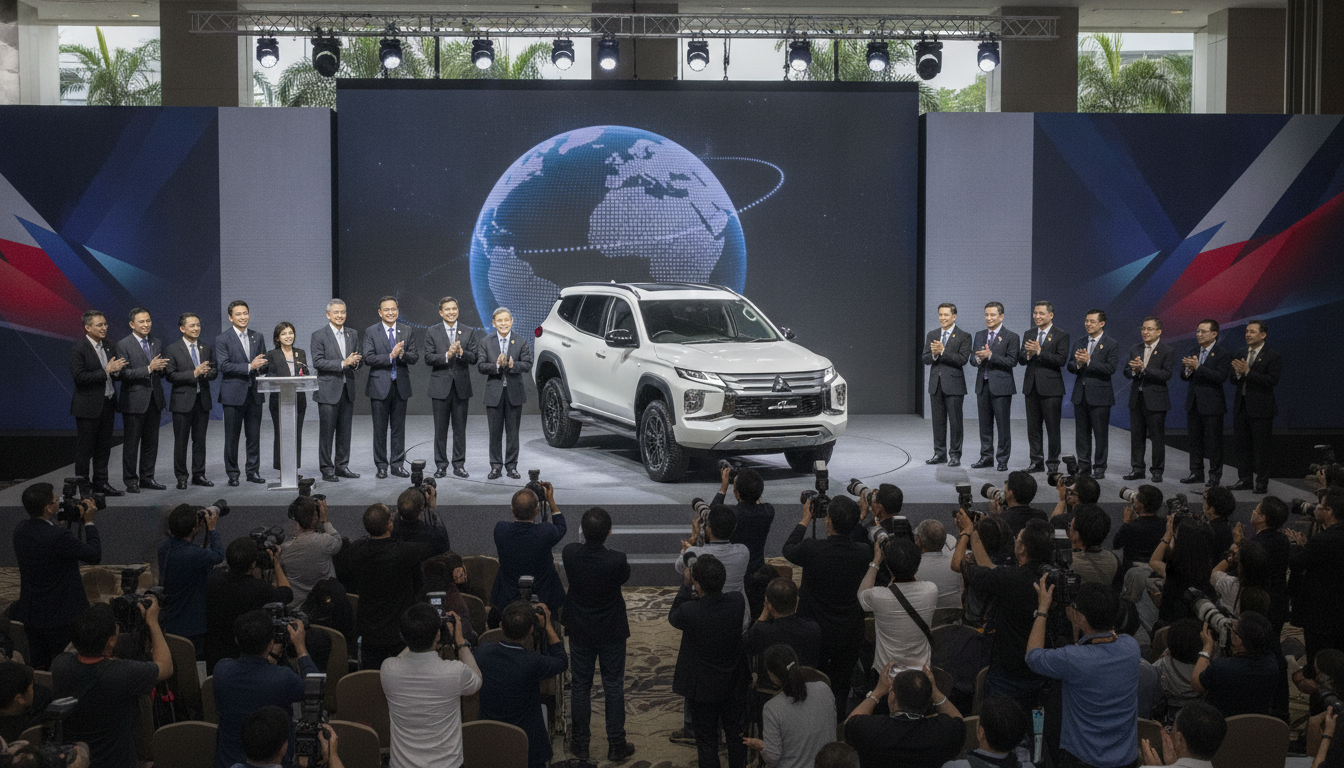
Mitsubishi unveils the new Pajero SUV on September 2, 2026, launching from Thailand to revive sales amid Chinese competition and EV market pressure now.
Mitsubishi Motors on September 2, 2026, unveiled the rebooted Pajero SUV, positioning the model as a central pillar in its effort to stabilize global sales. The announcement makes the Pajero SUV the focus of a global rollout that begins in Thailand as the automaker navigates growing competition and the industry’s shift toward electrification. Company executives framed the relaunch as a bid to reconnect with traditional SUV buyers while broadening appeal in key Southeast Asian markets.
Thailand-first global rollout announced
Mitsubishi confirmed that initial production and sales will start in Thailand, a major hub for the automaker’s regional operations. The company cited Thailand’s established manufacturing base and export infrastructure as key reasons for selecting it as the launch point. Officials said the model will subsequently be offered in other markets through a staged global rollout designed to balance demand and capacity.
Design evolution and off-road heritage retained
The new Pajero SUV preserves the model’s off-road DNA while adopting contemporary design cues to attract a broader audience. Mitsubishi’s design team emphasized a tougher stance, modern lighting, and increased interior refinement intended to appeal to both traditional SUV buyers and younger families. Engineers indicated that durability and modularity were priorities to support different regional specifications and customer uses.
Powertrain options reflect transitional strategy
Mitsubishi signalled that the Pajero SUV will be offered with multiple powertrain options to match market requirements and regulatory trends. Executives highlighted a mix of internal-combustion and electrified drivetrains as part of a transitional product strategy amid rising EV adoption. The company framed this approach as a way to manage near-term customer demand while preparing for broader electrification over the medium term.
Targeting Southeast Asian volume amid Chinese competition
Analysts say the Pajero SUV release is aimed squarely at shoring up Mitsubishi’s position in Southeast Asia, where volume remains crucial for profitability. The automaker faces intensified competition from Chinese brands that have expanded aggressively with value-oriented SUVs. Mitsubishi’s move to revive a recognizable flagship is intended to leverage brand heritage while responding to price-sensitive markets.
Production scale and supply-chain considerations
Mitsubishi plans to rely on Thailand’s production capacity to supply both local markets and export channels, drawing on existing supplier networks in the region. Company statements referenced efforts to manage parts sourcing, logistics and component lead times to support the rollout. Executives noted that aligning production with regional demand patterns will be essential to avoid inventory imbalances and to keep delivery times competitive.
Dealer network and pricing strategy under development
Dealers in Southeast Asia are preparing for the Pajero SUV’s arrival with expectations of pent-up consumer interest, though final pricing and trim levels have not been released. Mitsubishi has signalled flexible packaging and localized equipment options to suit diverse markets across price tiers. Observers expect the company to position the Pajero competitively, balancing features with affordability to regain market share.
Mitsubishi’s relaunch of the Pajero SUV underscores the company’s broader strategy to blend legacy models with contemporary technologies as it navigates a rapidly changing auto market. The Thailand-first rollout will serve as a key test of demand, production resilience and the brand’s ability to compete against increasingly capable rivals. The Pajero’s performance in early sales and dealer feedback over the coming months will be crucial indicators of whether the model can help restore momentum for Mitsubishi globally.

