
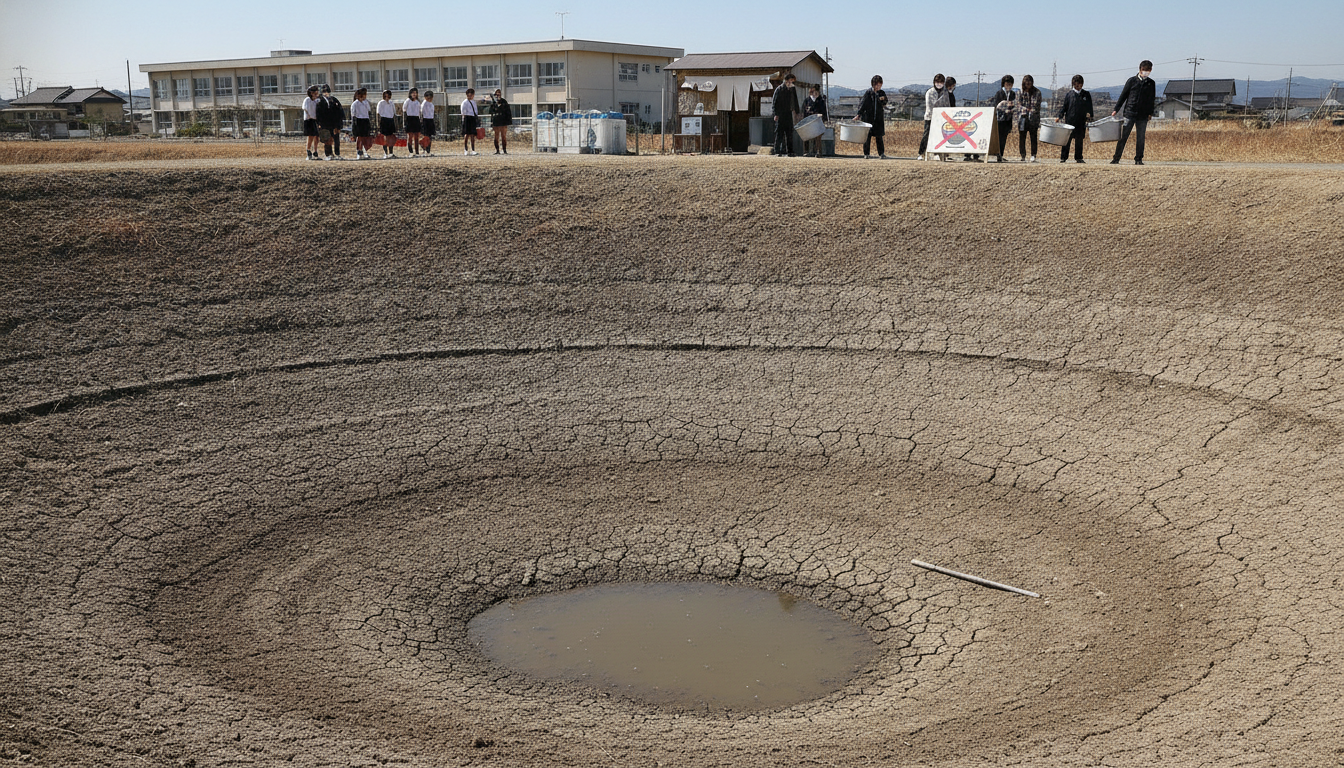
Shikoku water shortage deepens as dams fall and daily life adjusts ahead of Typhoon No.24
Shikoku water shortage grips communities as reservoir levels plummet; schools suspend pools, Takamatsu shifts to paper plates, and businesses curb use while rain from Typhoon No.24 is expected on Sept. 3, 2026.
Shikoku residents are facing a mounting water crisis as reservoir levels across the region have declined sharply this summer, prompting emergency conservation measures. The developing Shikoku water shortage has forced schools, public facilities and businesses to change routines, and local officials are urgently monitoring whether incoming rains from Typhoon No.24 on Sept. 3, 2026, will restore depleted supplies. With parts of the island experiencing prolonged dry spells even as other regions saw heavy downpours, authorities warn that relief is uncertain and conservation must continue.
Reservoirs Approach Critical Thresholds
Major dams that supply drinking water and irrigation for large parts of Shikoku have seen storage fall to historic lows this season. Officials report that some reservoir levels are hovering near critically low percentages, raising the prospect that the so-called “water jug” for the region could be effectively emptied if rains do not arrive.
The imbalance is stark: while parts of the country endured intense rainfall and typhoon-related deluges in August, Shikoku’s catchment areas received far less precipitation. That uneven distribution has strained system reservoirs and intensified concerns over both household supply and agricultural irrigation for the autumn planting season.
Schools and Public Facilities Cut Water Use
Municipalities across Shikoku have begun limiting nonessential water activities to conserve supplies. Several public pools have closed for the remainder of the summer, and prefectural education authorities have replaced planned swimming lessons with alternative curricula for the start of the new term.
Takamatsu city has taken practical steps to reduce water used in school cafeterias, announcing a switch from reusable bread plates to disposable paper napkins starting Sept. 7, 2026, to curtail water needed for dishwashing. Officials said the measure is temporary but necessary to reduce daily consumption while reservoir levels remain low.
Udon Industry Curtails Operations to Save Water
The region’s food sector, including the famed udon restaurants of Kagawa Prefecture, is adjusting operations as water becomes scarcer. Even small udon shops typically consume hundreds of liters a day for boiling noodles and cooling them in cold water, and proprietors say those volumes are now unsustainable without changes.
Some independent shops report altering menus, reducing service hours or introducing water-saving techniques such as recirculating cooling systems and stricter cleaning schedules. Larger chains with broader supply networks are also evaluating operational changes to limit water use while maintaining hygiene standards.
Local Governments Enact Conservation and Monitoring Measures
Prefectural and municipal authorities across Shikoku have issued conservation advisories and implemented targeted restrictions to stretch dwindling supplies. Measures include encouraging reduced household use, prioritizing potable water delivery, and coordinating with agricultural stakeholders on irrigation schedules.
Water bureaus are increasing daily monitoring of dam inflows and outflows and preparing contingency plans for rationing if conditions worsen. Emergency response teams are on alert to deploy temporary water supplies to critical facilities such as hospitals and care homes should shortages escalate.
Typhoon No.24’s Rainfall Could Provide Temporary Relief
Forecasters expect Typhoon No.24 to bring rain to Shikoku beginning on Sept. 3, 2026, and local officials say the event could deliver much-needed inflow to reservoirs. However, the potential benefit depends on the storm’s track and rainfall distribution; heavy, localized totals could replenish some basins while leaving others dry.
Authorities caution that even significant short-term inflows may not resolve deeper hydrological deficits created by weeks of below-average precipitation. Runoff patterns, sediment load and the speed at which reservoirs can capture stormwater will influence how much usable water is added to storage.
Communities across Shikoku are adapting to an evolving water emergency that combines prolonged dry weather with uneven national rainfall patterns. Local governments and businesses are implementing conservation measures to protect essential services while closely watching reservoir trends and the approach of Typhoon No.24 on Sept. 3, 2026. Residents are being asked to continue saving water as officials evaluate both immediate relief from the storm and longer-term strategies to bolster resilience against future shortages.

