
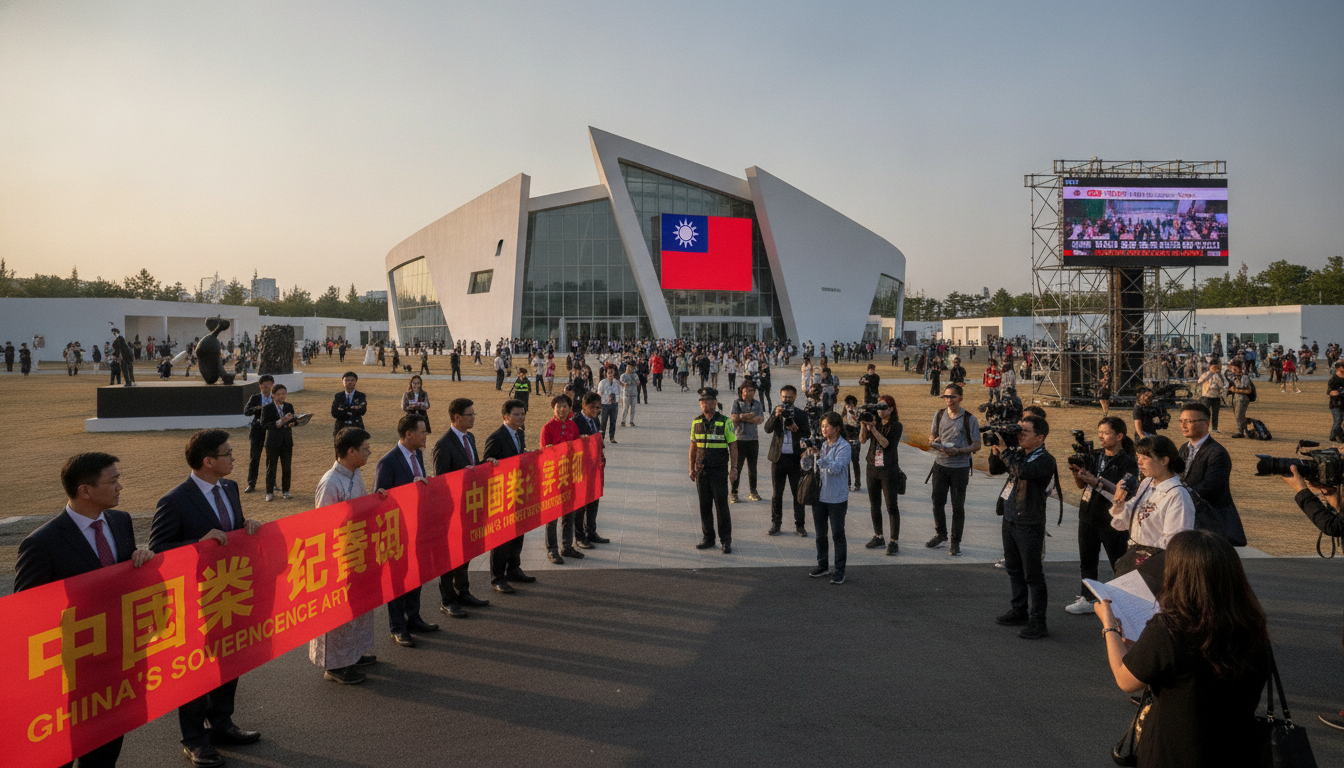
Taiwan pavilion at Gwangju Biennale sparks diplomatic row with China and local artists
A Taiwan pavilion at the Gwangju Biennale has triggered diplomatic tensions, with reports of a Chinese boycott threat and South Korean artists protesting political interference.
Taiwan pavilion triggers diplomatic controversy
The Taiwan pavilion at the Gwangju Biennale has become the focal point of an international dispute between cultural organisers and regional governments. The pavilion’s formal use of “Taiwan” prompted reports that China had threatened a boycott of South Korea’s leading contemporary art event. Organisers and local cultural institutions now face competing pressures to balance artistic presentation with diplomatic sensitivities.
The controversy has unfolded as the Biennale opens in Gwangju, a city long known for its contemporary art programming and democratic history. The display, accompanied by official promotional material credited to the National Asian Culture Center in Gwangju, foregrounded the pavilion’s national designation and artistic program. The naming decision, while straightforward to curators, quickly became a flashpoint in regional politics.
Reports of a Chinese boycott and diplomatic pressure
Multiple accounts published since the pavilion announcement suggested that Beijing had signalled it might reduce or withdraw participation in the Biennale in response to the use of “Taiwan.” Those reports described the potential measure as part of a broader pattern in which cultural events become entangled with diplomatic disputes. Neither Chinese nor South Korean state bodies issued detailed public briefings at the time, leaving much of the reporting reliant on anonymous sources and institutional statements.
Cultural diplomacy experts say the threat of boycott, whether explicit or inferred, has real consequences for festivals that rely on international exchange. A boycott can curtail participation by artists, institutions and funding partners, curbing programs that are often the result of years of planning. For the Biennale, an event that markets itself as a hub for transnational artistic dialogue, any withdrawal by major contributors would be both symbolic and operationally disruptive.
Gwangju Biennale organisers and local responses
Biennale organisers have worked to defuse immediate tensions while maintaining the exhibition schedule. Public statements emphasised the event’s commitment to artistic freedom and to hosting a wide range of international participants. At the same time, organisers acknowledged the complexity of staging an international exhibition in a fraught geopolitical environment.
Local cultural bodies, including the National Asian Culture Center, provided logistical and promotional support for the Taiwan pavilion. Officials at these institutions have stressed that their role is to facilitate artistic exchange rather than to adjudicate international disputes. Nonetheless, the fallout from the naming decision has prompted internal discussions about how to navigate national sensitivities without compromising curatorial autonomy.
Local artists protest perceived political interference
Against the backdrop of diplomatic unease, some South Korean artists and cultural activists have publicly objected to what they describe as political interference in the arts. Demonstrations and open letters from local practitioners argued that artistic spaces should not be subject to external political coercion. Protesters framed their opposition both as a defence of local autonomy and as a stand for the independence of cultural institutions.
Artists’ statements highlighted concern that external pressure could set a precedent for future events, where curatorial choices are narrowed by diplomatic objections. The pushback from the artistic community underlined a broader unease about the instrumentalisation of culture for state-level bargaining. In Gwangju, where civic activism has deep roots, such responses resonated with a local public attentive to issues of freedom and representation.
Regional precedents and cultural diplomacy implications
Observers pointed to earlier instances in which cultural platforms were drawn into disputes between Beijing and other entities over Taiwan-related recognitions. While major international festivals have sometimes navigated these tensions quietly, the Gwangju case illustrates how naming decisions can rapidly escalate. That dynamic raises questions about the ability of cultural institutions to remain neutral spaces for exchange in an era of heightened geopolitical sensitivity.
The incident is likely to reverberate beyond a single Biennale edition, prompting festival directors and funders across the region to reassess risk management strategies. Some institutions may seek clearer protocols for handling contested national designations, while artists and curators may weigh the diplomatic exposure that certain projects entail. The balance between artistic integrity and institutional survival will be tested anew in forthcoming cultural seasons.
What organisers and participants say next
Organisers have indicated they will continue the Biennale program and engage with participating delegations to limit disruptions. Participants from the Taiwan pavilion have been reported as pressing ahead with their scheduled exhibitions and events, emphasising that the artworks themselves are intended to open dialogues rather than provoke state-level confrontation. Local stakeholders have called for calm and for the protection of cultural spaces from political escalation.
Legal and diplomatic advisers to cultural organisations say that advance planning and clear agreements with partners can mitigate the fallout from such disputes. Yet they also acknowledge that art events cannot be fully insulated from geopolitics when national identity is at stake. The coming weeks will test whether dialogue among organisers, artists and external governments can resolve practical hurdles without sidelining artistic voices.
The Gwangju Biennale episode underscores the fragile intersection of culture and diplomacy in East Asia, where decisions about names and representation carry consequences far beyond gallery walls. Observers say the resolution of this dispute will matter not only for the current exhibition but for the resilience of international cultural exchange across the region.

