
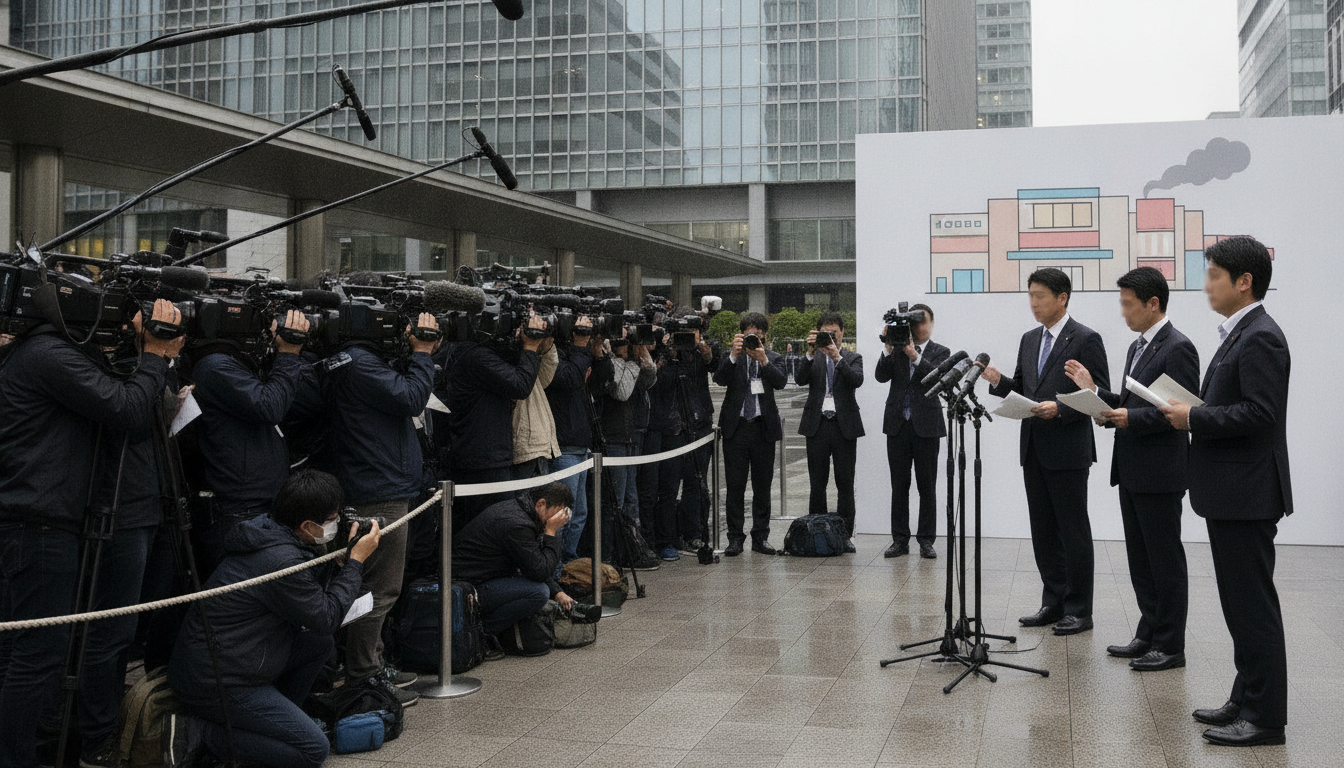
Aeon Mall Kumamoto explosion sparks METI-commissioned investigation into suspected LP gas leak
METI convened an independent panel on September 3, 2026, after the Aeon Mall Kumamoto explosion; investigators will probe a likely LP gas leak and recommend safety measures.
The Ministry of Economy, Trade and Industry (METI) on September 3, 2026, convened the first meeting of an accident investigation committee into the Aeon Mall Kumamoto explosion that followed the recent Kumamoto earthquake. METI officials said a leaked liquefied petroleum (LP) gas is considered a likely cause, and the newly formed panel will determine the root cause and propose measures to prevent a recurrence. The meeting marked the formal start of a technical review that will encompass gas systems, building structures and disaster response procedures.
Investigation panel holds inaugural session
The committee’s initial session was held at the High Pressure Gas Safety Association office in Tokyo’s Minato ward on September 3, 2026. Members heard a preliminary assessment from METI that pointed to an LP gas leak as the most probable trigger of the blast at Aeon Mall Kumamoto. Officials emphasized that the inquiry aims both to identify technical failures and to develop practical, enforceable recommendations.
Panelists signaled they will balance thoroughness with the need for timely findings. Authorities present as observers included representatives from METI, the Ministry of Land, Infrastructure, Transport and Tourism and the Fire and Disaster Management Agency, underlining the cross-agency interest in the causes and policy implications of the Aeon Mall Kumamoto explosion.
Suspected LP gas leak remains central focus
METI officials briefed the committee on preliminary evidence suggesting that LP gas used within the mall escaped containment and subsequently ignited. Investigators will trace the likely leak path from outdoor storage tanks through distribution piping into occupied spaces to reconstruct how flammable concentrations could have formed. Forensics will assess whether the leak resulted from earthquake damage to pipes, fittings, or valves, or from maintenance and installation shortcomings.
The investigation will also examine detection and alarm systems, emergency isolation mechanisms and any delays in evacuation or response that allowed the gas to accumulate. Determining why mall staff, tenants or sensors did not detect the hazard in time is a central element of the panel’s remit.
Composition of the committee and observer roles
The committee comprises eight specialists drawn from LP gas technology, structural engineering, disaster response and legal practice, according to the briefing at the first meeting. The panel was established under the auspices of the High Pressure Gas Safety Association and will operate with technical support from government observers. METI and other agencies will provide data and coordinate follow-up actions as needed.
Observers from the relevant ministries are expected to monitor proceedings and absorb the committee’s recommendations for regulatory or enforcement changes. The presence of multidisciplinary experts reflects the investigation’s scope, which will address technical, operational and regulatory dimensions of the Aeon Mall Kumamoto explosion.
Safety Association chair emphasizes accuracy over speed
At the session’s opening, Yoichi Kato, chair of the High Pressure Gas Safety Association, urged the committee to avoid rushing to conclusions while remaining mindful of time. He told members the goal is to “reach the true cause and to formulate effective and superior measures for preventing recurrence,” stressing the need for careful analysis that yields durable policy responses. That statement framed the committee’s approach as one that will marry precision with practical urgency.
Kato’s remarks signaled awareness of public concern and the reputational stakes for industry and regulators. The association will host the committee’s work and facilitate technical exchanges with industry stakeholders and gas safety experts.
Technical challenges and evidence-gathering ahead
Investigators face several technical challenges in reconstructing the sequence that led to the Aeon Mall Kumamoto explosion, not least determining the precise timing and location of any leak. The committee will review inspection records, maintenance logs, installation schematics and sensor data, and is expected to commission site inspections and laboratory tests. Seismically induced failures, aging infrastructure and human factors will all be weighed in the analysis.
Forensic reconstruction may also rely on witness accounts, security footage and physical examination of damaged piping and tanks. The panel’s findings could point to gaps in design standards, inspection regimes or emergency procedures for commercial facilities that rely on LP gas.
Potential implications for commercial facility safety and regulation
Any conclusions that link the Aeon Mall Kumamoto explosion to systemic vulnerabilities in LP gas storage or distribution could prompt regulatory revisions and wider industry action. The panel’s recommendations may address stricter maintenance protocols, mandatory sensor and shut-off systems, or changes to how LP gas is stored near high-traffic public spaces. Authorities and operators will be watching for proposals that balance safety gains with implementation feasibility.
Retail chains and mall operators nationwide are likely to review their own gas safety arrangements as the investigation progresses. The committee’s work may also influence disaster preparedness guidance for commercial facilities in earthquake-prone regions.
Final reporting and follow-up actions are expected once the panel completes its technical inquiry and produces recommendations aimed at preventing a recurrence of the Aeon Mall Kumamoto explosion. The committee has indicated it will approach the work methodically to ensure its findings are robust and its recommendations actionable.

