
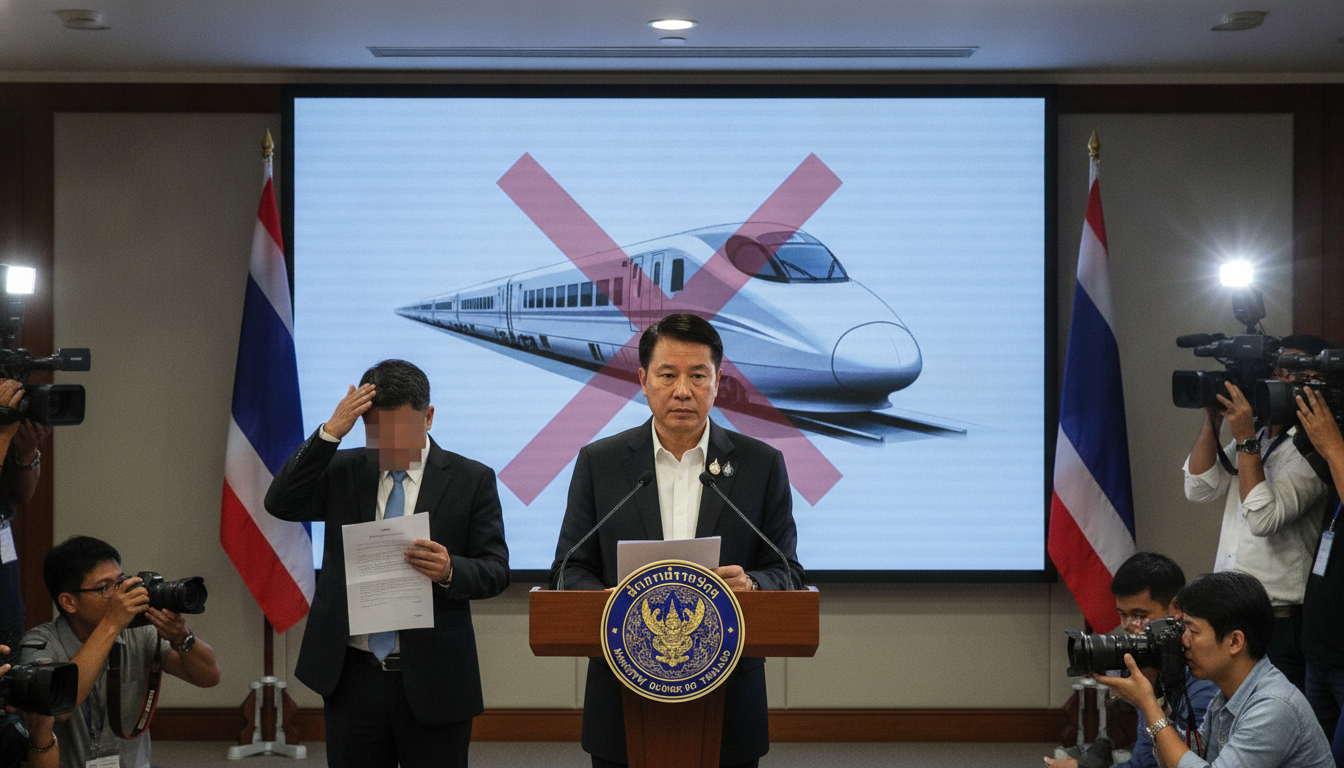
Thailand three-airport high-speed railway thrown into doubt as lead company seeks contract termination
A lead concessionaire for the Thailand three-airport high-speed railway has moved to terminate its contract with the government, deepening uncertainty for the $7 billion infrastructure venture and for long-delayed plans to link central-region airports.
The company leading the $7 billion project has indicated it wants to end its contract with the government, a development that threatens the already stalled Thailand three-airport high-speed railway. The move could complicate financing and planning at a time when the project has faced repeated delays and shifting timetables. Government officials, airport operators and private stakeholders now face a compressed window to respond to a potential unraveling of the concession agreement.
Contract termination bid and immediate fallout
The formal action by the lead concessionaire to seek termination signals a major shift in the project’s status and immediately raises questions about what obligations remain under the existing agreement. Termination proceedings typically trigger negotiations over compensation, outstanding liabilities and the transfer of project assets, any of which could extend the timeline for resolution. For a project described as a $7 billion venture, the financial and legal stakes are substantial and likely to attract scrutiny from lenders, insurers and potential replacement bidders.
History of delays and stalled progress
Planning for a high-speed rail link connecting three central airports has been under discussion for years, but actual construction and commissioning have been repeatedly postponed. Reported scheduling slippages, funding debates and regulatory reviews have left the initiative in a holding pattern, with contractors and public authorities unable to lock in a sustained delivery schedule. Those prolonged delays have left the project vulnerable to changing market conditions and shifting priorities among the parties involved.
Operational and commercial implications for airports
While the termination request pertains to the future rail link rather than existing airport operations, the uncertainty carries potential commercial consequences for airport planning and regional development. Airport operators, airlines and logistics firms that factored the rail link into forecasts for passenger flows and cargo distribution may now need to reassess investment and service plans. Any prolonged gap between planning and delivery could alter expected connectivity gains that regional planners have long cited as a rationale for the scheme.
Financial, contractual and lender considerations
A move to terminate a major concession typically prompts lenders and equity partners to seek clarity on repayment and recourse, and may trigger dispute-resolution clauses in project contracts. Creditors that underwrote parts of the $7 billion financing package will be watching to determine whether covenants remain intact or whether restructuring will be necessary. In addition to direct financial exposure, insurers and guarantors may be involved in determining responsibility for costs tied to delays, mobilization of works, or breach claims.
Government response and policy options
The Thai government faces several pathways in responding to the concessionaire’s termination request, including negotiation, arbitration, or seeking new partners to complete the work. Authorities could pursue remedies within the contract, open a fresh tender process, or explore alternative delivery models that shift risk among public and private actors. Any chosen route would likely require clear timelines and political commitment to reassure markets and stakeholders that connectivity plans remain a priority.
Regional development and traveler expectations
Planners have long argued that a three-airport rail link would enhance connectivity for travelers and support broader economic goals in the central region, but the latest development may erode confidence in those projections. Businesses, commuters and local governments that anticipated improved access may now face renewed uncertainty about when, or if, the promised benefits will materialize. Restoring confidence will depend on a transparent timetable for next steps and credible commitments from parties prepared to carry the project forward.
The immediate path ahead remains uncertain: negotiations between the concessionaire and government representatives will be closely watched for any indication of compromise or escalation. Stakeholders from the finance, transport and aviation sectors are likely to press for an expedited resolution to limit knock-on effects, but resolution timelines for large infrastructure disputes can span months or longer. Until there is a clear announcement of the next legal or commercial steps, the future of the Thailand three-airport high-speed railway will remain unresolved and its $7 billion price tag a focal point of contention.

