
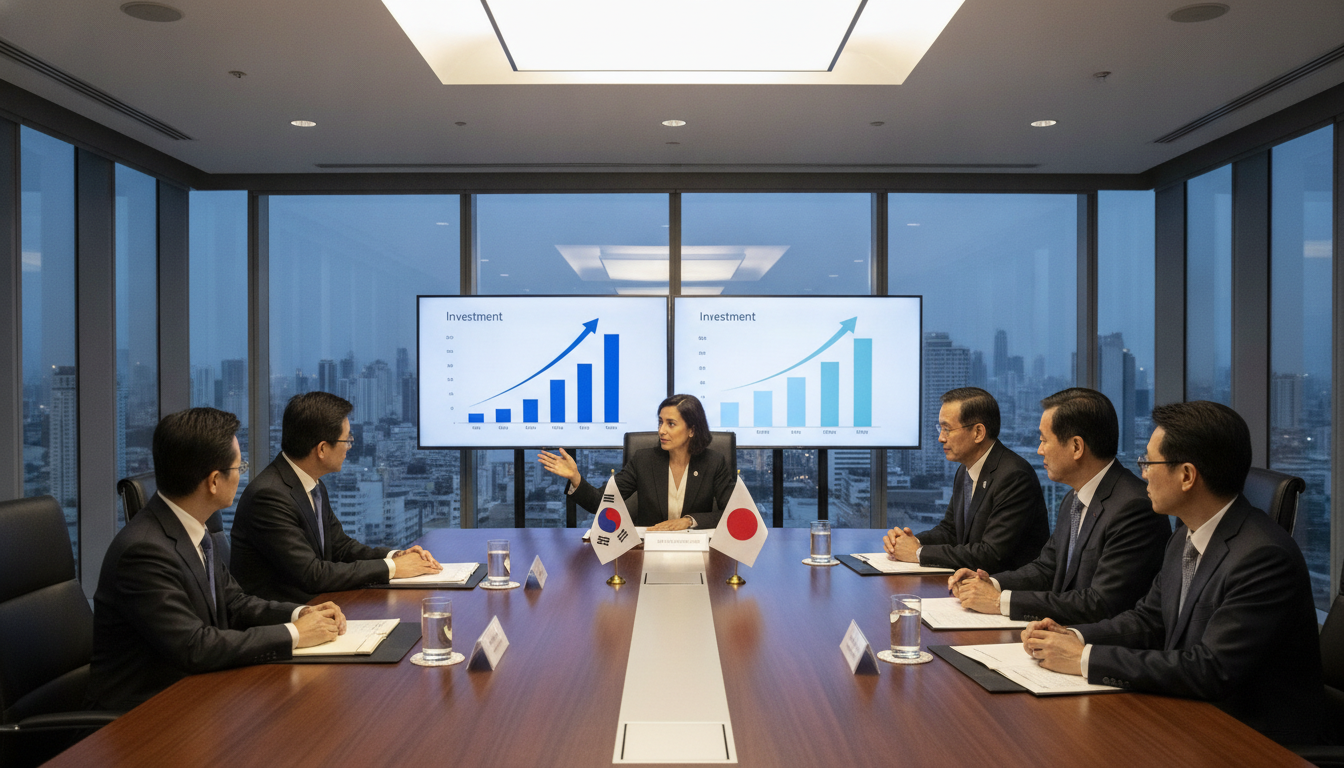
World Bank Urges Thailand to Court Korean and Japanese Suppliers to Build a Thailand Electric Vehicle Hub
World Bank urges Thailand to attract South Korean and Japanese battery suppliers to become a Thailand electric vehicle hub, boosting exports and skilled jobs.
Thailand should redouble efforts to attract battery and parts suppliers from South Korea and Japan to build a Thailand electric vehicle hub, the World Bank said in a report released Thursday. The lender recommended that Bangkok pursue diversified regional supply chains to underpin export-led growth and move beyond traditional assembly lines. The report arrives as policymakers and investors weigh opportunities to expand the country’s role in the global EV market. Building stronger links with Korean and Japanese manufacturers, it said, could accelerate Thailand’s shift toward higher-value industrial activity.
World Bank calls for supply-chain diversification
The World Bank’s analysis highlights the limits of an auto sector reliant on a narrow set of upstream suppliers and components. It argues that attracting battery cell producers, battery pack assemblers and other specialized suppliers would raise the local value captured from electric vehicle production. Diversified supply chains, the report suggests, would also reduce exposure to single-country shocks and improve Thailand’s resilience to global trade disruptions. The lender framed this strategy as essential for sustaining long-term economic growth in the face of rapid electrification of vehicles worldwide.
Focus on South Korean and Japanese battery ecosystems
The report singles out South Korea and Japan as priority sources of investment because of their advanced battery technologies and deep supplier networks. Firms from those countries lead in battery chemistry, cell manufacturing and pack integration, raising the potential for technology transfer if they invest in Thailand. The World Bank recommended targeted outreach to these ecosystems, including incentives tied to local R&D, workforce upskilling and collaboration with Thai suppliers. Officials and industry analysts say such partnerships could speed the emergence of a full battery value chain inside the country.
Existing manufacturing base and export strengths
Thailand’s long-standing auto manufacturing base gives it a platform to pivot toward electric vehicles, with established supply networks, skilled technicians and export logistics already in place. Auto assembly plants and component makers that historically served internal combustion engines can potentially retool to produce EV-specific parts if demand and incentives align. Strengthening links with battery suppliers could allow Thailand to move from assembly-focused operations to higher-value activities such as module integration and testing. That shift would bolster Thailand’s credentials as a regional export hub for finished electric vehicles and components.
Key infrastructure and policy challenges
Realizing a Thailand electric vehicle hub will require overcoming several constraints, including stable and scalable power supply, charging infrastructure, industrial land availability and streamlined permitting. Battery manufacture and cell production are energy-intensive and raise environmental and safety considerations that demand regulatory clarity. The World Bank also flagged the need for workforce development programs to supply engineers and technicians with EV-specific skills. Addressing these gaps will be essential to convince international suppliers that Thailand is a reliable location for long-term investment.
Economic impact and regional competition
If successful, attracting upstream battery suppliers could generate export growth, higher-quality jobs and more value-added activity in Thailand’s manufacturing sector. The transition promises to create roles across engineering, plant operations and logistics while boosting export revenues from finished EVs and integrated components. However, Thailand faces increasing competition from neighboring countries that are also courting EV supply chains, and policymakers will need to act promptly to capture inward investment. The World Bank’s recommendation underscores the narrow window in which countries can secure anchor investors that shape regional production networks.
Policy options and private-sector engagement
The report outlines a mix of policy levers and private-sector measures to make Thailand more attractive to battery makers, including tailored investment incentives, dedicated industrial zones, partnerships for training and clearer environmental and safety standards. Public-private cooperation on pilot projects, research collaborations and supply-chain mapping could reduce entry costs for overseas firms and help local suppliers meet technical requirements. Donor financing and multilateral support, the report notes, can help fund infrastructure upgrades that private investors alone may not prioritize. Close coordination between ministries, industry associations and foreign investors will be necessary to translate recommendations into concrete projects.
Thailand’s immediate task is to convert strategic recommendations into practical policies that persuade Korean and Japanese suppliers to commit capacity on Thai soil, the World Bank says. Success would not only deepen manufacturing linkages but also position Thailand to capture a larger share of a fast-growing global market for electric vehicles. The coming months will test whether Bangkok can deliver the regulatory certainty, infrastructure upgrades and workforce programs needed to attract the next wave of investment.

