
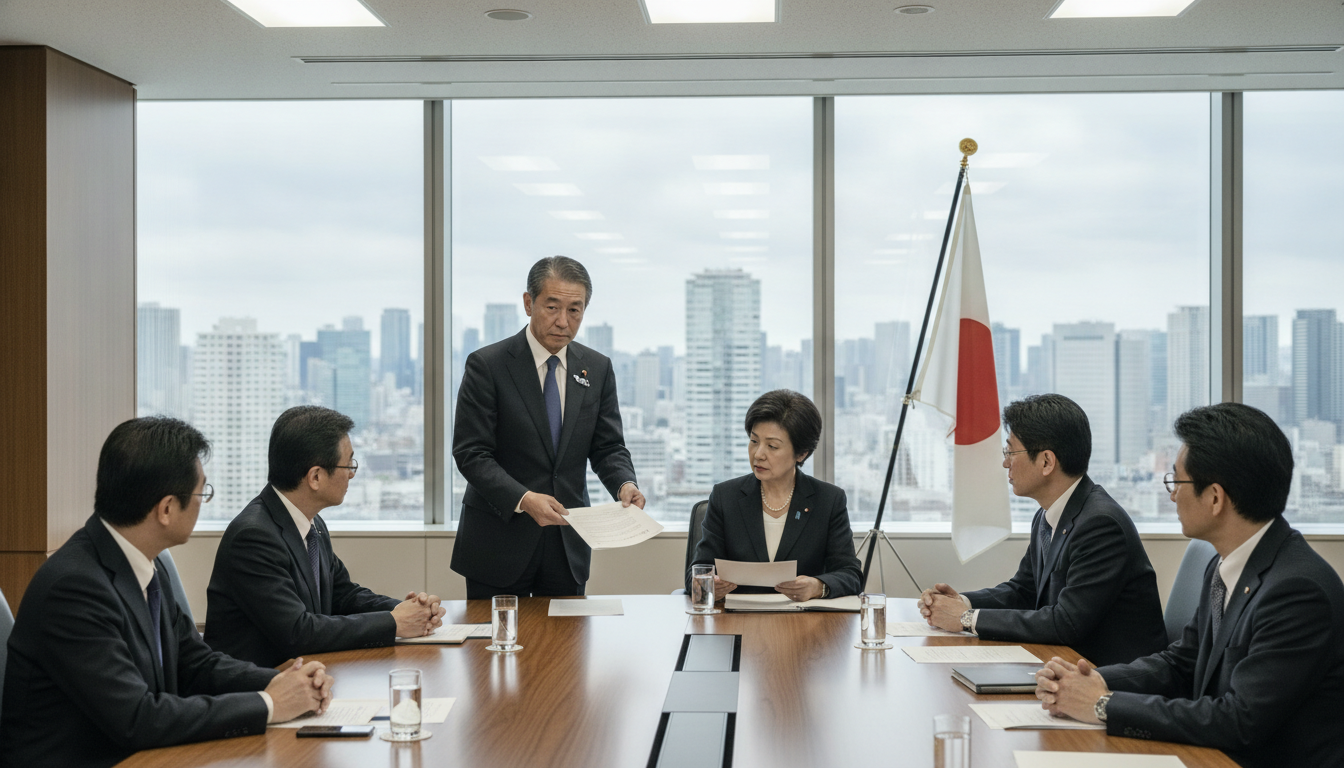
Japan Innovation Party to Push Nobuyuki Baba into Cabinet in September Reshuffle
Japan Innovation Party will push former leader Nobuyuki Baba for a cabinet post in PM Sanae Takaichi’s September reshuffle, moving to inside cooperation.
Japan Innovation Party (Ishin) confirmed on September 3, 2026, that it intends to recommend former party leader Nobuyuki Baba for a ministerial position in Prime Minister Sanae Takaichi’s planned cabinet reshuffle later this month. The move marks a shift from the party’s previous posture of outside cooperation to active participation within the cabinet, a step leaders say is aimed at securing a greater role in national policymaking. Government sources said Prime Minister Takaichi has begun negotiating ministerial allocations with Ishin ahead of the reshuffle.
Ishin’s Decision and Party Strategy
Ishin leaders concluded the recommendation after internal discussions about how best to influence government policy following the February lower house election. The party had maintained its stance of external cooperation since joining a coalition agreement in October last year, citing the need to monitor policy implementation. Officials from Ishin argued that joining the cabinet would allow them to advance specific reform priorities more effectively than working from the outside.
The shift reflects a strategic calculation that the party’s leverage can be enhanced by formal ministerial representation. Party figures framed the decision as a pragmatic response to the political reality that the Liberal Democratic Party’s dominant position after the February election reduced Ishin’s ability to shape the agenda without being inside government. The move is also intended to signal to voters that Ishin can deliver influence and concrete results.
Prime Minister Takaichi’s Motive and Timing
Prime Minister Takaichi views Ishin’s entry into the cabinet as an opportunity to shore up her governing coalition and broaden policy support. Senior government sources said she has instructed aides to explore possible portfolios that could be offered to Ishin without sparking an intense backlash inside the Liberal Democratic Party. Takaichi’s office has framed the reshuffle as a channel to strengthen the cabinet’s capacity to implement a policy program ahead of key legislative battles.
Timing is central to the prime minister’s calculation: the reshuffle, expected within September, follows a period in which the LDP secured a decisive victory in February, altering intra-coalition dynamics. With parliamentary schedules and upcoming domestic priorities, Takaichi’s team views a prompt reshuffle as a way to lock in commitments and present a more united governing front.
Background: From 2012 Founding to Oct 2025 Coalition
Ishin was founded in 2012 by Osaka political figures seeking systemic reform and local empowerment, and its relationship with national parties has evolved over more than a decade. When the coalition agreement with the LDP was reached in October 2025, Ishin chose not to accept cabinet positions, preferring to remain an external partner while monitoring the implementation of agreed policies. That arrangement reflected mutual caution: Ishin wanted to preserve its reformist brand, and the LDP sought to limit internal strain.
The decision to stay out of the cabinet also reflected parliamentary arithmetic at that time, when the LDP lacked a secure majority in both houses. As political calculations shifted after the February 2026 election, so too did the logic of participation.
Internal LDP Concerns and Political Risks
Despite the prime minister’s interest in bringing Ishin inside government, significant unease remains within LDP ranks. Several veteran LDP lawmakers privately expressed frustration over past Ishin critiques of LDP policies and worried that formal cabinet ties could create friction in policymaking. Party insiders warned that bringing Ishin into the cabinet risks exacerbating factional tensions and could complicate consensus-building on contentious bills.
Political analysts also caution that incorporating Ishin ministers may expose the government to reputational risk if policy disputes surface publicly. Opposition parties have already framed the potential appointments as evidence of political bargaining, and media scrutiny is likely to intensify around portfolio choices and the terms of cooperation.
Potential Portfolios and the Role for Nobuyuki Baba
Government sources indicate that Ishin is likely to push for a cabinet or state minister role that offers direct policymaking authority in areas aligned with its reform agenda. Nobuyuki Baba, a former party leader with experience in both parliamentary and party management roles, is seen by Ishin as a candidate who can navigate cabinet responsibilities while advancing structural reforms. The precise portfolio under consideration remains subject to negotiation, with officials emphasizing that any appointment must balance ministerial influence with political sensitivities inside the coalition.
Observers note that assigning Baba to a high-profile ministry would underline Ishin’s ambitions, while a junior post could be portrayed as a measured step toward deeper cooperation.
Next Steps and Implementation Timeline
Negotiations between the prime minister’s office and Ishin are expected to continue through this month, with final decisions timed to coincide with the cabinet reshuffle that sources say will take place before the end of September. Both sides have signaled a preference for resolving portfolio allocations swiftly to minimize uncertainty and present a cohesive government agenda. Administration aides are compiling lists of candidate ministries and contingency plans to manage internal dissent.
Parliamentary leaders will also monitor developments closely, as any change in ministerial composition can affect committee leadership and legislative scheduling.
The decision by the Japan Innovation Party to seek a cabinet seat for Nobuyuki Baba represents a notable recalibration of coalition politics in Tokyo and will test the government’s ability to integrate a reformist partner without destabilizing party unity.

