
Ships Turn Off Transponders and Alter Identities as Strait of Hormuz Closures Stall Passage
Ships disable transponders, alter identities and cite China ties to navigate closures of the Strait of Hormuz by Iran and the US, disrupting global shipping.
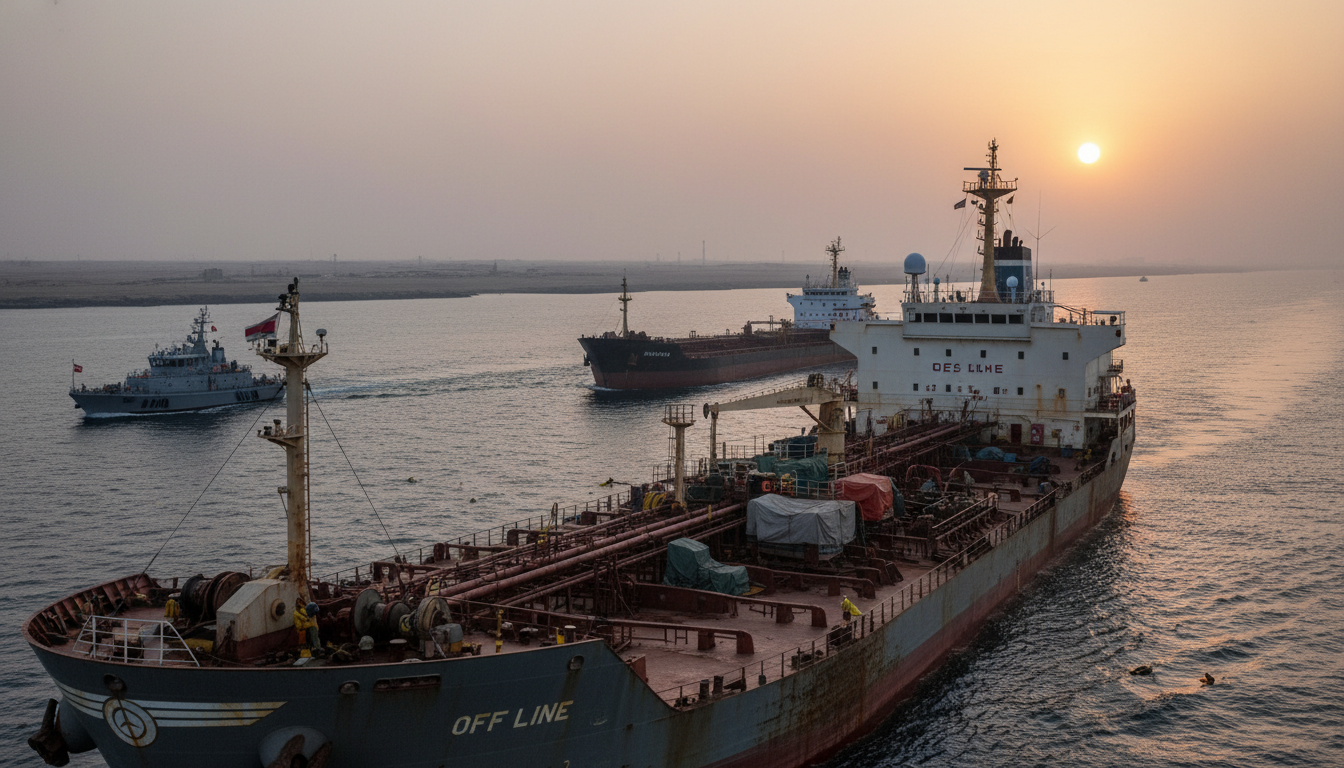
The Strait of Hormuz has seen a wave of vessels switching off automatic identification systems (AIS), altering registry information and touting China links to skirt closures ordered by Iran and the United States, maritime analysts say. Shipping firms and tracking groups report that these measures are being used to secure passage or avoid interdiction as the Mideast conflict continues to reverberate through global trade routes. The result is a growing number of tankers and cargo ships delayed or effectively stranded at anchor outside the strait, exacerbating supply chain pressures.
Vessels Mask Positions to Avoid Detection
Maritime tracking firms report increased incidents of AIS transmissions ceasing or showing inconsistent location data for ships approaching the Strait of Hormuz. Turning off transponders is a known tactic to evade surveillance, and analysts say its recent uptick reflects heightened operational caution by vessel operators in the region.
In addition to switching off AIS, some vessels appear to be transmitting spoofed signals or using temporary identifiers that do not match the ship’s International Maritime Organization (IMO) number. Industry monitors describe these actions as deliberate attempts to complicate identification and reduce the likelihood of stops or inspections by naval forces patrolling the area.
Closures Ordered by Iran and U.S. Create Navigation Uncertainty
Both Iran and the United States have announced or enforced route restrictions and heightened maritime measures in and around the Strait of Hormuz amid the broader regional confrontation. These closures and advisories have created legal and operational uncertainty for commercial operators, who must weigh the risk of interception against commercial imperatives.
The overlapping directives from different authorities have left masters and owners scrambling for guidance, with some choosing to wait in safer waters rather than transit. The backlog has been particularly acute for vessels carrying refined oil products, chemicals and time-sensitive container cargoes.
Commercial Responses: Registry Changes and China Claims
Several ships have been observed presenting altered registry details or asserting commercial ties to China in an apparent bid to obtain safe passage or diplomatic protection. Shipping industry sources caution that such claims can be difficult to verify at sea and may reflect efforts to exploit geopolitical relationships.
Owners and operators are also weighing more formal measures, including reflagging and charter adjustments, to mitigate the risk of seizure or forced diversion. Insurers, meanwhile, are reassessing war-risk premiums and cover terms for voyages through the strait, prompting some operators to delay sailings until clearer routing assurances are available.
Supply Chain and Energy Markets Feel Immediate Effects
Delays in the Strait of Hormuz are filtering into global supply chains, with shipping schedules disrupted and freight rates for affected lanes volatile. Commodities traders and logistics managers say the unpredictability of transits is driving contingency rebookings and empty-leg repositioning that increase costs and delivery times.
Energy markets are also sensitive to the bottleneck, because a significant share of seaborne oil and liquefied petroleum gas passes through the strait. Even temporary accumulations of tankers at anchorage can tighten spot markets and push up short-term freight and insurance costs, with knock-on effects for refiners and consumers in importing countries.
Calls for Enhanced Naval Coordination and Diplomatic Solutions
Industry bodies, port authorities and some governments are urging greater coordination between naval forces and clearer, mutually recognized safe-passage protocols to reduce the incentive for vessel operators to obscure positions. Proposals include agreed corridors, convoy systems and more transparent rules of engagement to reassure commercial shipping.
Diplomats and maritime security specialists say diplomacy remains essential to resolving the core tensions that are causing route closures. They argue that without a durable political de-escalation, temporary measures such as convoys may only offer limited relief and could complicate routine commercial operations.
The current pattern of vessels switching off transponders, altering identifying data or claiming alternate national links underscores the practical dilemmas facing the shipping industry near the Strait of Hormuz. As carriers, brokers and insurers adapt, international monitoring organizations are increasing scrutiny of suspicious signals and registry anomalies to maintain a baseline of maritime safety. Continued volatility in the region means shipping stakeholders should expect persistent disruption until clearer diplomatic and security arrangements are put in place.

