
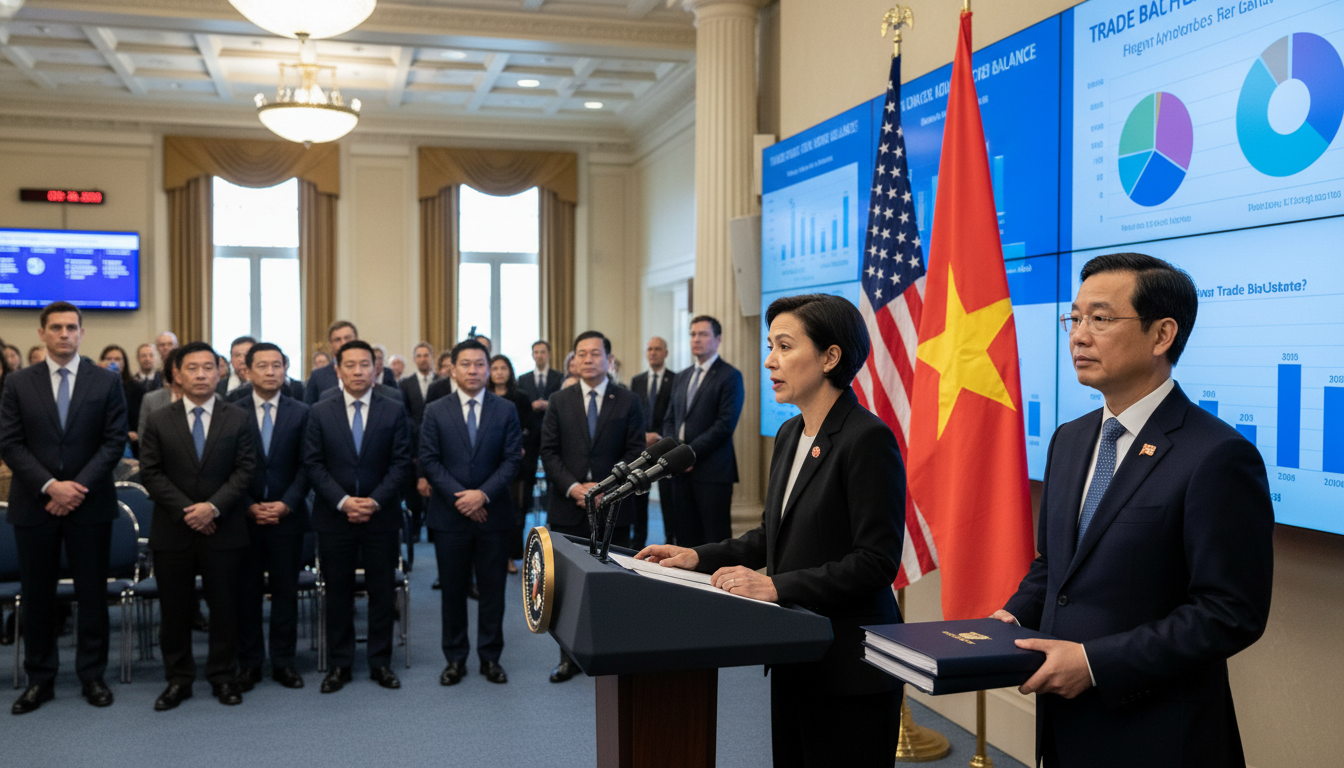
U.S. Opens Third Probe into Vietnam Over Intellectual Property as Analysts Flag Trade Imbalance
U.S. opens third probe into Vietnam over intellectual property; analysts say it also aims to curb a rising U.S.-Vietnam trade deficit and supply-chain risks.
The U.S. announced late Friday that it has launched a third trade investigation into Vietnam under U.S. trade legislation, citing concerns about intellectual property protection and enforcement. The U.S. probe into Vietnam seeks "responsive action" to deter future IP infringements, according to a statement from Trade Representative Jamieson Greer, and the move marks an escalation in trade scrutiny toward the Southeast Asian nation. Analysts say the probe is as much about addressing a large bilateral trade imbalance as it is about intellectual property rights.
U.S. launches third trade probe into Vietnam
When the U.S. Trade Representative opened the latest investigation, officials signaled that the inquiry would examine Vietnam’s legal and enforcement framework for copyright, trademark, and patent protections. This is the third formal action Washington has taken against Vietnam under trade statutes in recent months, reflecting rising tensions over market practices. U.S. officials framed the probe as a tool to secure concrete improvements rather than immediate punitive measures.
The announcement arrived amid growing political scrutiny in Washington of import patterns and manufacturing relocation in Asia. Lawmakers and business groups have increasingly highlighted gaps in enforcement of intellectual property rules and urged administrative action to protect U.S. firms and workers. The probe sets in motion a formal process that could lead to remedial measures if investigators find systematic failures.
Washington highlights intellectual property enforcement
In its public statement, the Trade Representative emphasized the need for sustained, verifiable steps to curb IP infringement and support rights-holders. Officials pointed to recurring cases of counterfeiting and unauthorized use of patented technologies as areas of concern. The investigation will gather evidence from U.S. companies, Vietnamese authorities, and other stakeholders to assess whether domestic laws and enforcement practices meet internationally accepted standards.
The focus on enforcement reflects a broader U.S. policy trend of using trade instruments to address commercial disputes that have intellectual property dimensions. Investigators will evaluate not only statutes on the books but also the effectiveness of border controls, digital enforcement, and judicial remedies available to foreign firms operating in Vietnam. Any findings could inform recommendations or negotiations aimed at strengthening protections.
Analysts say trade imbalance is a driving factor
Market analysts and trade experts say the probe should be read against a backdrop of a substantial U.S. trade deficit with Vietnam, which has widened as companies shifted production to Southeast Asia. Many observers argue that addressing intellectual property issues provides a politically and legally defensible rationale for action that also targets the bilateral trade gap. They suggest Washington is seeking leverage to rebalance commercial flows without imposing blanket tariffs.
Some economists contend that the investigation could be a component of a broader U.S. strategy to encourage higher-value production or greater market access for American goods. Others caution that singling out IP enforcement risks conflating distinct policy objectives and could prompt retaliatory measures or prolonged bargaining between governments. For exporters and multinational firms, the probe introduces new uncertainty into investment and sourcing decisions.
Vietnamese industry and government responses
Vietnamese officials and industry associations have not issued a unified public response to the latest probe, though previous actions prompted a mix of rebuttals and promises of legal reform. Business groups in Vietnam have historically defended the country’s progress on IP legislation while acknowledging implementation challenges in some sectors. Trade ministry officials are expected to engage with U.S. investigators and provide documentation on enforcement efforts.
Vietnam’s manufacturing sector, which has expanded rapidly in electronics, textiles, and medical supplies, faces particular scrutiny because of the complexity of supply chains and the presence of subcontracting networks. Companies operating in Vietnam will likely brief both domestic authorities and foreign partners about steps taken to tighten compliance and guard against illicit trade practices.
Potential impacts on supply chains and exporters
The probe could have ripple effects across regional supply chains, especially for firms that rely on Vietnamese manufacturing for components and finished goods destined for the U.S. market. If findings lead to stricter enforcement expectations or targeted restrictions, some buyers may reassess sourcing strategies to mitigate compliance risks. Conversely, clear remedial action by Vietnam could reassure partners and help stabilize trade relations.
Exporters of high-tech and branded goods stand to benefit if the investigation produces stronger IP protections, while smaller suppliers may face increased compliance costs. The unfolding inquiry also adds a political dimension for companies weighing investment decisions in Southeast Asia, where trade policy uncertainty can influence site selection and contract terms.
Next steps in the investigation and timeline
Under U.S. trade procedures, the investigation will involve evidence collection, consultations with affected parties, and a period for Vietnam to respond to preliminary findings. The timeline can extend for months, and outcomes range from negotiated corrective measures to recommendations for statutory action. Both governments may prefer a negotiated resolution that yields enforceable commitments without escalating to punitive sanctions.
Stakeholders in the private sector are likely to submit briefs and data to inform the inquiry, and international observers will watch for any broader shift in Washington’s approach to trade enforcement in the region. The investigation’s progress will also be monitored for its diplomatic implications as U.S. policymakers balance trade enforcement with security and strategic interests in Asia.
The U.S. probe into Vietnam adds a new chapter to an evolving commercial relationship, one that now faces intensified scrutiny over intellectual property and economic imbalances that have emerged with rapid industrial expansion.

