
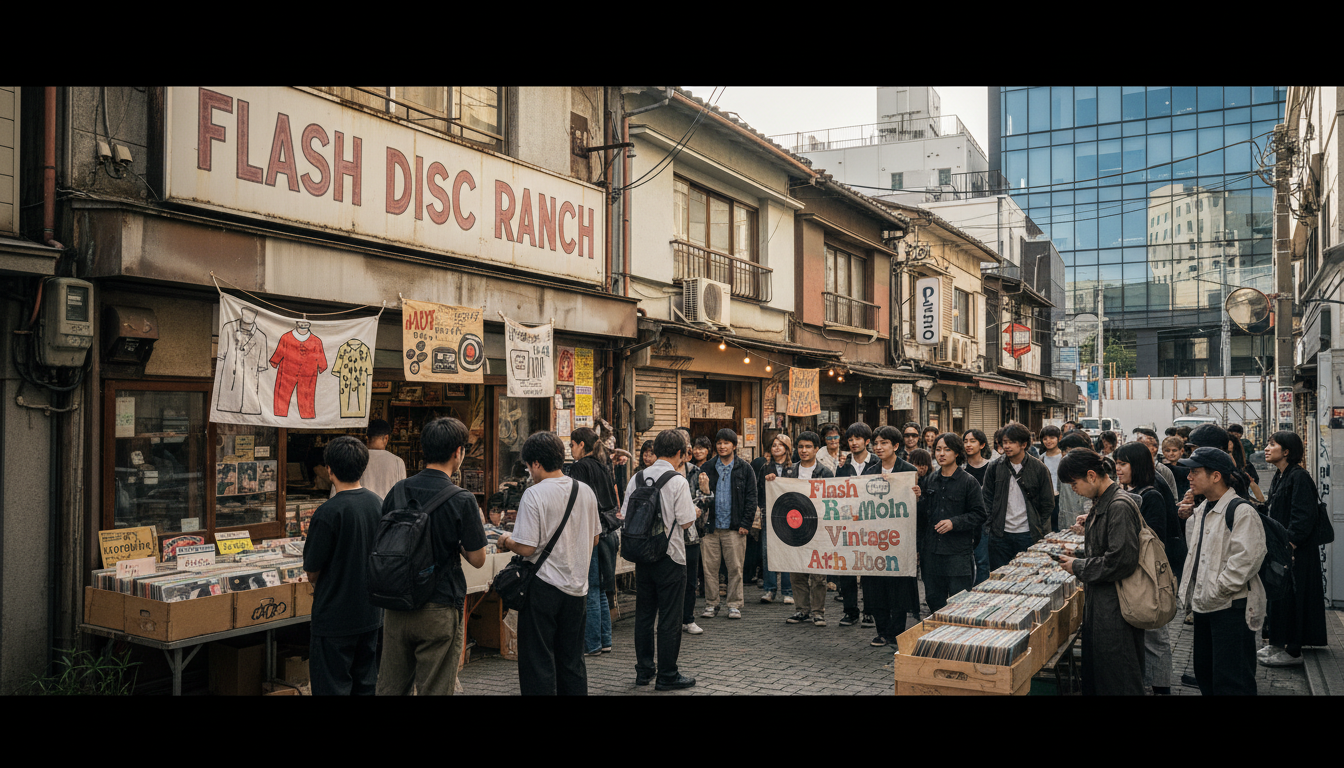
Shimokitazawa’s indie soul endures as vintage shops, vinyl stores and live music venues adapt to Tokyo redevelopment
Shimokitazawa’s indie character is holding fast as redevelopment projects transform parts of the neighborhood, but vintage clothing stores, vinyl sellers and live-music venues continue to define the area. Long-standing small businesses and community groups have responded with adaptive strategies and public campaigns to protect the district’s cultural identity. Visitors still find narrow lanes of secondhand shops, café terraces and intimate stages, even as new construction alters the skyline.
Shimokitazawa’s identity under pressure
The neighborhood, long known for its secondhand fashion and music subculture, faces a wave of redevelopment that has accelerated in recent years. Rising land values and construction of mixed-use buildings have introduced new retail chains and apartments into formerly low-rise blocks. Residents and business owners say the shift threatens the area’s distinct mix of independent retailers and performance spaces.
Despite those concerns, local operators argue that Shimokitazawa’s core identity is resilient because it is based on a network of small merchants and creative spaces. Those networks, they say, cannot be easily reproduced by chain stores or high-rise developments. The result is a contested urban landscape where change and preservation coexist uneasily.
Redevelopment projects reshape streetscape
Municipal and private projects have altered several key parcels of land, replacing single-story shops and warehouses with multi-level developments intended to increase housing and commercial capacity. Proponents point to improved infrastructure and greater tax revenue for the city as benefits of the new construction. Critics counter that the scale and design of many projects fail to reflect the human-scale streets and narrow alleys that draw visitors to Shimokitazawa.
The construction boom has also forced temporary closures and relocations, with some small retailers citing higher rents and logistical hurdles as reasons to downsize or move. Others have used the disruption as an opportunity to update store interiors, expand online sales, or collaborate on pop-up events to keep customer interest high. These adaptive responses are shaping a new commercial ecology rather than simply erasing the old one.
Vintage clothing and vinyl: retail resilience
Shimokitazawa’s reputation as Tokyo’s hub for vintage fashion and vinyl records is rooted in decades of specialized shops that cultivate niche inventories and knowledgeable staff. Many of these businesses operate with low margins and tight supply chains, yet they draw consistent foot traffic from collectors, students and tourists. Their survival often depends on a reputation for curation and a local community that values authenticity over convenience.
Retailers report experimenting with hybrid models: in-store listening booths for records, curated subscription boxes for vintage apparel, and collaborations with international resellers. These efforts help to widen customer bases while keeping the tactile shopping experience that online platforms cannot replicate. The result is a retail scene that leans on speciality and service to withstand competitive pressures.
Live music venues and cultural continuity
Small live houses and comedy clubs provide a steady cultural pulse that differentiates Shimokitazawa from other commercial districts in Tokyo. These venues offer low-cost stages for emerging artists and attract audiences seeking intimate performances rather than arena spectacles. Venue operators emphasize that the neighborhood’s density of small stages has been integral to Tokyo’s broader music ecosystem.
Faced with noise regulations, rising lease costs and occasional redevelopment displacements, several venues have diversified programming and formed cooperative schedules to share audiences. Live events now often dovetail with daytime market fairs, record sales and fashion pop-ups, creating cross-traffic that benefits both performers and retailers. Cultural continuity, therefore, relies on both programming innovation and physical spaces that remain accessible to independent promoters.
Local groups and preservation efforts
Community associations, merchant alliances and civic activists have coalesced to influence planning decisions and to seek protections for low-rise, mixed-use zones. Campaigns have included petition drives, public hearings and creative placemaking initiatives intended to demonstrate the economic and social value of the existing streetscape. These efforts aim to persuade developers and officials to incorporate smaller storefronts, affordable tenancy options and pedestrian-friendly design in new projects.
Beyond formal advocacy, informal networks of tenants and customers have supported one another through rent-sharing arrangements, cooperative marketing and event collaborations. Such grassroots measures have produced temporary retail cooperatives and joint promotions that keep independent brands visible during transitionary periods. The effectiveness of these strategies, community leaders say, depends on sustained engagement from both local stakeholders and city planners.
Tourism, economic impact and future prospects
Shimokitazawa remains a draw for domestic and international visitors seeking an alternative to Tokyo’s more polished commercial centers. The neighborhood’s mix of cafes, vintage shops and live venues feeds a steady tourism economy that benefits small-business owners and service workers. Market trends suggest that experiential retail—where customers seek discovery and social interaction—continues to provide a comparative advantage against homogenized shopping districts.
Looking ahead, the balance between redevelopment and preservation will likely determine whether Shimokitazawa can retain its cultural core while meeting urban demand for housing and modern facilities. City officials, developers and community representatives face choices about zoning, tenant protections and design standards that will shape the district for decades. The most probable outcome is a layered neighborhood that incorporates both new construction and the surviving circuits of independent trade and culture.
As redevelopment proceeds, Shimokitazawa’s narrow lanes, record stores and intimate stages offer a reminder that urban identity is sustained as much by people and practices as by buildings, and that small-scale commerce and live culture can adapt to change if policy and community action create room for them to thrive.

