
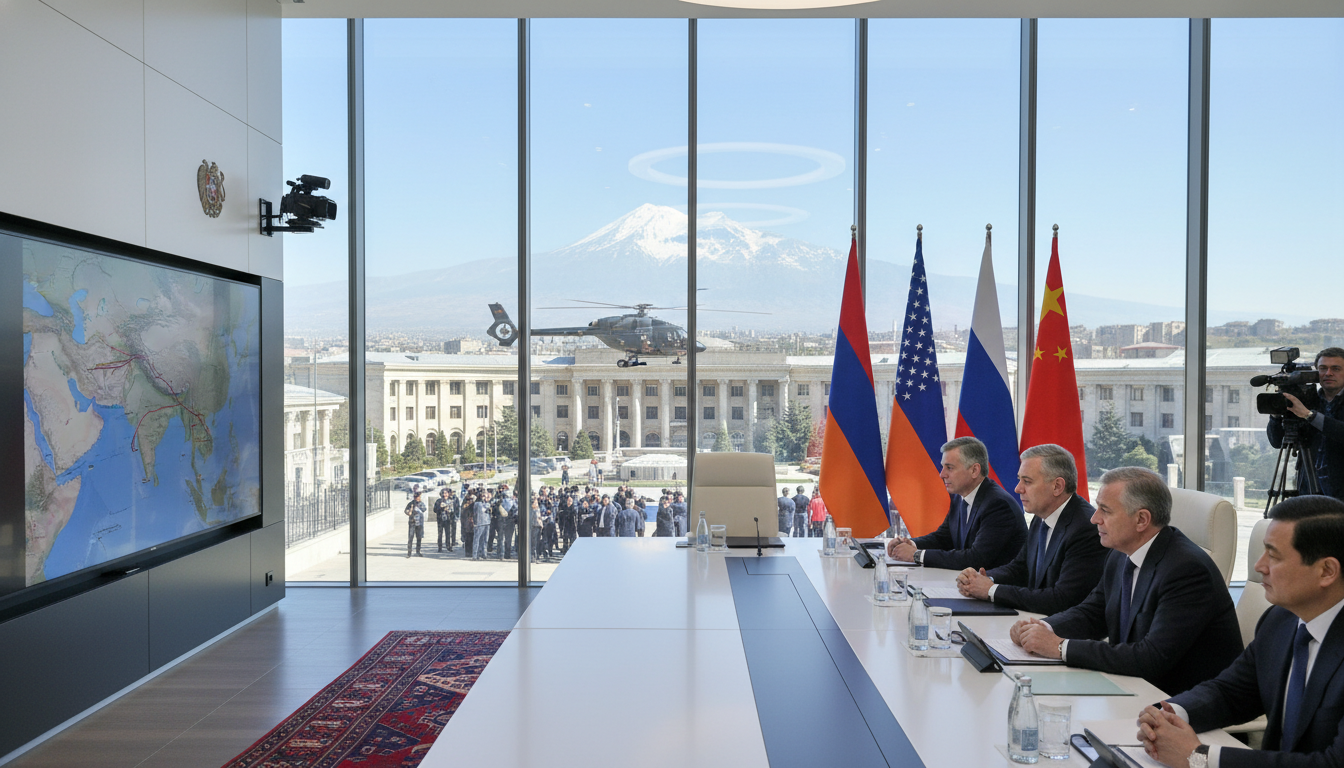
Armenia parliamentary election 2026 draws U.S., Russia and China into strategic contest
Armenia parliamentary election on June 7, 2026 is attracting close attention from the U.S., Russia and China as Yerevan’s vote will help define the country’s alignment and regional transport role.
Armenia heads to the polls on June 7, 2026 in a parliamentary election that has become a focal point for global powers seeking influence in the South Caucasus. The vote, which international bodies are preparing to monitor closely, will test Prime Minister Nikol Pashinyan’s turn toward the European Union and Western partners while pro‑Russia factions press for a different direction. (odihr.osce.org)
Election timetable and international observation
Armenia’s Central Election Commission has formally scheduled voting for June 7, 2026, and both long‑term and short‑term observation missions are preparing deployments. International organisations including the OSCE’s Office for Democratic Institutions and Human Rights and parliamentary assemblies have signalled plans to monitor media coverage, campaign conduct and the vote count. (odihr.osce.org)
Electoral authorities say preliminary results will be announced within 24 hours of polls closing and final results declared in the days that follow. Observers have highlighted the compressed campaign timeline and the heightened political tensions that could complicate verification of post‑vote claims. (ifes.org)
Superpowers increase scrutiny of Yerevan
Washington, Moscow and Beijing have each stepped up diplomatic and intelligence attention around the vote, viewing Armenia as strategically important in a reconfigured regional map. U.S. officials have emphasised support for democratic processes, while Moscow maintains deep military and political links with segments of Armenian society. China has signalled economic interest in regional connectivity projects that transit Armenian territory. (zois-berlin.de)
Analysts say the presence of multiple external actors heightens the stakes beyond domestic governance, making the election an arena for signalling influence across the South Caucasus. Campaign messaging from several parties has referenced foreign partnerships or security guarantees as central campaign themes. (zois-berlin.de)
French and EU engagement ahead of the vote
France and the European Union have publicly backed Armenia’s pro‑European leadership in recent weeks, with French President Emmanuel Macron conducting a state visit and high‑level EU engagement taking place in Yerevan in early May. Paris framed its outreach as support for democratic choice and closer ties between Armenia and European institutions. (primeminister.am)
European parliamentarians and EU officials have underscored economic support packages and integration pathways as incentives for voters who favour a Western orientation. Armenian leaders have used the engagements to argue that closer EU ties will deliver investment, trade and security dividends. (europarl.europa.eu)
Trade corridors and the ‘TRIPP’ initiative
A parallel element shaping voter and elite calculations is the emergence of new overland trade concepts linking Europe and Asia through the South Caucasus and Caspian region. U.S. policy statements and some Western analysts have described a planned corridor—sometimes referred to in commentary as the Trump Route for International Peace and Prosperity (TRIPP) or as part of the broader “Middle Corridor”—that would boost Armenia’s transit significance. (css.ethz.ch)
Proponents say the corridor would shorten freight routes, attract foreign investment in transport and energy infrastructure, and reduce regional dependence on single transit partners. Opponents caution that such projects can become politicised and may increase external pressure on Yerevan to commit commercially and strategically in ways that have domestic political costs. (css.ethz.ch)
Security backdrop: Nagorno‑Karabakh and the peace process
The election takes place amid a fragile peace process with Azerbaijan and lingering security concerns stemming from the years of conflict over Nagorno‑Karabakh. Negotiations brokered with international involvement have produced agreements that reshape borders and transit corridors, and the outcomes of these talks remain salient to voters worried about territorial integrity and displaced communities. (europarl.europa.eu)
Security considerations are central to party platforms, with some candidates emphasising reconciliation and regional connectivity while others prioritise strengthened defence ties and guarantees from Russia or other external partners. Observers warn that any deterioration in the security environment during or after the vote could complicate the acceptance of results. (zois-berlin.de)
Domestic polarization and campaign dynamics
Inside Armenia, the campaign has intensified existing social and political divides, with pro‑European forces rallying around Prime Minister Pashinyan and several established parties mounting a challenge on pro‑Russian or nationalist platforms. Opinion polling ahead of the election pointed to a competitive landscape in which coalition outcomes are possible. (en.wikipedia.org)
Election observers and civil‑society groups have flagged risks including disinformation, targeted media campaigns and attempts to sway diaspora voting and migrant communities. Authorities and international partners have announced measures to bolster media monitoring and counter false narratives, but experts say the digital information environment will remain a contested domain through the ballot. (odihr.osce.org)
Armenia’s June 7 vote will shape the country’s foreign policy trajectory, the pace of economic opening, and the future of regional transport projects that promise to redraw trading maps across Eurasia. The immediate post‑vote period is likely to be watched closely by capitals in Washington, Moscow, Beijing and Brussels as well as by investors and regional neighbours, all of whom have deep stakes in the outcome.

