
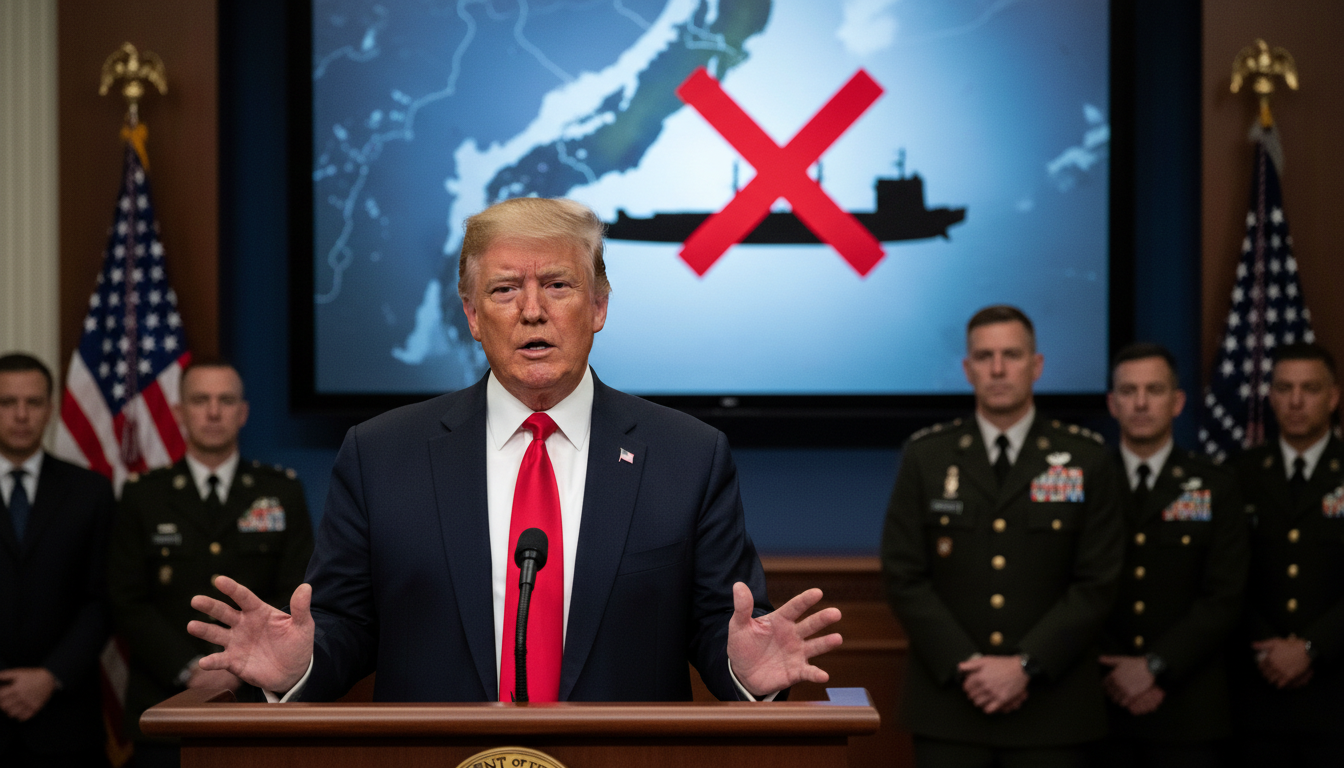
Iran Cannot ‘Blackmail’ U.S., Trump Says as Tehran Moves to Resume Strait of Hormuz Blockade
U.S. President Donald Trump on April 18, 2026, said Iran cannot “blackmail” the United States over threats to close the Strait of Hormuz, after Tehran announced it would resume blocking the strategic waterway. The dispute over the Strait of Hormuz has raised international concern over shipping security and energy supplies, and Trump said Washington was engaged in talks but would take a firm stance against coercion.
Trump’s Statement on April 18, 2026
Speaking on April 18, 2026, President Trump rejected what he described as attempts by Iran to use the Strait of Hormuz as leverage, saying the United States would not be pressured. He told reporters that Washington remained in communication with Tehran but would maintain a “tough stand” in response to threats against the shipping lane.
The president’s remarks framed the issue as a test of pressure tactics, and his language emphasized deterrence rather than accommodation. The comment came amid a wider diplomatic and security backdrop in which both sides have traded warnings over access to the Gulf.
Tehran’s Announcement on Resuming Blockade
Iran’s leadership announced plans to resume measures that could disrupt transit through the Strait of Hormuz, a move Tehran framed as a response to perceived external pressures and regional developments. Iranian officials said the resumption would be selective and tied to political objectives, signaling a calibrated approach rather than an immediate full closure.
The announcement worried international shipping firms and governments because the Strait of Hormuz is one of the world’s busiest maritime choke points. Even partial disruptions can reverberate through global supply chains and energy markets, prompting quick reactions from industry and states.
U.S. Diplomatic Lines and Military Posture
The White House said it was conducting talks with Iran while simultaneously emphasizing that diplomatic engagement would not equate to capitulation on core security interests. U.S. officials indicated they were coordinating with allies and partners to present a unified response to any move that threatened freedom of navigation in the Gulf.
At the same time, the administration signaled it would reinforce military and surveillance capabilities in the region if necessary to keep sea lanes open. Such moves typically aim to deter blockades or harassment of merchant vessels without escalating into broader conflict.
Consequences for Global Shipping and Energy
The Strait of Hormuz is a vital artery for global energy flows and international trade, and renewed threats to its openness are likely to drive market volatility and higher shipping costs. Energy traders often react swiftly to geopolitical signals from the Gulf, and even the prospect of disruption can push oil prices up and prompt insurers to raise premiums on transits.
Commercial operators may reroute cargoes, slow transit schedules, or increase reliance on overland alternatives where feasible, adding time and cost to delivery chains. For companies and economies that depend on Gulf oil and gas, the prospect of even temporary interruptions heightens the urgency of diplomatic and security measures.
Regional Responses and International Concerns
Neighboring states and international organizations expressed concern about any move that would jeopardize freedom of navigation through international straits. Regional capitals have repeatedly called for de-escalation and for all parties to respect established maritime law and the safe passage of civilian shipping.
Naval forces from multiple countries routinely patrol parts of the Gulf and the approaches to the Strait of Hormuz to deter threats to commercial traffic, and those deployments can expand quickly as tensions rise. The presence of international vessels aims to provide reassurance to shippers while signaling that unilateral attempts to close the waterway will face concerted pushback.
Risks of Miscalculation and Longer-Term Implications
Analysts warn that the narrow geography of the Strait increases the risk of incidents that could spiral into wider confrontations if not managed carefully. Close encounters between military or paramilitary vessels and commercial ships have in the past prompted international incidents, and officials on both sides appear keen to avoid unintended escalation even as they exchange warnings.
Longer-term, persistent threats to the Strait of Hormuz could accelerate efforts to diversify energy routes and sources, including investment in pipelines, storage, and alternative suppliers. Such strategic adjustments would take time and investment, but recurrent episodes of insecurity tend to reshape commercial and strategic planning across global markets.
The coming days are likely to see intensified diplomatic outreach and close monitoring of shipping flows as governments seek to prevent disruption while avoiding unnecessary escalation.

