
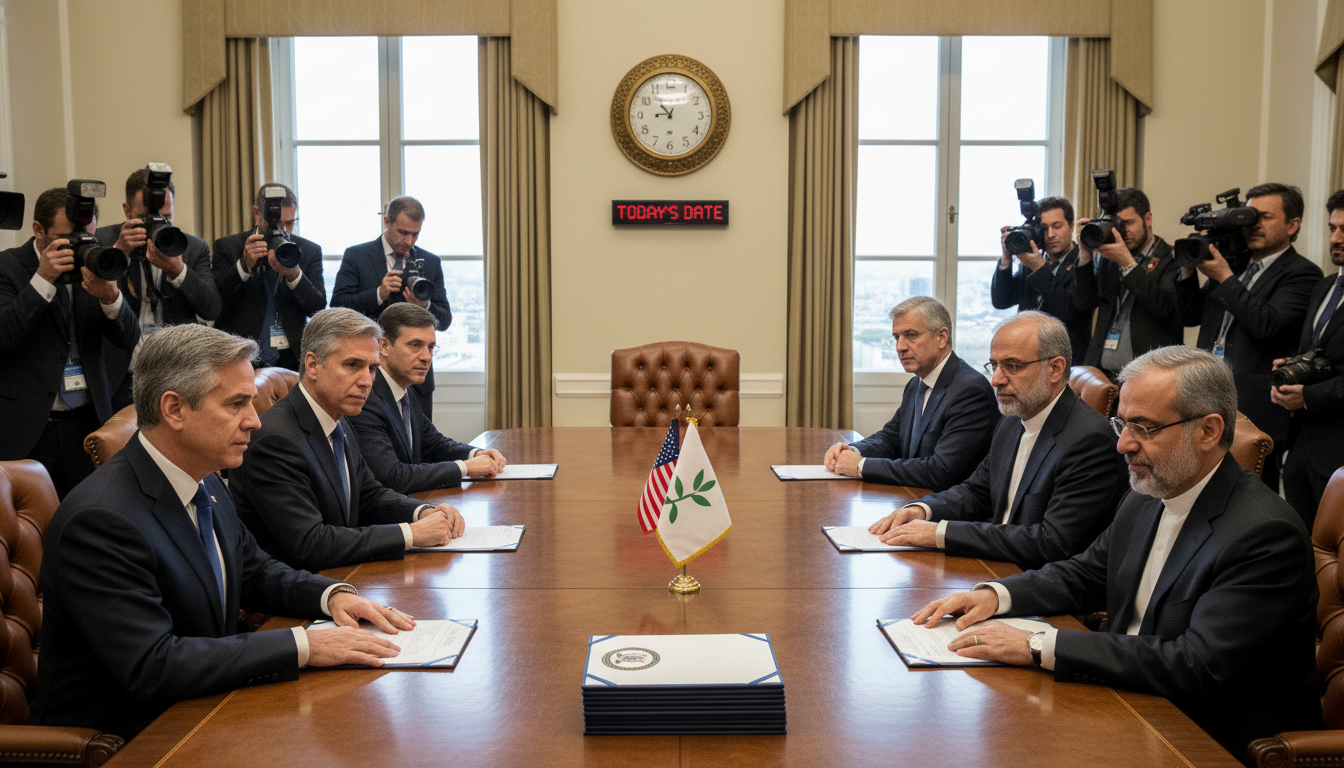
US-Iran ceasefire declared over February hostilities as temporary two-week truce holds
U.S.-Iran ceasefire: Washington says hostilities since Feb. 28 have “terminated” after a temporary two-week truce agreed April 7–8 and extended, reopening diplomatic negotiations.
U.S. Says Hostilities Since Feb. 28 ‘Terminated’
A senior U.S. administration official told NBC News the United States has determined that hostilities with Iran that began on Feb. 28 have “terminated” for the purposes of the War Powers Resolution. This assessment follows an agreement that established a temporary ceasefire in early April and has prompted legal and policy reviews in Washington. (whbl.com)
Two-Week Truce Agreed on April 7 and Subsequently Extended
U.S. and Iranian representatives agreed to a two-week ceasefire that was first announced on April 7 in Washington and took effect on April 8 in parts of the Middle East, according to U.S. and media accounts. The initial truce was framed as temporary and contingent on conditions including the reopening of shipping through the Strait of Hormuz, and officials say the pause has since been extended while talks continue. (nbcnewyork.com)
Ceasefire Terms Emphasize Strait of Hormuz and Security Guarantees
A central element of the agreement described by U.S. officials and reported media centers on ensuring safe passage through the Strait of Hormuz, a crucial corridor for global energy shipments. Washington has made reopening and keeping the strait open a key condition of the pause, while Iran has proposed a package of broader security guarantees and demands tied to sanctions and regional deployments. (nbcbayarea.com)
Iranian state outlets and regional observers published proposals that include a range of political and security concessions Tehran seeks as part of any longer-term arrangement. These public positions have complicated negotiations by adding conditions that U.S. officials say will require detailed diplomatic work to reconcile with allied and regional security concerns.
Diplomatic Talks Reopened in Islamabad
Negotiations resumed in Islamabad shortly after the ceasefire was announced, with delegations from both sides engaging in talks intended to translate the temporary pause into a durable understanding. Early sessions in mid-April produced exchanges but did not yield a comprehensive deal, according to officials and media reports, leaving room for further mediation. (en.wikipedia.org)
Mediation efforts have involved multiple regional actors and underscored Pakistan’s role in brokering the initial truce proposal that led to the April agreement. Observers say Islamabad’s involvement reflects wider international interest in preventing a broader escalation that could draw in other regional states.
Regional Reactions and Ongoing Military Postures
Even as the ceasefire reduced direct exchanges between U.S. and Iranian forces, military movements and isolated strikes continued in some nearby theaters, and Israel signaled limited operations would continue against certain Iranian-backed groups. Capitals across the Middle East and Europe welcomed the reduction in direct U.S.-Iran fighting while urging that the pause be converted into a longer-term settlement. (washingtonpost.com)
Naval and air deployments from multiple countries remain on heightened alert in the Gulf and eastern Mediterranean, and international shipping firms have continued to monitor transit conditions closely. Analysts warn that fragile truces can fray quickly if parties perceive unilateral breaches or if third-party actors escalate hostilities in parallel arenas.
War Powers Determination and Washington’s Next Steps
U.S. officials have framed the termination determination in legal terms tied to the War Powers Resolution, a move that affects congressional oversight and the administration’s authorization to continue certain military activities. Lawmakers from both parties expressed interest in the administration’s legal calculus, and some urged clarity on any further operational authorities or limits. (whbl.com)
Officials said Washington will press for detailed verification mechanisms as talks continue and will seek allied support for any longer-term arrangements that address Iran’s nuclear and regional activities. At the same time, U.S. policymakers face decisions on force posture, sanctions relief sequencing, and how to tie security guarantees to concrete, verifiable steps on the ground.
The temporary U.S.-Iran ceasefire has quieted direct exchanges for now and reopened diplomatic channels, but leaders on both sides and regional partners caution that translating a fragile truce into durable peace will require intensive diplomacy, monitoring mechanisms and compromises that have so far eluded negotiators. (nbcnewyork.com)

