
Ultra Japan Returns to Odaiba: What to Expect from the Annual Ultra Music Festival
Ultra Japan lands at Odaiba’s Symbol Promenade Park with global DJs, diverse electronic acts, and summer festival essentials for music fans.
Ultra Japan, the annual ultra music festival held at Odaiba’s Symbol Promenade Park, brings a wide range of international DJs and guest musicians to Tokyo’s waterfront each season. The event offers multiple stages, immersive production and a festival culture that emphasizes both high-energy performances and collectible memorabilia like official souvenir t-shirts. For residents and visitors planning to attend, the festival is a concentrated weekend of electronic music, communal dancing and large-scale event logistics that requires advance preparation.
Ultra Japan’s Odaiba Staging and Atmosphere
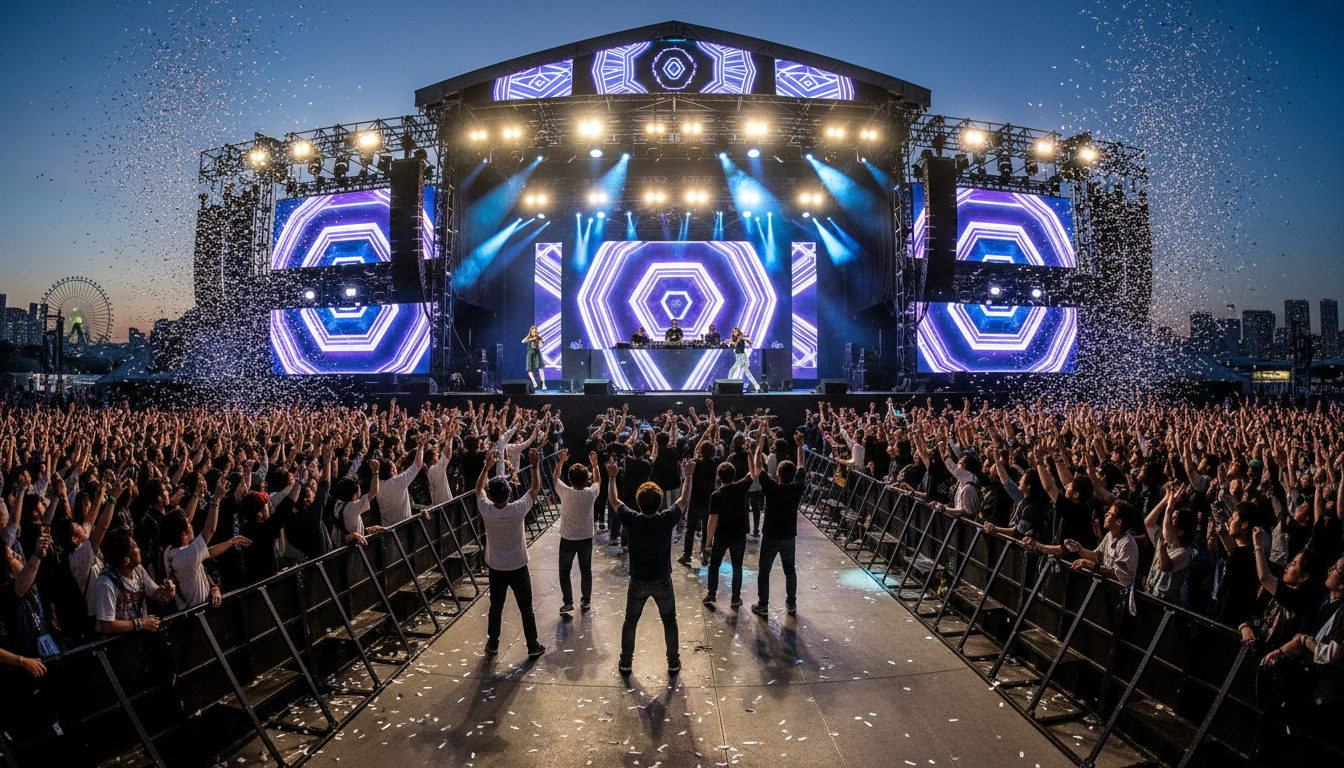
Symbol Promenade Park provides a distinctive open-air setting along Tokyo Bay that frames the festival with views of the waterfront and the city skyline. Organizers typically arrange multiple stages across the park to accommodate headliners, curated stage concepts and smaller DJ slots, creating a layered listening experience for attendees. The layout encourages movement between areas so crowds can sample a range of electronic subgenres within a single day.
Production values at Ultra Japan are designed to match international festival standards, with large-scale sound systems, lighting rigs and visual installations that extend the live set into a full sensory presentation. These production elements are often emphasized by promoters to create headline moments that draw large audience clusters and social media attention. Attendees should expect variable sound levels and dense crowds near headline sets.
The overall atmosphere mixes intense club-style energy with the seasonal outdoor festival mood, especially in summer months when daytime heat gives way to cooler evenings by the bay. Security and crowd management are visible components of the experience, with staff present to guide entry, assist in emergencies and maintain clear sightlines around main stages. This balance between spectacle and safety is a core part of the event’s recurring appeal.
Lineup and Musical Scope at Ultra Japan
Ultra Japan’s musical program spans a broad spectrum of electronic dance music, from mainstream EDM and progressive house to techno, trance and niche underground sounds. Promoters typically invite both internationally renowned headline DJs and regional artists, giving the lineup a mixture of global names and local talent. The festival’s diverse booking strategy aims to satisfy casual festivalgoers as well as dedicated fans of specific subgenres.
Programming often includes themed stages that reflect different curatorial philosophies—some stages emphasize high-energy festival anthems while others focus on club-oriented mixing and experimental electronic music. This structure allows attendees to tailor their day by moving between stages according to mood or curiosity. Festivalgoers should plan their schedule in advance if they want to catch specific performers, because overlapping set times are common.
Beyond headline acts, the event’s DJ roster typically features stage residents, surprise guest slots and collaborative back-to-back sets that can produce unique live moments not replicated elsewhere. For those seeking to discover new artists, Ultra Japan’s multi-stage format creates opportunities to encounter emerging DJs alongside established performers. Fans who prioritize musical variety will find the festival’s scope intentionally broad.
Tickets, Entry and Practical Planning Tips
Ticketing for large festivals like Ultra Japan usually includes several tiers such as general admission, premium access and VIP packages that come with different benefits and capacities. Purchasing tickets early can reduce cost and secure preferred entry types, while on-site sales are often limited. Attendees are advised to review ticket terms regarding re-entry, age restrictions and refund policies before purchase.
Entry procedures at the venue typically involve bag checks, wristband distribution and ID verification where age-sensitive areas or alcohol service are concerned. Arriving early helps avoid peak entry queues and gives visitors the chance to orient themselves to stage locations, facilities and meeting points. Festival operators commonly publish maps and scheduling guides in advance; downloading these materials or taking screenshots can be helpful when cellular reception becomes congested.
Travel to Odaiba is serviced by several public transit options, and journey planning should consider both outbound and return rushes after headline performances. Security protocols and transport capacity can create delays during peak exit times. Festival attendees should allow extra time for transit, carry a copy of emergency contact information and agree on rendezvous spots with companions in case of communication failures.
On-site Amenities, Merchandise and Food
Merchandise is a prominent aspect of the Ultra Japan experience, with official booths selling branded items such as souvenir t-shirts, caps and limited-edition apparel that often sell out quickly. Many attendees view festival shirts as a tangible memory of the event, so shoppers who want specific sizes or exclusive items should consider purchasing early in the day. Official merchandise queues can move slowly, especially after popular sets conclude.
Food and beverage options at the festival generally include a mix of local vendors offering Japanese festival fare alongside international street food and beverage stands. Hydration stations and bottled water are important, particularly during warm weather, and organizers typically recommend bringing a refillable bottle where permitted. Cashless payment systems are increasingly common at major festivals, so visitors should confirm accepted payment methods and carry backup options.
Practical services such as phone charging stations, locker rentals and first-aid tents are standard features at large-scale events and can greatly improve an attendee’s day. Locating these services early upon entry reduces stress later in the schedule. Waste disposal and recycling facilities are usually distributed around the site, and sensible use of these provisions contributes to a cleaner festival environment for all.
Local Impact, Transport and Community Considerations
An event of Ultra Japan’s scale brings both economic activity and logistical pressure to the Odaiba area, generating business for hotels, restaurants and retail outlets while placing demands on public transit and municipal services. Local authorities and event promoters commonly coordinate on crowd control, sanitation and transportation adjustments to mitigate disruptions. Residents and businesses around the venue often see a short-term surge in customers during festival weekends.
Transport agencies typically add capacity or adjust schedules to accommodate increased passenger volumes, but peak exit times after headline sets can still produce crowded platforms and longer travel times. Festival attendees should be mindful of local commuters and follow guidance from transit staff to maintain flow and safety. Ride-share services and taxis are alternative options but may require waiting in designated queues.
Noise management, public safety and environmental stewardship are recurring topics in the conversation between promoters and host communities. Large events are increasingly accountable for noise curfews, litter control and post-event cleanup plans. Attendees who respect local ordinances and festival rules help maintain good relations between promoters and the Odaiba community, which supports the long-term viability of such events in urban waterfront settings.
Tips for First-Time Attendees and Responsible Festival Behavior
First-time visitors to Ultra Japan will benefit from practical preparation such as setting a meeting point, monitoring set times and wearing comfortable footwear suitable for standing and walking across grassy or paved areas. Pocket-size rain gear can be useful during an unpredictable summer day, and sun protection is recommended for daytime sets. Light layers help manage the transition from warm afternoons to cooler evenings near the water.
Being aware of personal limits—around alcohol consumption, sun exposure and physical exertion—is important to stay safe over the course of a long festival day. Use designated medical and assistance stations when needed rather than delaying care. When attending with friends, periodic check-ins and agreed-upon signals for emergencies reduce stress and enhance group safety.
Respectful behavior toward fellow attendees, staff and the local community improves the experience for everyone and helps build a positive reputation for major events. Dispose of trash responsibly, follow staff instructions at entry and exit points, and keep noise and behavior within festival guidelines when leaving the site late at night. These small actions collectively support a sustainable festival culture in Odaiba and beyond.
Planning Resources and Final Preparations
Before attending, consult the event’s official announcements for the most current information on lineup, ticket availability and on-site rules, as these details change from year to year. Official communication channels are the primary source for last-minute updates regarding stage times, entry policies and health or safety advisories. Preparing with accurate, up-to-date information reduces unexpected complications on the day.
Organizers commonly publish site maps, transport advisories and accessibility information in the lead-up to the festival; reviewing these materials helps attendees with mobility needs or those coordinating larger groups. If traveling from outside Tokyo, reserving accommodation early and accounting for travel time to Odaiba will smooth the overall itinerary. Backup plans for weather, transport delays and meeting points are practical measures that ensure a more relaxed festival visit.
Souvenir shopping, photo opportunities and curated stage experiences are among the highlights many visitors plan for, but balancing planned moments with spontaneous discoveries makes for a fuller festival day. Allow time to wander between stages, explore vendor areas and sample food offerings to fully engage with the event atmosphere. Being flexible and patient often results in unexpected performances or memorable encounters.
Ultra Japan in Odaiba remains a major fixture for fans of electronic music, offering curated lineups, large-scale production and the chance to purchase festival memorabilia such as the official souvenir t-shirt. With careful planning around tickets, transport and personal safety, attendees can focus on the performance schedule and social experience that define the event. Checking official sources before you go will provide the latest practical details and ensure your visit aligns with current policies and programming.

