
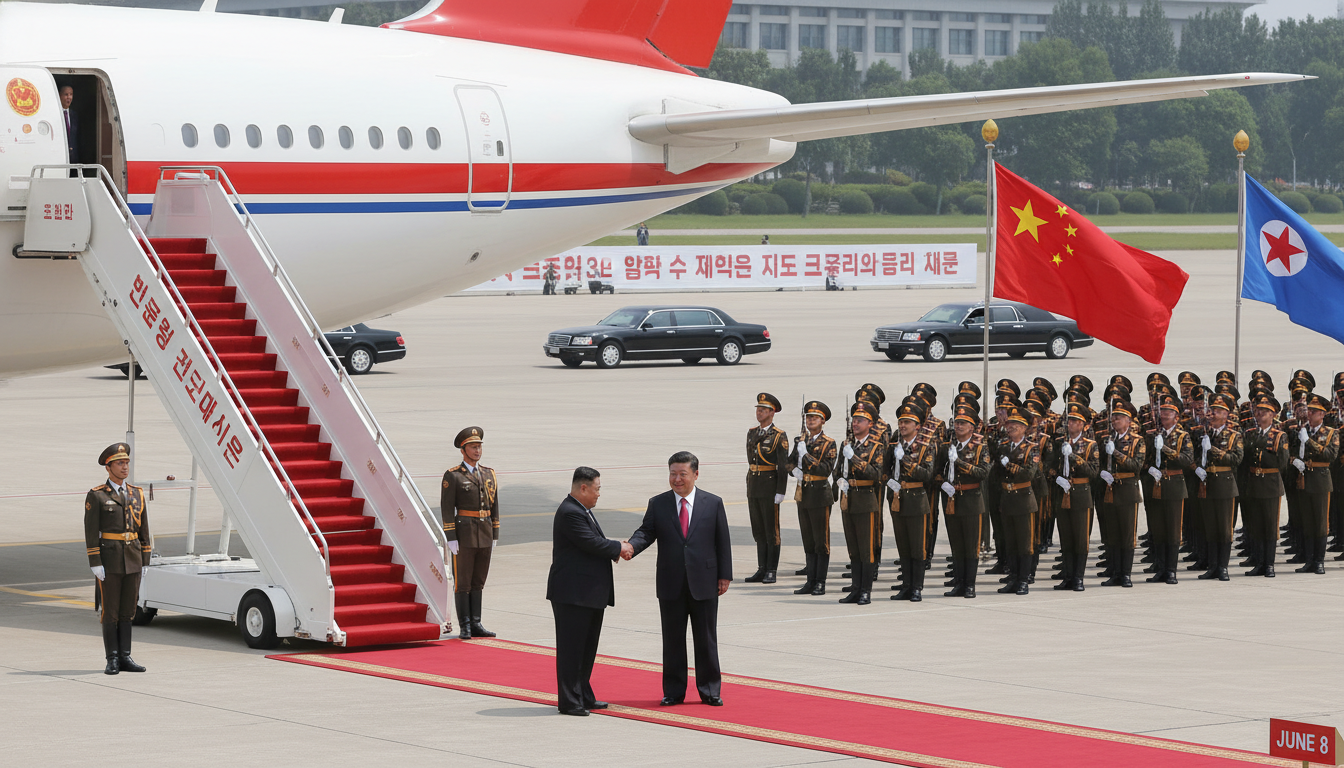
Xi visit Pyongyang to begin June 8, CCTV says, marking 65th anniversary of China–DPRK treaty
Chinese state broadcaster CCTV announced a two‑day visit to Pyongyang by President Xi Jinping beginning June 8, at the invitation of North Korean leader Kim Jong Un, timed to mark the 65th anniversary of the China–DPRK Treaty of Friendship, Cooperation and Mutual Assistance. The announcement of the Xi visit Pyongyang has heightened diplomatic activity in the region and drawn close scrutiny from Seoul, Tokyo and Washington.
Official announcement and immediate reaction
CCTV’s bulletin on Friday said the state visit will run for two days and is being held to coincide with commemorative events for the 65th anniversary of the bilateral treaty that underpins China–North Korea ties.
Beijing’s state media framed the trip as a reinforcement of long‑standing bilateral relations, while officials across East Asia reacted cautiously, noting the timing amid several concurrent diplomatic initiatives across the region.
Preparations and movement of protocol teams
South Korean and regional reporting in recent days documented the arrival of Chinese diplomatic and security teams in Pyongyang, a standard precursor to a head‑of‑state visit that signals at least tentative scheduling of high‑level talks. Observers noted heightened logistical activity at Pyongyang facilities and media staging points consistent with preparations for an official reception. (donga.com)
Diplomatic sources in Seoul and Tokyo said they were monitoring movements closely and seeking clarifications from Beijing, while saying that formal confirmation from both governments would be required before interpreting the visit’s scope. (en.asiatoday.co.kr)
Context: the 65th‑anniversary commemoration
The visit comes as the two countries prepare commemorative events marking 65 years since the signing of the 1961 treaty of friendship, cooperation and mutual assistance. Chinese and North Korean officials have already coordinated on preliminary activities tied to the anniversary, including ministerial exchanges earlier this year. (en.yna.co.kr)
Chinese Foreign Minister Wang Yi’s recent trip to Pyongyang underscored Beijing’s interest in reinforcing the historical ties that the treaty symbolizes, and officials said the anniversary provided a natural diplomatic occasion for renewed high‑level engagement. (en.yna.co.kr)
Diplomatic signalling and regional implications
Analysts say a state visit by President Xi would be the highest‑profile Chinese engagement with Pyongyang since 2019 and would send a clear political signal about Beijing’s priorities on the Korean Peninsula. The timing also coincides with intense diplomatic activity by other powers in the region, complicating Washington’s and Seoul’s calculations.
Officials in Tokyo and Seoul said they would interpret the Xi visit Pyongyang through the lens of regional stability and denuclearization diplomacy, noting that any public commitments or declarations emerging from Xi’s meetings with Kim Jong Un could affect trilateral consultations and alliance planning. (world.kbs.co.kr)
Logistics, security and public messaging
State media coverage will be central to how both capitals shape the visit’s narrative, with CCTV expected to provide extensive footage and commentary if the trip proceeds as announced. Pyongyang typically stages large public events for state visits, and municipal preparations observed by foreign correspondents suggest the North Korean leadership is planning a high‑visibility reception. (hk01.com)
Security arrangements for a head‑of‑state trip of this type are intensive; Chinese and North Korean protocol teams would co‑ordinate transport routes, venue security and press access, while foreign embassies monitor the movements closely and update their governments. (donga.com)
Uncertainties and what to watch next
While CCTV’s report is definitive in tone, Beijing has at times been cautious about confirming or denying high‑level travel plans until final clearances are complete, and governments in the region maintain that schedules can change at short notice. Officials in Seoul said they would await formal diplomatic notices before drawing conclusions about the visit’s agenda or outcomes. (en.asiatoday.co.kr)
Key signals to monitor in the coming days include formal communiqués from Beijing or Pyongyang, the arrival or departure of Chinese and North Korean ceremonial teams, and the substance of any bilateral statements — particularly language on security cooperation, economic assistance and multilateral diplomacy.
President Xi’s scheduled visit to Pyongyang, as announced by CCTV, places China at the center of renewed attention over the Korean Peninsula, where historical ties, modern strategic calculations and urgent regional diplomacy intersect; officials will now watch closely for formal confirmations and the trip’s declared outcomes.

