
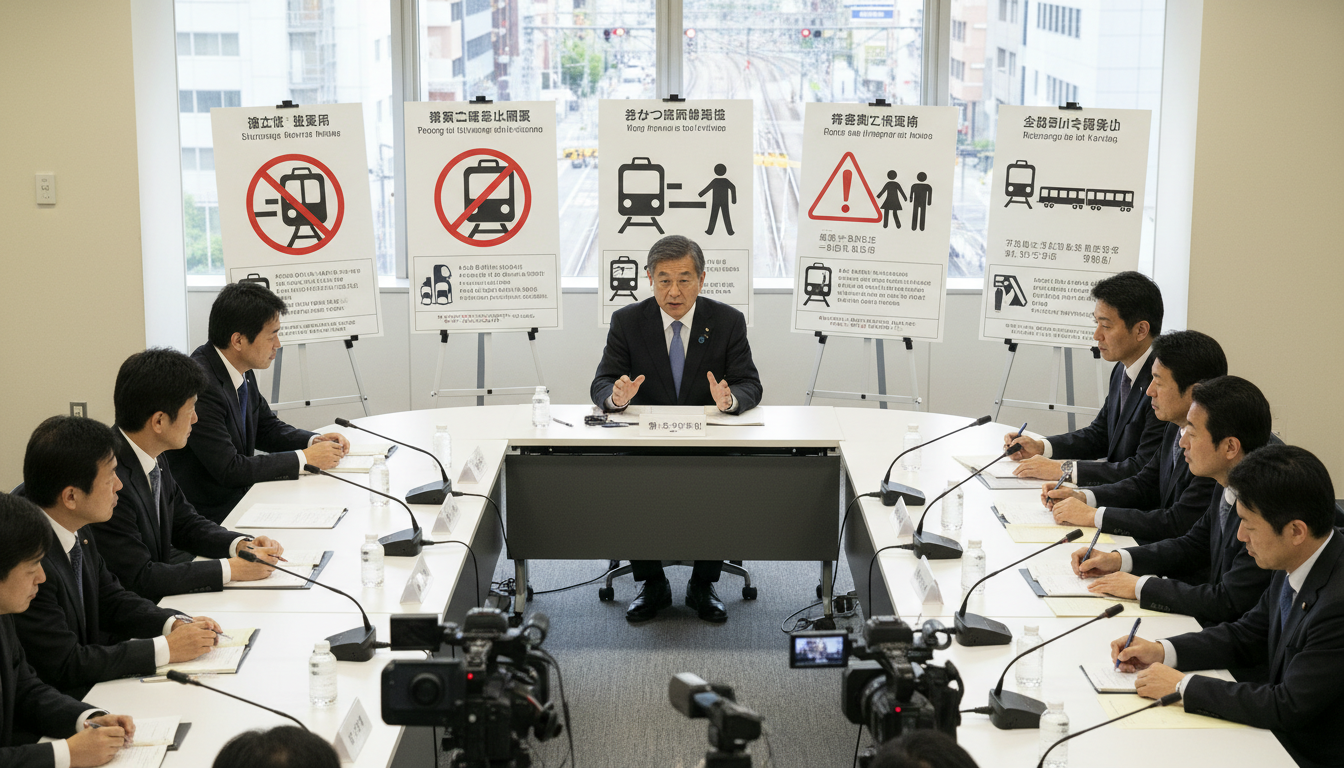
Japan Proposes Multilingual Warnings at Railroad Crossings After Fatal Tourist Accident
Japan moves to add multilingual warnings and pictograms at railroad crossings after a foreign tourist was struck and killed on Aug. 13, 2025, a JTSB report says.
A transport ministry affiliate on Thursday proposed installing multilingual warnings and pictograms at railroad crossings following a fatal collision that killed a foreign visitor, the Japan Transport Safety Board (JTSB) reported. The proposal aims to reduce risks at crossings that rely on alarms rather than physical barriers, particularly in areas frequented by tourists.
Proposal for multilingual warnings and pictograms
A transport ministry affiliate presented the recommendation on Thursday, advocating for multi-language signage and universally understood pictograms at crossings. The proposal was prompted by a JTSB report released the same day that documented the circumstances of the August 13 incident.
Officials said the changes would target crossings where foreign visitors are likely to encounter language barriers and unfamiliar safety practices. The affiliate described pictograms and messages in multiple languages as measures to complement existing alarms and improve immediate comprehension.
JTSB report outlines August 13 collision
The JTSB report states that on the afternoon of Aug. 13, 2025, a two-car train operated by Kyushu Railway Company (JR Kyushu) struck a 55-year-old woman from Taiwan. The train was traveling between Kamiarita and Arita stations on the Sasebo Line in Saga Prefecture when the collision occurred.
Investigators classified the location as a Class 3 railroad crossing, a category equipped with auditory alarms but lacking movable barriers. The report provides a timeline of the train’s approach and notes the crossing’s proximity to a nearby tourist site, underscoring the intersection of visitor foot traffic and rail operations.
Crossing characteristics and safety limitations
Class 3 railroad crossings are designed to alert pedestrians and drivers through audio and visual signals but do not include gates that physically block access. Authorities say these crossings are common in less urbanized areas and are often situated on local roads serving shrines, parks, or small commercial zones.
Without barriers, the effectiveness of alarms depends on pedestrians recognizing and reacting to signals. Investigators and safety advocates point out that alarms alone may be insufficient when language differences or distractions reduce a person’s ability to interpret warnings quickly.
Accident location near popular local shrine
The collision took place near Sueyama Shrine, a site that draws both domestic and international visitors. Local tourism spots with shrine precincts and narrow approaches can create complex pedestrian flows that intersect with rail crossings, increasing the need for clear, immediate warnings.
Tourists unfamiliar with local crossing practices may not expect train traffic on lines that run close to pedestrian routes. The JTSB report highlights how the physical setting and visitor movement patterns can compound risk when crossings lack physical separation.
Safety concerns for foreign tourists and regional tourism
Japan’s regional tourism has grown in recent years, bringing more international visitors to sites served by small rail lines. Safety advocates and local officials say the rise in visitor numbers increases the urgency of adapting infrastructure and signage to diverse language needs.
Multilingual warnings at railroad crossings are being discussed as a targeted response to reduce misunderstandings that can lead to accidents. Pictograms are viewed as particularly useful because they convey danger without relying on text, making them accessible regardless of a visitor’s language proficiency.
Potential next steps for authorities and rail operators
Following the JTSB report and the affiliate’s proposal, local authorities and JR Kyushu are expected to review crossing conditions and consider pilot measures. Possible actions include installing multilingual signs, adding pictograms, testing audio announcements in multiple languages, and evaluating whether some Class 3 crossings should be upgraded with barriers.
Rail operators historically balance safety investments with operational and geographic constraints, and decisions often involve coordination between municipal governments, the transport ministry, and railway companies. Any revisions to crossing infrastructure would likely proceed in phases, beginning with high-risk locations near major tourist attractions.
Japan’s transport ministry affiliate framed the proposal as a pragmatic, low-cost measure that could be implemented quickly at targeted sites. The JTSB report serves as the immediate catalyst for discussions but does not itself mandate specific changes.
The transport ministry affiliate’s recommendation marks a focused effort to close a safety gap at crossings where alarms alone may not protect visitors unfamiliar with local railways. As authorities evaluate concrete measures, families and community groups in Saga Prefecture and beyond will be watching for changes that aim to prevent another tragedy.

