
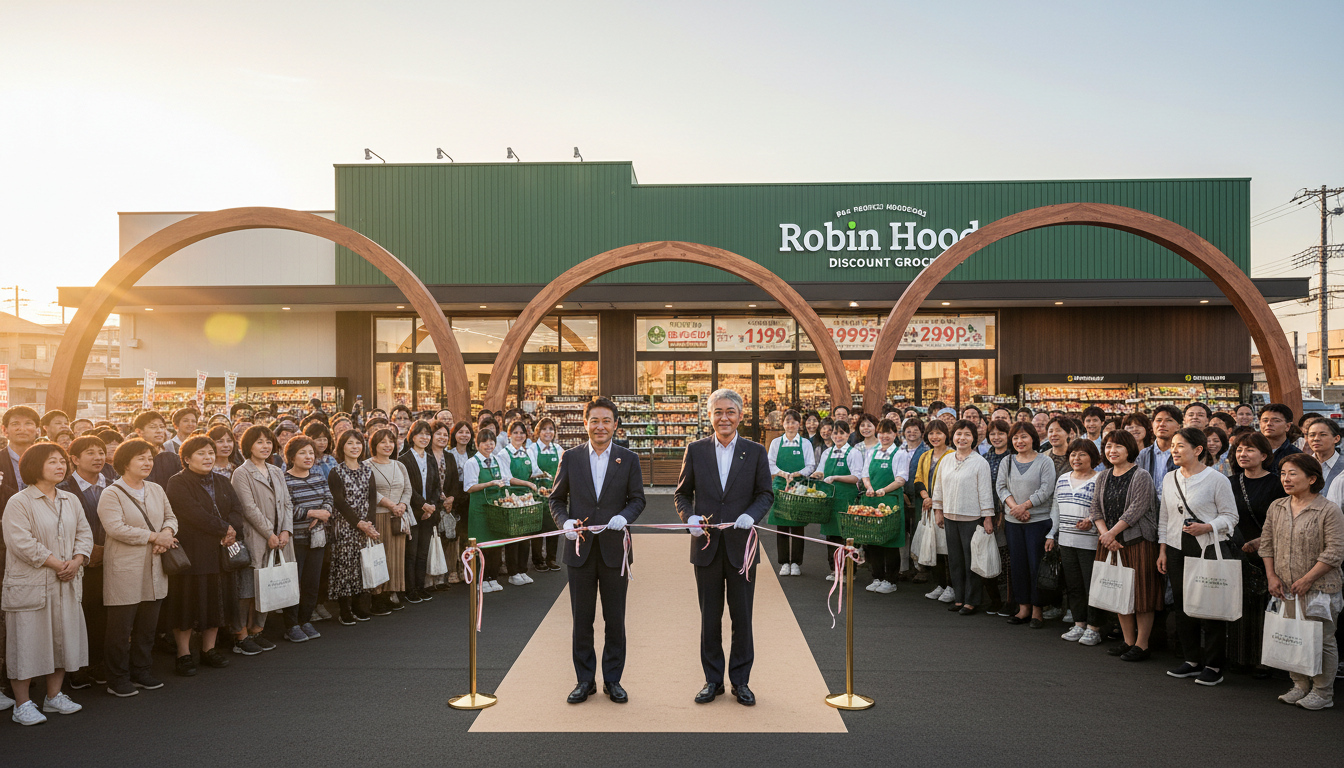
Pan Pacific launches Robin Hood grocery chain in Aichi to offer ultra-low food prices
Pan Pacific opens Robin Hood grocery chain in Aichi, offering ultra-low prices like ¥85 rice balls as the Don Quijote parent courts budget shoppers.
Pan Pacific International Holdings, the parent company of discount giant Don Quijote, has launched a new food-focused brand called the Robin Hood grocery chain and opened its first outlet in Aichi Prefecture. The move is aimed squarely at cost-conscious local shoppers as household budgets face pressure from rising prices. The inaugural store will feature deeply discounted staples and convenience items to attract frequent, value-seeking visits.
Pan Pacific’s strategic shift into groceries
Pan Pacific’s decision to roll out the Robin Hood grocery chain represents a targeted expansion of its retail footprint into everyday food and daily necessities. The company, best known for its Don Quijote discount stores and the Don Don Donki brand overseas, is adapting its low-price model to a format focused on groceries. Executives say the new chain is designed to serve neighbourhood needs rather than the tourist and mixed-buyer base that fuels many of its existing stores.
Aichi opening highlights extreme value offers
The first Robin Hood store opened in Aichi Prefecture, roughly a three-hour drive from Tokyo, showcasing the pricing strategy that will define the chain. Shoppers can expect items such as rice balls priced at ¥85 and multi-packs of sausages sold for roughly ¥735 including tax. Those specific examples underline the chain’s strategy: a small number of headline bargains intended to drive foot traffic and frequent purchases.
Local customers are the primary target
Pan Pacific has signalled a clear pivot toward domestic consumers as the core audience for Robin Hood. In fiscal 2025, more than 80% of the group’s revenue was generated by local shoppers, a statistic that has informed the new brand’s positioning. The company’s leaders are betting that steady demand for inexpensive, convenient food will sustain the chain as inflation affects household spending patterns.
Product mix emphasizes speed and convenience
Robin Hood’s assortment will center on fast-moving food items and everyday essentials, mirroring consumer demand for quick, low-cost meal solutions. The format prioritizes ready-to-eat and heat-and-serve goods alongside staples such as rice, packaged meats and basic groceries. By simplifying choice and trimming price points, the chain aims to encourage repeat visits and high turnover on a limited selection of high-demand products.
How the move fits Japan’s retail landscape
The launch comes at a time when many Japanese households are feeling the impact of higher living costs, prompting retailers to offer deeper discounts or rethink their formats. Pan Pacific’s experiment adds a new layer to competition among supermarkets, convenience stores and discount retailers that are all vying for shrinking consumer budgets. For larger retail groups, success will hinge on balancing low prices with sustainable margins and supply-chain efficiency.
Implications for competitors and consumers
If Robin Hood’s introductory pricing and convenience approach attract steady local patronage, other chains may respond with more aggressive promotions or targeted local formats. For consumers, the immediate benefit will be access to lower-priced options for everyday meals and household goods. For the broader market, the test will reveal whether Pan Pacific can replicate the success of its established discount model in a grocery-focused environment without eroding profitability.
The Robin Hood grocery chain opening is a clear signal that Pan Pacific is doubling down on value retailing as households contend with inflationary pressures. Observers will be watching the chain’s roll-out schedule, product mix adjustments and customer response to see whether the model can scale across other prefectures. How quickly Pan Pacific expands Robin Hood, and whether competitors counter with their own local-focused initiatives, will determine the longer-term impact on Japan’s grocery sector.

