
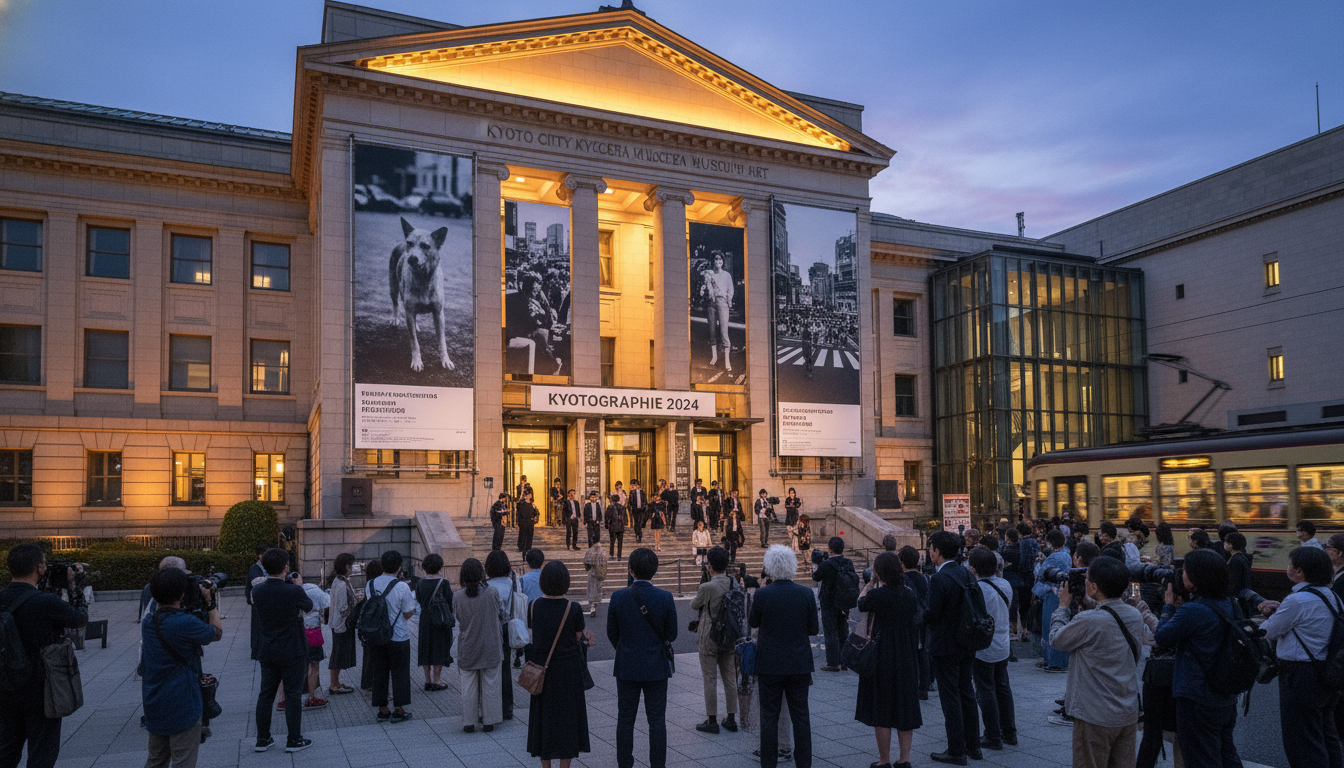
Daido Moriyama Retrospective Opens at Kyoto City Kyocera Museum of Art
Daido Moriyama retrospective opens at Kyoto City Kyocera Museum of Art on April 18, presenting the photographer’s iconic street work after a global touring run.
Daido Moriyama, the influential figure in postwar Japanese street photography, opened a large-scale retrospective at the Kyoto City Kyocera Museum of Art on April 18 as part of the Kyotographie international photo festival. The exhibition, described by organizers as one of the most comprehensive presentations of his career, arrives in Japan following a premiere in São Paulo and a subsequent tour across Europe. For the first time on Japanese soil, this collection gathers the prolific photographer’s most recognized images alongside lesser-known prints that trace his method and evolution.
Retrospective Opens at Kyoto City Kyocera Museum of Art
The show, staged in multiple galleries across the Kyocera museum, assembles hundreds of prints that span decades of Moriyama’s work. Organizers say the installation emphasizes the photographer’s practice of rapid shooting and editorial selection, offering viewers both iconic high-contrast images and experimental contact prints. The presentation coincides with Kyotographie’s program, which this year foregrounds international dialogues in contemporary photography.
International Tour and Exhibition Origin
The retrospective first appeared at Instituto Moreira Salles in São Paulo in 2023 and subsequently toured several European institutions before its arrival in Kyoto. Curators adapted the selection for each venue, and the Kyoto presentation reflects adjustments intended to highlight Moriyama’s connections to Japanese urban life. The tour history underscores the exhibition’s status as a major international loan project, supported by institutional partnerships and lenders from private and public collections.
Selection and Scale of Works on Display
Curators describe the show as a large-scale survey rather than a chronological display, placing images thematically to reveal recurring motifs in Moriyama’s practice. Visitors will encounter street scenes, portraits, fragments of signage, and blurred motion studies arranged to evoke the intensity of urban encounter. The exhibition also includes contact sheets and sequence prints that illustrate Moriyama’s process of shooting relentlessly and then choosing images by gut and instinct rather than careful framing.
Moriyama’s Method and Aesthetic
Moriyama’s photographic approach is often characterized by grain, high contrast, and a willingness to embrace imperfection, qualities evident throughout the retrospective. He favored small handheld cameras and worked quickly, producing prolific bodies of work that resist neat categorization. The show highlights this ethic: arrays of raw, sometimes abrasive prints stand alongside more composed images, reinforcing the central idea that Moriyama’s practice values spontaneity and accumulation over polish.
Connection to Kyotographie and Festival Programming
Kyotographie, the international photo festival hosting the exhibition, has programmed the retrospective as a cornerstone event of its current edition. Festival officials have positioned the Moriyama show to engage both local audiences and international visitors, offering guided tours, panel discussions, and related talks that explore his influence on contemporary photographers. The inclusion of the retrospective within the festival amplifies its public visibility and situates Moriyama’s work within broader conversations about urban modernity and photographic history.
Institutional Framing at Kyoto City Kyocera Museum of Art
The Kyoto City Kyocera Museum of Art has arranged the exhibition to occupy multiple galleries, allowing curators to manipulate pacing and sightlines. Lighting and wall color choices emphasize the tactile surface of silver gelatin prints and contemporary inks, while explanatory panels provide context on Moriyama’s career and the show’s itinerary. Museum staff note that the exhibition offers opportunities for scholarship and public programming, including workshops that respond to Moriyama’s candid shooting methods.
Visitors and critics have remarked on the retrospective’s capacity to convey both the raw energy of street photography and the discipline behind a lifetime of making images. Many works prompt close viewing and lingering attention, forcing audiences to reconcile the photographer’s apparent casualness with a rigorous visual logic. The presence of preparatory materials and sequences invites a reconsideration of authorship and editorial choice in analog practice.
The show’s arrival in Kyoto also raises questions about how Japanese audiences will reframe Moriyama’s legacy after years of international exhibitions. Presenting this body of work domestically for the first time in its current form enables fresh readings of familiar images and introduces lesser-known prints to a Japanese public that has shaped and been shaped by the same urban landscapes Moriyama photographed.
Ticketing, hours, and related festival events are being managed by the Kyocera museum in coordination with Kyotographie, and visitors are advised to check the museum’s published schedule for exhibition timings. The retrospective’s domestic premiere marks a significant cultural moment in Kyoto’s festival calendar and offers a rare opportunity to engage comprehensively with one of Japan’s most influential photographers.
Daido Moriyama’s retrospective in Kyoto invites viewers to witness a photographic practice that privileges immediacy, accumulation and the unexpected, making visible the textures and tensions of modern urban life.

