
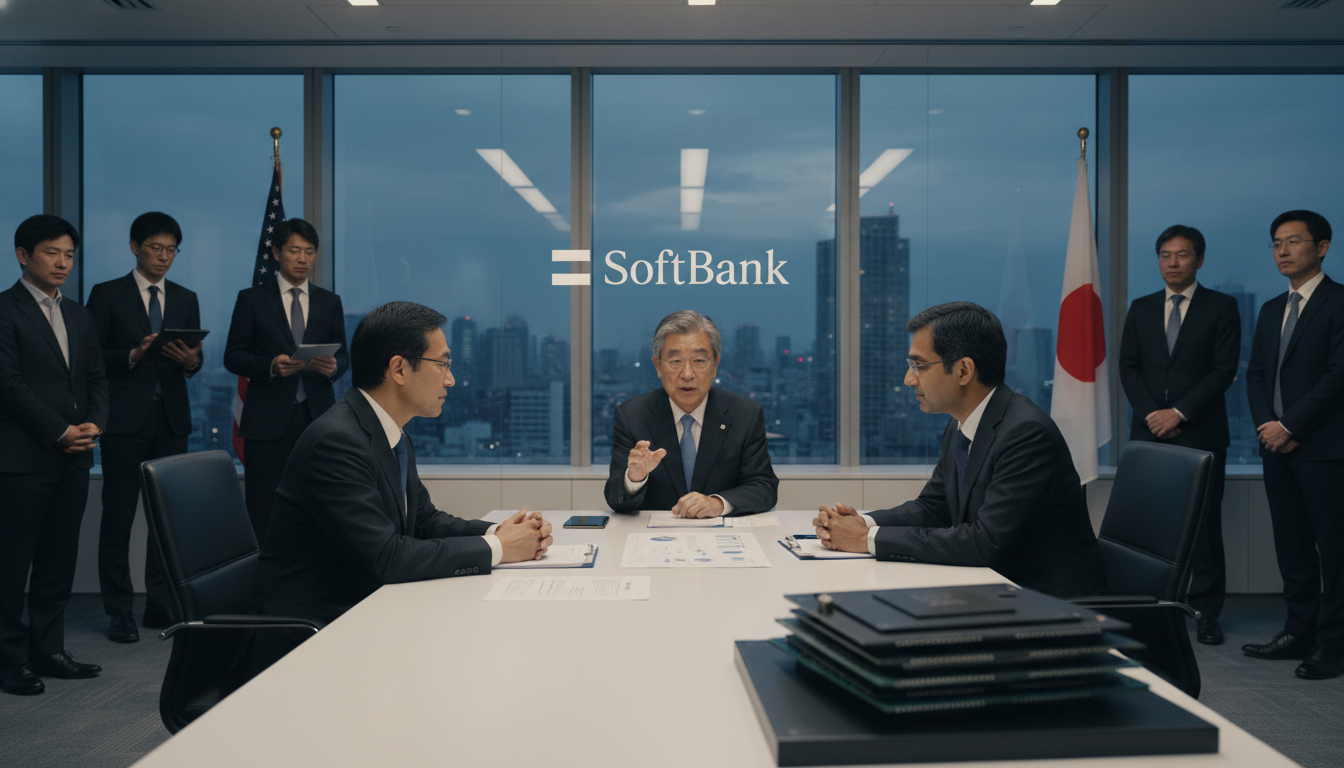
Google and Microsoft Enter Bidding to Become Clients at SoftBank Data Center
Google and Microsoft are bidding to become clients at SoftBank data center in Ohio; winners, expected by April 30, 2026, will cover semiconductor costs.
SoftBank data center bid draws major cloud rivals
Google and Microsoft have confirmed participation in a contest to be named clients of a SoftBank data center under construction in the United States, Nikkei reported. The SoftBank data center is central to a broader push by the Tokyo-based group into U.S. infrastructure, and the potential clients are being asked to assume significant upfront costs. A decision on the winning firms is expected by April 30, 2026, according to sources familiar with the process.
The bidding represents an unusual arrangement in which tenants will help shoulder equipment expenses tied to semiconductors installed at the facility. SoftBank is positioning the project to attract hyperscalers that can commit to long-term usage and capital contributions. The development underscores growing collaboration and competition among cloud providers over access to regional data capacity.
Google and Microsoft join client selection process
Both Google and Microsoft submitted bids to be among a slate of clients for the new facility, industry sources say. Their participation signals that hyperscalers remain eager to secure additional regional capacity even as broader cloud growth moderates in some markets.
SoftBank’s selection process is understood to favor tenants who can co-invest in specialized hardware, particularly semiconductors tailored to AI workloads. The involvement of two of the largest cloud players in the world raises the strategic stakes for SoftBank and for the broader market for edge and regional data centers in the U.S.
Winners to assume semiconductor costs, decision set for April 30, 2026
Under terms being circulated, the winning clients will be responsible for a portion or the entirety of the costs of semiconductors deployed inside the facility. This cost-sharing model departs from traditional leasing arrangements where operators supply the infrastructure and tenants pay rents and operating fees.
Industry analysts note that requiring clients to finance chips — especially accelerators used for AI — reduces SoftBank’s upfront capital exposure while aligning the tenants’ incentives with the performance of the hardware. Sources close to the bidding say SoftBank aims to conclude the client selection by April 30, 2026, enabling equipment procurement and installation to proceed on a compressed schedule.
Ohio site and recent U.S. engagements by SoftBank
SoftBank has publicly signaled its commitment to U.S. infrastructure projects in recent months, seeking to deepen ties with American federal and state officials. A photograph circulated with the initial reporting showed SoftBank Group Chairman Masayoshi Son at a ceremony for a gas-power facility in Piketon, Ohio, on March 20, alongside senior U.S. officials. That image underscores the company’s broader engagement in regional energy and industrial projects tied to its data and semiconductor ambitions.
The choice of Ohio for the data center aligns with state and federal incentives aimed at bolstering domestic capacity for critical technologies. Local power and grid considerations have become central to decisions about where to site large-scale computing facilities, and SoftBank’s Ohio project is being developed with those constraints in mind.
Potential impacts on cloud competition and chip supply chains
If Google or Microsoft — or both — win client slots, they would gain preferred access to the facility’s compute resources and potential influence over hardware configuration. For chip suppliers, the model creates a clear signal of demand for accelerators and other specialized silicon that support artificial intelligence workloads.
Market observers say the arrangement could accelerate procurement cycles for semiconductors while concentrating orders among a smaller set of facilities and customers. That concentration may benefit manufacturers by providing larger, more predictable purchase commitments, though it could also heighten competition among cloud firms for favorable placement and pricing.
Next steps and broader industry implications
Following the expected selection by the end of April 2026, SoftBank and the winning clients will move to finalize contractual terms and timelines for equipment delivery. Installation of semiconductor hardware and other systems is likely to follow a phased plan tied to client take-up of capacity and regulatory milestones.
For SoftBank, securing marquee tenants such as Google or Microsoft would validate its model of combining capital-light partnerships with strategic infrastructure investments. For cloud customers and chip vendors, the outcome will offer an early indication of how commercial arrangements around AI-grade hardware may evolve in regional data centers.
The SoftBank data center bidding process marks a notable instance of major cloud providers engaging directly in client-selection competitions that shift certain hardware costs onto tenants. Observers will be watching closely as final decisions are confirmed and details emerge about payment structures, capacity commitments, and the timing of deployments.

