
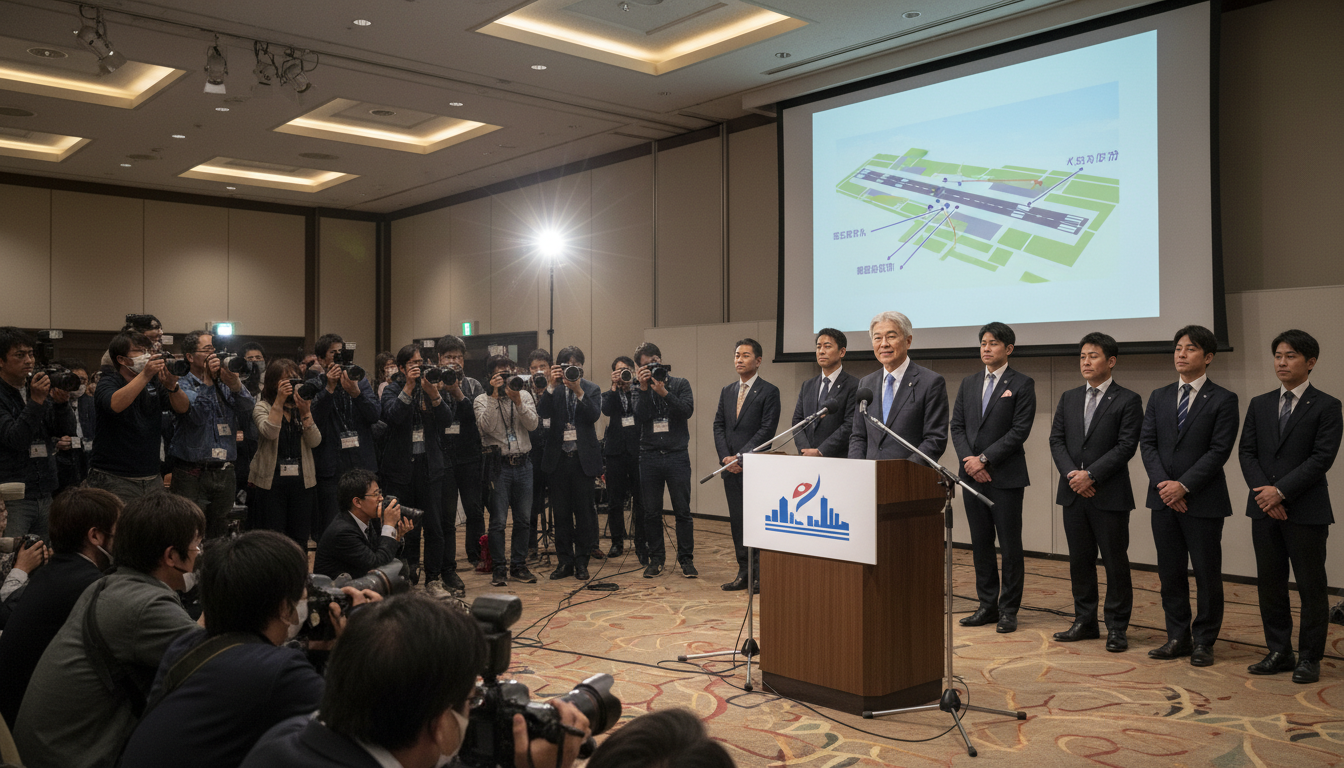
Katori mayoral election: Incumbent Ito wins re-election in Chiba’s Katori City
Incumbent mayor Ito Tomonori was re-elected in the Katori mayoral election on April 26, 2026, defeating two challengers with a clear margin in a contest focused on demographic decline and local services.
Incumbent Secures Re-election
The Katori mayoral election held on April 26, 2026, returned incumbent Ito Tomonori to office with 15,715 votes, securing a second term. Ito, 53, ran as an independent with endorsements from the Liberal Democratic Party, the Democratic Party for the People, and the regional branch of Japan Innovation Party. Voters chose by a turnout of 48.74 percent from an electorate of 58,839, according to the official counts released after polling closed.
Vote Totals and Turnout
Ito’s nearest rival, former Diet member Yatagawa Gen, received 11,035 votes while newcomer Nagashima Kazuya recorded 1,645 votes. The combined total reflects a lower turnout than the previous mayoral contest, which had seen 49.09 percent participation. Election officials confirmed the tallies as the final vote count, with Ito holding a margin of 4,680 votes over Yatagawa.
Campaign Themes and Promises
Ito campaigned on a record of fiscal and administrative reforms implemented during his first term, highlighting measures such as the introduction of free school lunches. He framed his agenda around strengthening Katori’s economic base and leveraging regional infrastructure, including measures tied to the nearby Narita Airport, as pillars for sustainable growth. In his victory remarks, Ito pledged to continue those policies, saying he aims to leave a more resilient Katori for the next generation.
Opponents’ Backgrounds and Critiques
Yatagawa Gen, 63, a former member of the House of Representatives, emphasized his two decades of electoral and legislative experience and argued that his national networks could be mobilized to address Katori’s challenges. He criticized the current administration for insufficient action on population decline and gaps in medical services, particularly the absence of obstetrics and gynecology facilities. Nagashima Kazuya, 41, a contract worker and political newcomer, ran as an independent focused on grassroots concerns but was unable to attract the votes needed to mount a major challenge.
Demographic Decline and Service Gaps
Katori City marks its 20th year since the merger of four municipalities, and its population has fallen to about 68,000 — roughly 20,000 fewer residents than at the time of consolidation. Candidates made demographic trends, the aging population, and declining birthrates central issues of the race, along with the local shortage of maternity and gynecological care. Campaign discussions also examined how to attract companies and employment to stem outmigration, especially among younger residents.
City Council By-elections and Local Impact
On the same day voters also decided three city council by-elections, in which three first-time independent candidates won seats. Iwase Michiko topped the poll with 9,360 votes, followed by Hirayama Satoshi with 8,063 votes and Hayashi Shigeyuki with 5,249 votes. The fourth contender, Miyazaki Naoyuki, received 3,225 votes and fell short. The addition of these newcomers to the city assembly is expected to shape deliberations on budgeting and local service delivery in the months ahead.
The re-election of Ito in the Katori mayoral election sets the city on a course of continuity in governance even as voters signaled strong interest in tackling long-term demographic and healthcare challenges.

