
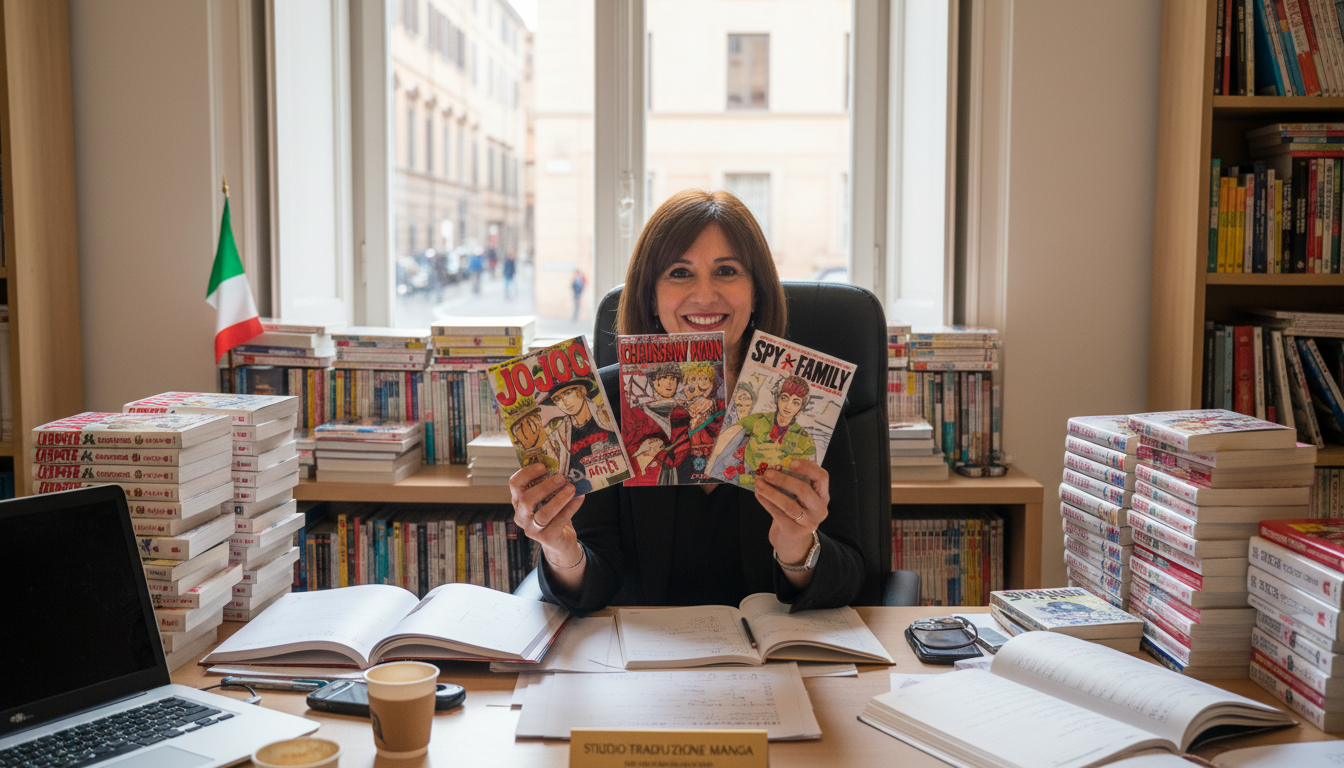
Anime in Italy: Translator Simona Stanzani on Bringing JoJo, Chainsaw Man and Spy × Family to Italian Readers
Simona Stanzani on anime in Italy: the translator explains how manga, subtitled film and streaming have deepened Japan’s cultural reach and fan culture in Italy.
Italy’s appetite for anime and wider Japanese pop culture continues to shape publishing, subtitling and fandom, industry figures say. Translator Simona Stanzani, who has worked on major manga series and film subtitling, traces that influence to childhood TV viewing and sustained cross-cultural exchange. Her work on titles including JoJo’s Bizarre Adventure, Chainsaw Man and Spy × Family highlights the role of translators in making Japanese media accessible to Italian and English audiences.
Italian audiences embraced anime during the late 1970s and beyond
At the close of the 1970s, Italian television began importing Japanese animated series that quickly found a national audience. Those early broadcasts created a generational habit of watching anime that persisted into the cassette and DVD eras. The pattern of acceptance established then helped streaming platforms and manga publishers later find receptive Italian readers and viewers.
These imports were more than entertainment; they became cultural touchstones for many Italians who grew up with serialized animation. The daily rituals around TV viewing are a recurring memory among translators and fans alike, and they help explain why anime in Italy remains a strong market for contemporary Japanese culture.
Translator Simona Stanzani’s personal and professional journey
“At an early age, I was already watching anime every day,” Stanzani says, recalling the wave of Japanese media that transformed her youth. That early exposure informed her decision to pursue work translating manga and subtitling film, roles that require both linguistic precision and cultural sensitivity. Stanzani has become a prominent bridge between Japanese creators and international audiences, working in both Italian and English.
Her portfolio includes high-profile manga and film projects, and her career illustrates how translators shape readerships by choosing phrasing, preserving tone and clarifying cultural references. Colleagues describe her work as attentive to both authorial intent and local reader expectations, a balance that contributes to a title’s success in Italy.
Major manga and film titles localized for Italian readers
Stanzani has translated series such as JoJo’s Bizarre Adventure, Chainsaw Man and Spy × Family, bringing distinct voices and visual storytelling to Italian shelves. Each title presents different challenges: JoJo’s stylized dialogue and art, Chainsaw Man’s tonal shifts, and Spy × Family’s blend of espionage and domestic comedy. Translators must negotiate wordplay, cultural jokes and pacing while maintaining readability.
Beyond manga, Stanzani has subtitled films including classic works such as Akira Kurosawa’s The Seven Samurai, demonstrating the continuity between cinematic and graphic storytelling in Japan’s cultural export. Her film subtitling work reinforces how translators contribute to preserving cinematic nuance while enabling broader appreciation across language barriers.
Cultural impact on Italian creators and fandom
The diffusion of anime and manga in Italy has not been one-way; Italian creators and fan communities have incorporated Japanese influences into local comics, animation and events. Local artists cite anime aesthetics and storytelling techniques in contemporary work, and festivals routinely showcase both Japanese imports and homegrown productions. Fan conventions and cosplay communities are now integral to the cultural ecosystem that supports translated media.
This reciprocal influence helps sustain a market for translated manga and subtitled films, as engaged audiences seek both fidelity to the original and accessible contextualization. Translators like Stanzani play an informal curatorial role, helping new readers discover titles while preserving the cultural texture that inspired them.
Industry trends: streaming, publishing and the translator’s evolving role
The rise of streaming platforms and simultaneous release strategies has accelerated demand for fast, high-quality translations and subtitles. Publishers and services increasingly coordinate to release manga chapters and anime episodes across multiple languages shortly after Japanese launches. This shift raises new challenges for translators, who must work at speed without sacrificing nuance or cultural clarity.
At the same time, print publishing and specialty bookstores continue to support long-form translations and collector editions, underscoring a diverse market. Professionals in the field now often collaborate with editors, legal teams and cultural consultants to navigate rights, adaptation and marketing in ways that were less common during the medium’s early years.
Translators also find themselves as visible figures within fandom, participating in panels and interviews that explain translation choices and highlight cultural differences. That visibility helps demystify the translation process and builds trust between creators, translators and readers.
Japan’s cultural exports have matured from niche imports to mainstream entertainment staples in Italy, and translation lies at the heart of that transition. As platforms and publishing models evolve, translators such as Simona Stanzani will remain key actors in shaping how Italian audiences experience anime and manga.

