
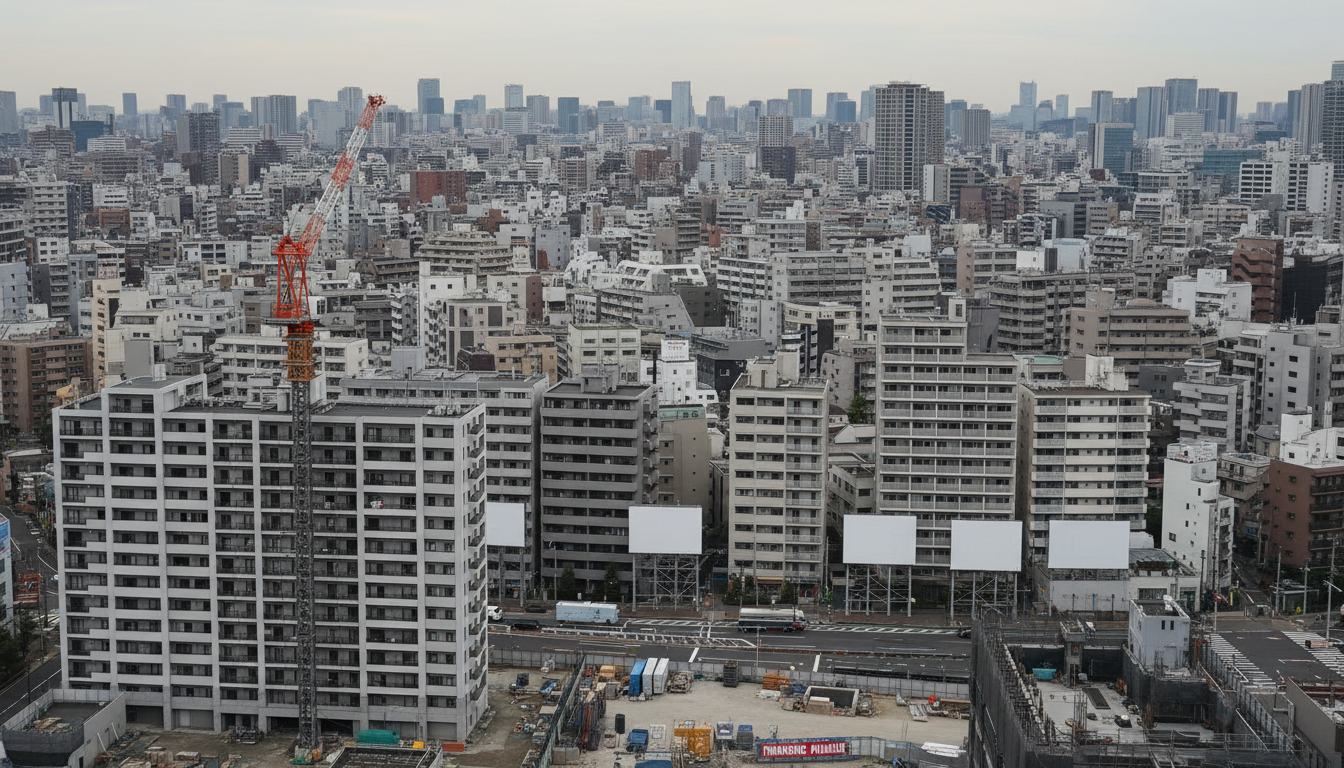
Tokyo residential property market cools as unsold inventory rises to multi‑decade high
Tokyo residential property market softens as higher borrowing costs and inflation squeeze buyers, pushing unsold inventory to levels not seen in decades.
Tokyo’s residential property market has begun to cool, with unsold units climbing sharply as rising mortgage costs and persistent inflation sap buyer demand. Developers and real estate agents report slower sales across central wards and suburban neighborhoods, while new project launches are being delayed or repriced. The shift marks a notable pause after several years of strong activity and raises fresh questions about near‑term prospects for the city’s housing sector.
Unsold Inventory Hits Multi‑Decade High
Unsold inventory across Tokyo’s condominium and single‑family markets has risen to its highest point in decades, according to multiple industry indicators. New and completed units are spending longer on the market, increasing pressure on developers to adjust marketing strategies and pricing.
The accumulation is most acute among larger developments and luxury offerings that had benefited from earlier demand, while smaller, affordably priced homes are also seeing slower turnover. Rising stock levels are prompting sharper competition among sellers and a gradual widening of discounts on new launches.
Mortgage Rates and Household Budgets Under Strain
Higher interest rates have made mortgages noticeably more expensive for many buyers, eroding purchasing power and altering household budgets. Many prospective purchasers are recalculating affordability, leading some to postpone decisions or seek smaller units.
At the same time, inflation has pushed up living costs, limiting buyers’ capacity to absorb higher monthly repayments. Lenders have tightened credit conditions in some segments, which further constrains first‑time buyers and middle‑income households.
Sales Slowdown Across Central and Suburban Districts
Sales activity has slowed not only in central Tokyo but also in suburban districts that previously benefited from workers seeking more space. Transaction volumes have retreated from the brisk pace seen during the market’s peak, with fewer immediate buyers stepping forward at list prices.
Real estate agents report longer negotiation periods and more frequent price revisions as buyers increase their bargaining. The slowdown is uneven: neighborhoods with strong transport links and established amenities continue to see steadier interest than more marginal locations.
Developers Respond with Price Adjustments and Launch Delays
Faced with rising inventories and softer demand, many developers are recalibrating release schedules, postponing some projects and offering more incentive packages. Discounts, furnishing credits and flexible financing options have become more common as companies seek to keep absorption rates stable.
Some firms are also trimming planned construction starts to avoid adding further supply to an already saturated market. These tactical shifts are aimed at protecting margins while maintaining liquidity in an uncertain sales environment.
Rental Market and Investor Sentiment Diverge
While owner‑occupier demand has cooled, rental markets in central Tokyo show relative resilience, driven by ongoing urban employment and student populations. Landlords in prime areas are reporting steadier occupancy rates, even as rent growth moderates.
Investor sentiment has grown more cautious, particularly among speculators who had pushed into the market earlier. Institutional buyers are selectively active, favoring well‑located assets with stable income prospects over speculative developments.
Policy Makers and Industry Weigh Options
City and industry stakeholders are examining measures to soften the adjustment, from incentives for first‑time buyers to targeted support for rental housing. Policymakers face trade‑offs as they balance financial stability concerns with the need to sustain housing demand.
Any broad policy response is likely to be measured, with interventions aimed at smoothing market dynamics rather than reversing the correction. Observers note that prolonged high interest rates globally constrain options for rapid relief.
Outlook for the Tokyo residential property market hinges on the interplay between borrowing costs, inflationary trends and household confidence. If interest rates stabilize and inflation eases, demand may gradually recover and inventories could tighten over time. However, if elevated costs persist, the market is likely to experience an extended period of adjustment as buyers and developers adapt to a new affordability landscape.

