
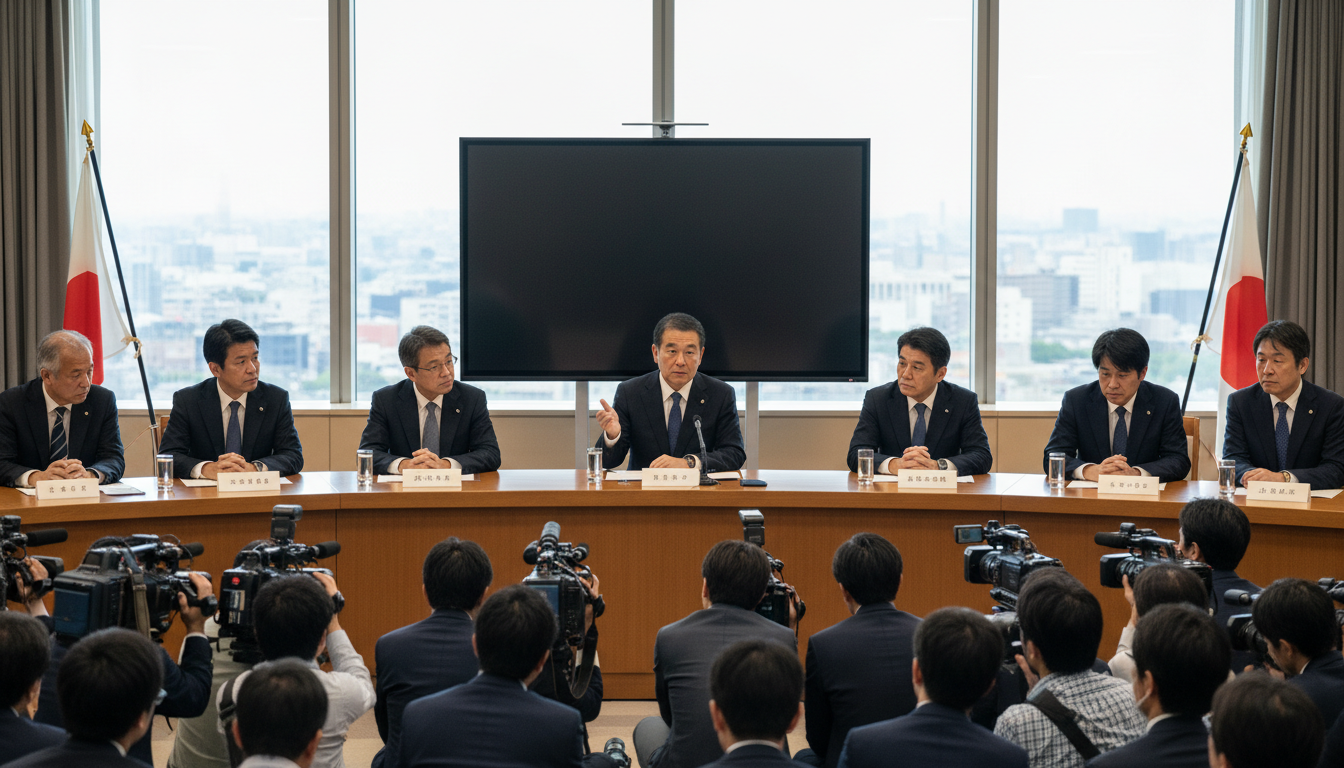
JERA Suspends Earnings Forecast for Fiscal Year to March 2027 Citing Iran War–Driven Market Uncertainty
JERA cannot issue an earnings forecast for the fiscal year to March 2027 due to energy market uncertainty from the Iran war; LNG procurement unchanged so far.
Japan’s largest power producer, JERA, said on April 27 that it is unable to provide an earnings forecast for the fiscal year ending March 31, 2027, blaming heightened uncertainty in global energy markets following the Iran war. The announcement, which noted that JERA’s liquefied natural gas (LNG) procurement had not been affected to date, reflects growing concerns among Japanese utilities over price volatility and supply-chain risk tied to Middle East tensions.
JERA suspends forecast for fiscal year to March 2027
JERA said it could not calculate a reliable earnings outlook for the fiscal year to March 2027 because market conditions are too uncertain. The company pointed specifically to disruptions and volatility linked to the Iran war as the primary reason for withholding a forecast.
The move is notable because firms typically issue forward guidance to help investors and customers plan. By suspending its forecast, JERA signalled that the scale and speed of recent market shifts prevent the company from making reasonable assumptions about fuel costs, market prices and procurement outcomes.
Company statement on LNG procurement and supply status
Despite suspending its earnings forecast, JERA reported that its LNG procurement and terminal operations have remained steady so far. The company stated that shipments arriving at its Chiba terminal and other import facilities have continued without reported disruption up to the time of the announcement.
JERA’s reassurance on procurement stops short of guaranteeing future stability, however, and the firm warned that evolving geopolitical developments could alter the situation rapidly. The company’s supply comments suggest operational resilience to date but underline the potential for swift changes in the weeks and months ahead.
Factors behind the market uncertainty
Industry analysts point to several linked factors that have amplified uncertainty: elevated spot LNG prices, insurance and rerouting costs for tankers, and the potential for sanctions or military escalation to constrain flows from key producing regions. These dynamics increase the difficulty of forecasting power generation costs and margin outcomes for large utilities such as JERA.
JERA’s broader exposure to global commodity markets through long-term LNG contracts and spot purchases means swings in freight rates and fuel prices feed directly into its cost base. The company’s decision reflects the challenge of translating volatile input costs into firm financial guidance when key variables are in flux.
Potential impact on Japan’s electricity sector and consumers
Any sustained rise in fuel costs could put additional pressure on utilities, potentially affecting electricity tariffs, contract negotiations and the financial positions of smaller regional suppliers. Japan remains heavily reliant on imported LNG for power generation, making the sector sensitive to price and supply shocks emanating from the Middle East.
At the same time, a large integrated producer suspending guidance raises questions about how companies will manage procurement strategies and price risk. Utilities may increase hedging, seek alternative suppliers, or accelerate discussions on cost pass-through measures with regulators and large industrial customers.
Regulatory and industry responses being monitored
Government agencies and industry associations in Japan are likely to monitor the situation closely, weighing measures to ensure supply security while protecting consumers. The Ministry of Economy, Trade and Industry (METI) and energy market stakeholders have in the past discussed diversification, strategic reserves and demand-side measures as tools to mitigate shocks.
Market participants will watch for any official interventions, guidance on tariff adjustments, and announcements of contingency measures. JERA’s announcement could prompt renewed dialogue among utilities, traders and government bodies on coordinated risk management steps.
Outlook: risks, scenarios and what to watch next
Looking ahead, the key variables to track include spot LNG price trends, tanker routing and insurance developments, and the diplomatic or military trajectory of the Iran war. Any escalation that affects shipping lanes or production could quickly tighten markets and raise costs for import-dependent countries like Japan.
JERA’s statement underscores that the near-term outlook is fluid; the company will likely revisit guidance only when clearer signals on market stability emerge. Investors, customers and policymakers will be watching for updates from JERA and other major suppliers as conditions evolve.
JERA’s decision to withhold an earnings forecast illustrates the immediate financial and operational uncertainties that Japanese energy companies face amid geopolitical shocks, and it highlights the broader vulnerability of import-reliant power systems to sudden changes in global fuel markets.

