
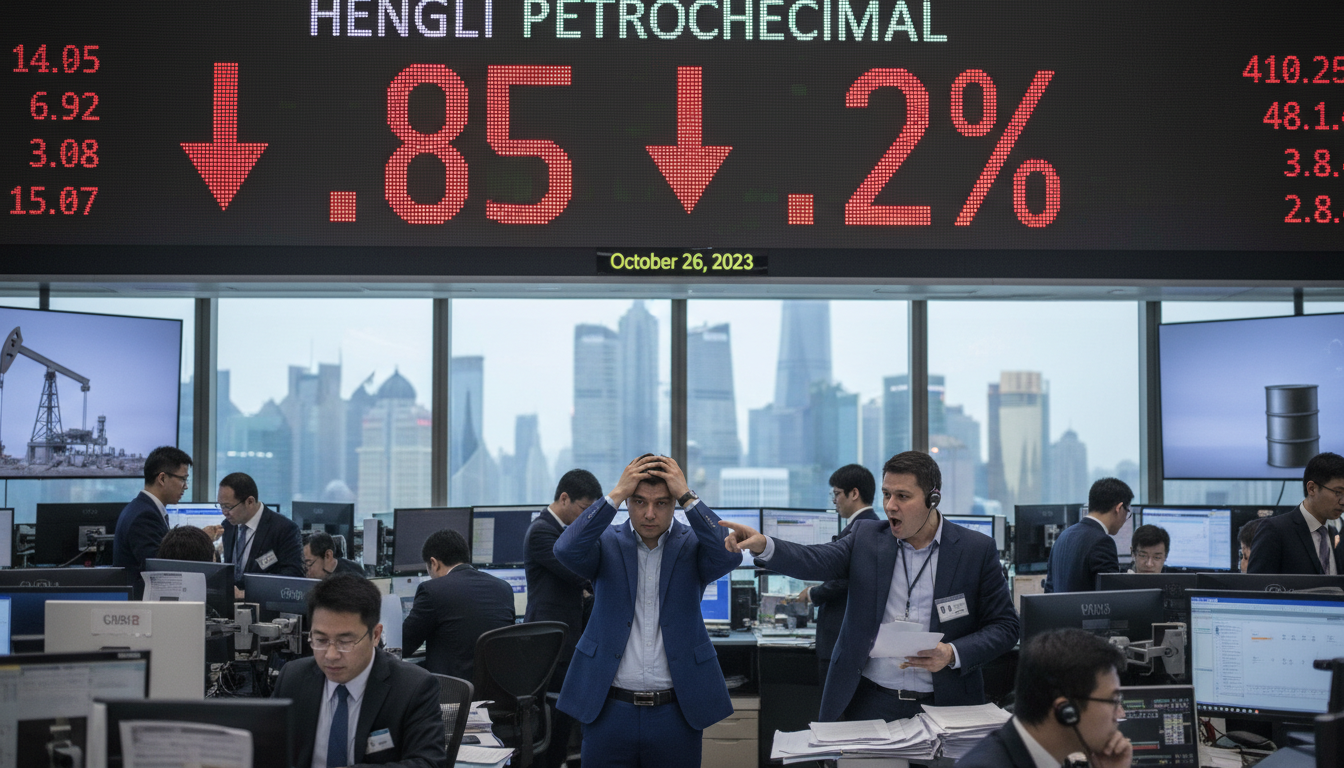
Hengli Petrochemical Shares Fall Sharply After U.S. Sanctions Refinery Unit over Alleged Iran Oil Purchases
Shares of Hengli Petrochemical plunged after the U.S. Treasury on April 27, 2026, sanctioned a refinery unit, alleging it purchased Iranian crude that could support Tehran’s military activities. The action sparked criticism from Beijing and added tension to diplomatic talks ahead of a planned superpower summit in mid-May. Investors reacted swiftly on Shanghai markets, underscoring the economic fallout from sanctions tied to energy trade.
U.S. Treasury Moves Target Refinery Unit
The U.S. Department of the Treasury said it had designated a refinery unit linked to Hengli Petrochemical for allegedly refining Iranian crude oil and enabling military-linked activities in Iran. The designation imposes penalties that complicate the unit’s ability to transact with U.S. persons and could chill relations with global trading partners. U.S. officials framed the measure as part of broader efforts to cut off revenue streams that could be used to support Tehran’s security apparatus.
The Treasury’s statement did not immediately detail every commercial link or name specific downstream buyers, leaving market participants to parse the breadth of the measure. Sanctions of this kind typically trigger compliance reviews across banks, shipping firms and commodity traders that handle crude and refined products connected to the designated entity.
Market Reaction and Share Volatility
Shanghai-listed shares of Hengli Petrochemical dropped sharply on the day the sanctions were announced, reflecting investor concern over potential restrictions on crude supply, payments and international partners. Trading volumes surged as funds and retail investors adjusted positions to account for new compliance and operational risks. Brokers warned that volatility could persist while clarity on the sanctions’ operational impact emerges.
Analysts noted that sanctions often reverberate beyond a single firm, affecting sector peers and commodity logistics providers. Market participants will closely watch any secondary measures from other jurisdictions and how banks and insurers respond when processing transactions linked to the designated refinery unit.
Beijing’s Response and Diplomatic Stakes
Chinese officials publicly criticized the U.S. move, calling for dialogue and stressing the importance of stable commercial ties, according to government statements released after the designation. The pushback highlights the diplomatic sensitivity of sanctioning a major Chinese-listed company as Washington and Beijing prepare for a high-level summit scheduled in mid-May 2026. That timing increases pressure on both capitals to manage fallout without derailing strategic discussions.
Chinese authorities may seek clarifications or lodge formal protests through diplomatic channels, while urging domestic firms to ensure compliance with both national policy and international norms. How Beijing balances support for national companies with the imperative to avoid escalating bilateral tensions will be a focal point for policymakers over the coming weeks.
Operations at the Changxing Island Refinery
The refinery unit targeted by the designation operates a so-called “teapot” plant on Changxing Island in Dalian, Liaoning province, a type of independent refinery common in China’s coastal industrial clusters. These smaller, privately operated refineries often blend a variety of crude types and supply both domestic and export markets with refined fuel and petrochemical feedstocks. Their size and trading flexibility have made them significant players in regional crude flows.
Operators of such facilities typically depend on diverse crude sourcing to maximize margins, and the sudden imposition of sanctions can disrupt procurement and hedging arrangements. Port operations, storage leases and shipping contracts connected to the refinery may also come under scrutiny as counterparties reassess exposure.
Implications for China’s Energy Trade and Refining Sector
The allegation that a Chinese refinery refined Iranian crude raises broader questions about how crude is routed through global markets and the role of intermediaries in obscuring origin. Energy traders and refiners will likely intensify due diligence on shipment documentation, chartering arrangements and payment channels. The incident could accelerate adoption of stricter compliance systems across the domestic refining sector.
For China, which imports large volumes of crude to fuel its refining and petrochemical industries, the episode could prompt industry-wide reviews and potential shifts in sourcing strategies. Companies may opt for larger, long-term supply contracts with clearer provenance or accelerate investment in tracking and certification mechanisms to reduce sanction-related exposure.
Legal and Commercial Risks for Foreign Counterparties
Banks, insurers, and shipping companies with previous dealings tied to the designated unit now face heightened legal and commercial risk when handling related transactions. Even absent immediate secondary sanctions, many institutions adopt a cautious stance to avoid reputational and regulatory consequences. This risk-averse behavior can effectively isolate designated entities from key services and partners.
Legal advisers predict a wave of contractual assessments by counterparties seeking to limit liability, while compliance teams work to map links between entities, vessels and cargoes. The pace and scope of such re-evaluations will shape the practical impact of the designation on physical trade flows and financing.
The U.S. action against the Hengli refinery unit underscores how sanctions continue to be used as a foreign policy tool and how they can ripple through markets and diplomacy. Observers will watch whether the designation prompts further measures, how Beijing responds in the coming days, and whether market stability can be restored as officials from both countries prepare for high-level talks.

