
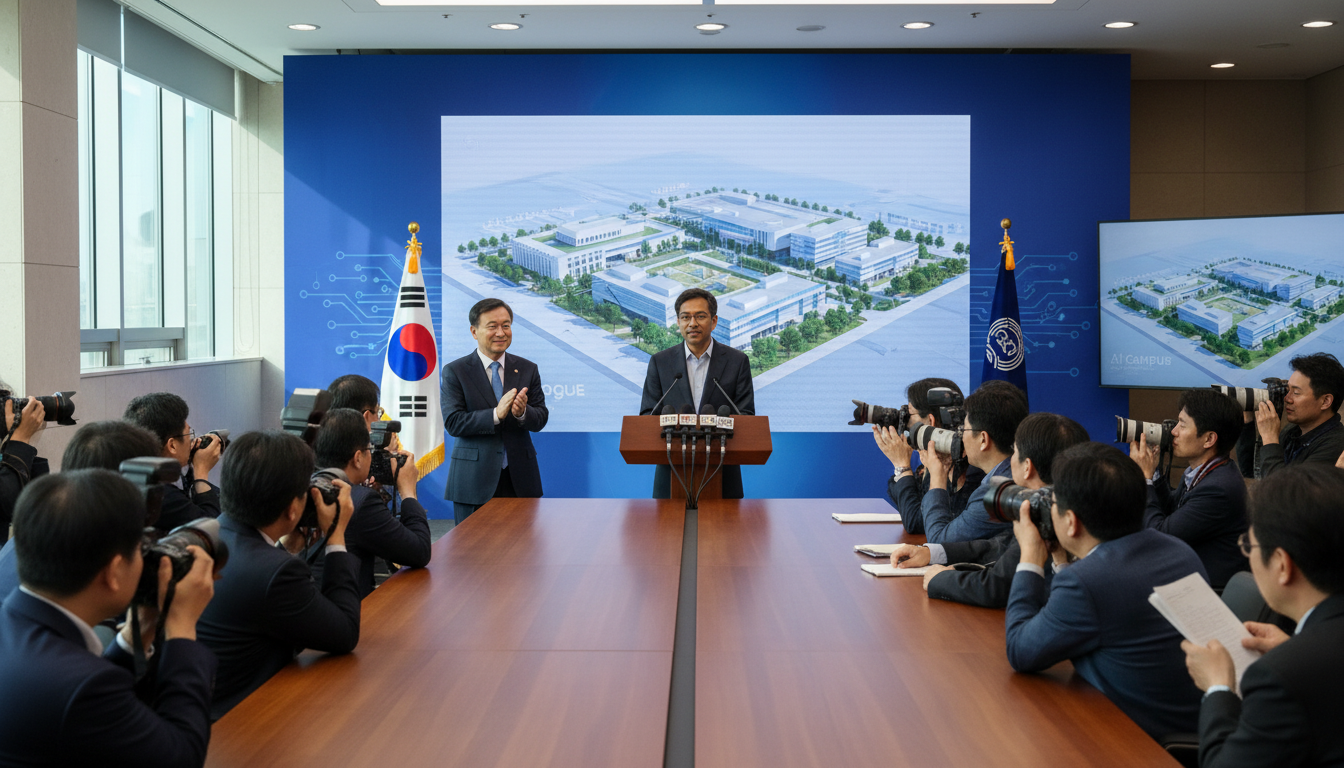
Google AI campus Seoul to open after Seoul and Google resolve yearslong mapping dispute
Google AI campus Seoul announced as the U.S. tech giant will build an artificial intelligence research and training hub in the city, marking a thaw in ties after a mapping-data standoff.
South Korea and Google announced on Monday that Google will establish an artificial-intelligence campus in Seoul, a move officials described as a major investment in the country’s technology sector. The Google AI campus Seoul will serve as a base for research, talent development and collaboration with local partners, according to statements from both sides. The announcement follows a February agreement that appeared to resolve a yearslong dispute over Google’s request to store high-precision map data on servers outside South Korea.
Project scope and planned activities
Google has said the campus will focus on AI research, engineering and workforce training, with facilities designed to support long-term projects in machine learning and related fields. Company representatives indicated the site will host labs, cloud infrastructure and programs aimed at training Korean engineers and students. South Korean officials welcomed the plan as a catalyst for private-sector research and cross-border collaboration with universities and startups.
The technology company did not disclose a detailed timeline or a full list of partners in its initial announcement. Government officials said further details on investment amounts, construction timelines and regulatory arrangements would be made public in coming weeks. Analysts note that such clarifications are customary as large-scale technology investments typically require approvals and coordination at multiple levels.
Location choice and economic implications
Seoul’s selection as the campus location underscores the city’s growing prominence as a regional AI hub and reflects South Korea’s strengths in talent, infrastructure and industry partnerships. The campus is expected to create local jobs in research, engineering and operations and to stimulate related activity among Korean startups and service providers. City and national economic development agencies framed the investment as part of a broader push to attract global technology firms to South Korea.
Officials from Seoul’s municipal government highlighted potential spillover benefits for education and small businesses, saying the campus could offer internship opportunities and joint research funding. Observers caution that the precise economic impact will depend on how the campus integrates with domestic supply chains and whether it leads to sustained private and public investment in AI ecosystems.
Regulatory context and mapping-data dispute
The announcement comes after a contentious period over the handling of high-resolution map data that strained relations between Google and Korean authorities. In February, Seoul and Google reached an agreement that appeared to resolve concerns about storing sensitive map data on overseas servers, a stumbling block that had limited Google’s mapping services in the country. The resolution eased regulatory tensions and opened the door to deeper cooperation on other digital services and infrastructure.
South Korean regulators have intensified scrutiny of data security and localization in recent years, citing national security and privacy considerations. The government’s engagement with Google on the mapping issue indicated a willingness to negotiate frameworks that balance data protection with the benefits of foreign investment and advanced cloud services.
Responses from government and industry leaders
South Korean ministers and municipal officials framed the campus as a strategic win for the nation’s technology agenda. Government statements emphasized the importance of foreign direct investment in maintaining competitiveness in AI and semiconductor-adjacent technologies. Industry groups and university leaders expressed cautious optimism, noting that long-term value will depend on research outputs, talent retention and access to funding for collaborative projects.
Google’s public relations team described the project as part of the company’s global efforts to expand AI infrastructure and deepen local research ties. The company stressed partnerships and workforce development as central goals, while saying it would work with Korean stakeholders to meet data governance and regulatory requirements.
Regional and geopolitical considerations
The establishment of the Google AI campus Seoul may shift the competitive landscape as governments across Asia seek to attract leading AI firms. South Korea competes with other major tech centers for investments that bring advanced compute, research talent and commercial opportunities. The campus also highlights the interplay between national data policies and international technology companies, as governments balance economic benefits with security and sovereignty concerns.
Experts say the campus could enhance Korea’s bargaining power in future technology negotiations, but they caution that geopolitical factors and evolving regulatory regimes will continue to shape foreign tech investment. The move also signals to other multinational firms that negotiated solutions to data governance disputes are possible without resorting to full data localization.
The project marks a tentative reset in Seoul–Google relations and points to potential long-term collaboration on AI research and workforce development.
The Google AI campus Seoul announcement is likely to trigger a series of negotiations over operational details, regulatory oversight and partnerships with domestic institutions, with follow-up declarations expected as plans are refined.

